Monday, February 28, 2011

INKBLOTS Men's Writing Group for February

INKBLOTS – FEBRUARY, 2011 (pictured at left: Johann Gutenberg in Gutenberg Square, Strasbourg, France, his birthplace)

Italian red, fire on the hearth, five men. John S leads off reading a portion of a manuscript written by a former student of mine at CHS. Alisa writes “Help Wanted,” sign read by Callie, in front of an import company, the Phelps family in Rosalind, WA. Callie gets a job tutoring the Phelps’ children. Alisa. This is going to be a great story. If you’d like, I’ll make a few comments based only on hearing about ten minutes of it read aloud at Inkblots. But relax, I’ll make them in a private message!
John read his novel on retired cop whose daughter is pregnant and needs an abortion, or so she thinks, or her boyfriend’s mom thinks. Show me what “too nervous” looks like. Good candid questions that would be asked at the CPC. But show us how the girl would react when she’s nervous, how she sits, what she does with her hands, feet, mouth, eyes. What’s going on inside her mind. What she’s afraid of. This story has several layers, including racial tensions, misconceptions, prejudice, as well as sexual mores and devaluation of human life. Show more how these go together. Ultrasounds are very expensive but supporters are paying for it so you can see your baby. Good job doing your homework. Doug Mc suggests breaking the visit to the Crisis pregnancy center up into two chapters. By breaking the chapter you create tension and you involve your reader in what is going on and what ought to happen. Make the reader, even the pro abortion reader, want her to do the right thing, to have the ultrasound, to keep the baby. Have her get up and leave, or just about leave.
Doug Mc, who just submitted his Return to Tarawa manuscript to P&R Publishing in New Jersey. Give us your story in 30  words, 150 words, what is your main point, how does each chapter contribute to your main point. He felt like the questions unearthed some of the revision and editing maybe needed in the story. Six pages of submission forms with three chapters, same as he submitted to Writers Edge reading service in Wheaton. They said effusive things about the manuscript, really they did. I don’t have them right in front of me, but it concluded with, “I hope to see this in print some day.” Doug is now reading his Korean War era novel. He read for us a chapter that can be difficult to write but necessary in historical fiction: historical details for context. How much is enough? How much is too much?
He wore a concerned face… Can you show this? Made everyone take notice, might better be you showing how they react, how a specific character fears the artillery fire, his facial expression, his flinching with each retort of the guns. Good description of abandoned bivouacs for combat units, 3,000 men “who aren’t here anymore.” Mr. Rand growled (not nearly growled). There is a fascinating fluidity to your writing. You have put us in medias res, and we’re all sitting here following along, hanging on your words. We’re all interested, can’t help it. Your voice is developing every time I hear you read. I don’t mean your audio voice, that works well, but your voice weaving the narrative smoothing and naturally with the dialogue of the various characters. David K comments that the conversation sounds a bit stiff for two men who know each other. John S didn’t agree. The phone rang and none of us wanted D to stop and get the phone.
David K read for us a new chapter in his futuristic thriller, second civil war in America. Two brothers feuding, one the president of the US while the other becomes the leader of the succeeding states. Genetic engineering of several individuals (if engineered things can be called individuals). The two presidents are in the same room together? But the war is still on so it’s not over. Too much “Whatever.” Episode in Cajun country using local dialect. Gator named Judas. Test-tube baby. John S said the cease-fire episode seemed odd, letting the brother go just like that. Too nonchalant and seemed unrealistic. There was some discussion of free-trade, separate currency, but no more aggression. The story could use more subtle nuances of human interaction, what people do as they say things, what they think. It does seem sort of blunt, rapid clips, two dimensional. You mentioned that you don’t really like details in books you read; you just want to get to the action. But avoid adding a little extra in there. Work toward an organic story, where essential details flow naturally out of the characters problems, misconceptions, fears, quirks. Details never work if they are tacked on. They must be essential. The story not complete without them, but don’t overwrite it either.
I suggest everyone read or reread Strunk and White, Elements of Style before they write any more. Five short chapters that can change your life as a writer. I read and reread it often. Learn something new every time. I read chapter 46 of my just-finished-today novel on John Knox. Found some typos and awkward wording as I did so. The out-loud test is everything. We chatted for a while about other ideas we have rolling around in our imaginations.          

Monday, February 21, 2011

John Knox novel completed at last! Here's a sample

I pushed the girl out of my mind as we walked toward home down the Royal Mile. I intended only to poke my head in the kirk and perhaps persuade John Knox to come home early, take some supper, get some more rest. But as I entered there were five or six young men seated in the south transept of St. Giles, John Knox seated before them.
My mind flashed back to my youth when my brother Francis, Alexander, and I sat before Master Knox. I used to feel jealous of his attentions to us. There was no place for that now. He often said that he’d had rather spend fifteen hours interpreting a text of Holy Scripture with young men preparing for the ministry than an hour doing anything else. This appeared to be one such earnest discussion. I was about to go, when the words of one of the young men arrested my attention. I lingered, the boys weary and fidgety at my side, I hoping it would not be prolonged for fifteen hours, but eager to hear their debate.

“But will not such teaching loosen the reins of lusts?” asked the young man. “If we instruct the ignorant that salvation is entirely an unconditional free gift—they’ll be no restraint on manners and behavior. Law is smashed and Antinomianism shall prevail.”
“Do you imagine that any of us can earn God’s favor by keeping God’s law?” said John Knox. “Do you imagine that salvation is mostly of God’s grace, mostly of Christ’s merits, but that we must be his partners in our own salvation, then?”

“But you cannot deny, Master Knox, that huge tracts of Holy Scripture address the members of the visible kirk as responsible partners in covenant with God, whose destiny is determined by our faith and our obedience or lack thereof.”

At the young man’s words, I saw the vitality of John Knox’s convictions rising up in him, his forehead seeming to become more broad and set, his eyebrows overshadowing his features like dark clouds before a tempest; his eyes flashed like lightning, and his in-drawing of breath seemed as if it would burst forth like thunderclaps in his reply.

“Every papist, man, would agree with you,” he said. “The only way huge tracts of Holy Scripture say such nonsense, however, is if you make a mingle mangle out of law and gospel, that is, if you get the cart of good works before the horse of electing grace. You must not separate the things that God has joined together. The cause of good works, my friend, is not our free will, but when the Spirit of the Lord Jesus, whom God's elect children receive by true faith, takes possession of the heart of any man, the Spirit regenerates and renews the man, so that he begins to hate what before he loved, and to love what before he hated.

“If you make the believer’s good works, his sanctification, a condition of his justification, you mistake the evangel and make man’s faithfulness a means of meriting or of maintaining the salvation of God. If we determine our destiny by anything in us, faith, faithfulness, obedience, free will, good works, anything by which we partner with God, then you must say, as the papists say, that God has come down to save the just. But Jesus the Son of God came not in the flesh to call the just, but to call sinners, surely not to abide in their old iniquity, but to true repentance, true dying to sin. The Christian’s hope of mercy and forgiveness before God is not in his faith and obedience, but in the redemption that is in Christ’s blood alone, by which alone a man’s imperfection has no power to damn him, for Christ's perfection is reputed to be his by the regenerating and renewing of the Spirit which alone engenders faith in us, faith which he has in Christ’s blood. God has received already at the hands of his only Son all that is due for our sins, and so cannot his justice require or crave any more of us. There is no other satisfaction or recompense required for our sins.”

“You said the same today on the mount,” said Nathaniel as we left the kirk and walked home.

“Did I?”

“Aye, you said Jesus came to seek and to save the lost,” continued the boy, “the lost, like the wee lamb on the precipice. It was the same as father was speaking of.”

“Aye, so it was,” I said.

Several times over the next weeks, I saw the haddock lass, as I at first termed her. Then I came to call her in my mind, the generous lass. At last I learned her name.

“I’m Margaret Stewart, Lord Ochiltree’s daughter,” she told me.

Monday, January 17, 2011

INKBLOTS Men's Writer Group

INKBLOTS –January 16, 2011
Blustery evening (better for getting the creative juices flowing), fire on the hearth. John brought along a 2004 red from Nimes, where his daughter and son-in-law live in France, where the best preserved Roman coliseum in the world is. I led off with one of my favorite paragraph from Abolition of Man. He could have said. We are a civilization that produces people who have no integrity. Instead he wrote, “In a sort of ghastly simplicity, we remove the organ and demand the function… We castrate and bid the geldings be fruitful.” Vintage Lewis, and perfect example of using specific, evocative language; be specific, avoid the vague and anemic.

John led off with the tea party chapter from his contemporary fiction, exploring the complexities of throw-away life in the age of abortion, euthanasia, and infanticide. I would avoid a movie reference for context. Consider a description of the massive house that describes the mansion in comparative terms. You started to with the columns.  Maybe put it in a historical context, pre Civil War, family with 100 slaves. Andy S commented that the height description in numbers is less effective. Translate 5’ 2”. How about comparing the height with her being just barely tall enough to go on the adult ferris wheel, on a tall day.
   
I read from D M Kaplan’s Revision. Point was the importance of enabling reader to “see, really see.” It is the task of the author to awaken the imagination of the reader so that they not only see, they know the character, how they think, what they hate, why they do so, what makes them move, what other characters think of him. No short cuts to this. And I would add, we must show and not tell the reader. When we show them we don’t need to tell them. But still don’t over-write! Develop a sense of what is essential, what must be there and what does not belong. Sometimes this means cutting out our favorite passage.

Dave reads a chapter of his futuristic thriller. Bioengineering novel, political critique of absolutism, statist politics. The reference to praying seems forced. Against his religion. Is he the one that is or sort of is a Christian? I have a hard time with this. Now he does back down, but I wonder if the reason this gets clogged in my imagination is the futurism and the realism of Christianity seem incompatible. Maybe I’m wrong, but it does seem to sort of paste in the Christianity. Lost your faith? I can’t see that there is real compatibility with a real world where Christianity is also real. John commented that he couldn’t see any of the description, couldn’t see where anyone was, what they were doing. Too unrealistic, too nonchalant, for realism. Comic relief? Maybe so, but it does seem to be unrealistic, and comic relief with violence seems awkward. Andy advises Dave to make each scene grab the reader all by itself. Good advice. Lots of potential. Too quick, stretch it out a bit. Lots going on with the brothers at odds with each other. Reader needs to feel like he is there, and like he really cares about what is going on. End chapter where brother lowers his gun, can’t shoot his brother.  We must have a consistent lens, a character the reader sees the world through.

Mixed signals on where the story is going. By attempting to combine Biblical, real Christianity with the fantasy futuristic genre. It has the effect of making Christianity seem fantasy too, opposite of what Dave wants, we all know that. This may account for why it feels tacked on, artificial. Stick with genre. Dickens in Christmas Carol, Scrooge can’t just change by moral improvement; he needs some kind of above the natural to transform him. It is not Christ and gospel of grace, but it is an exploration of evil and the need for transformation. Celebrate goodness and integrity over evil and killing. The violence seems to be too gratuitous, without giving the reader a sense of compassion, no or little internal conflict. We should want to awaken a deeper sense of what it means to be human. Even unbelievers who write well explore this; they just aren’t aware that they’re doing it. The Christian had the advantage here. We by grace have been made to know that we are made in the image of God, that we have rebelled against his holiness, that we are in deep weeds.     

We talked a good deal about how Christian writers have a role and it’s not preaching, though they may carefully create a character who does.

Tuesday, January 11, 2011

Bond Interview with John Horn for Ballantyne The Brave, Vision Forum 1/7/11

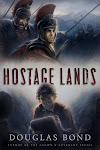
Douglas Bond is an excellent Christian author who has written many boys' historical fiction novels, some of my favorites being Hostage Lands and the Crown and Covenant Trilogy. Mr. Bond graciously allowed me to interview him on the subject of writing, and I think his answers will be both interesting and instructive to BTB readers. Enjoy!

Mr. Bond, thanks so much for participating in this interview! I've enjoyed your books for many years, and I have heard the same from many readers of Ballantyne The Brave. Now, let's get to the meat of the matter!
1. This question is rather broad, and probably hard to answer, but I’ll ask it anyway: In what way does your Christian faith affect your writing?

Every author views the world through an interpretive lens, that is to say, every writer has a philosophy of life, a world view that informs how they understand the nature of things in the world and, specifically, human nature. I am no different. The question every reader and interpreter of literature must ask is whether or not the author’s interpretation is accurate; does it fit with the nature of reality, is it consistent with the way things really are? As a Christian, God helping me and by his grace alone, I want to always be portraying things the way they are, how life in a deeply troubled, broken world actually is. That does not mean that I decide to portray all of life as total depravity, ugliness, full of gratuitous violence, hate, war—like the Coen Brothers produce movies. My goal is ultimately to write for an audience of One, Jesus Christ. I don’t write to try and give readers what they want, or what I think they need, but I attempt to write out of my what I need, my challenges, troubles, failings, and occasional triumphs, but all Soli Deo Gloria, to the glory of God in Christ alone. I hope that faith in Christ affects everything about my writing. When it doesn’t, I hope I will have the sense to take up knitting or fly fishing. 

2. Who are some of the authors that have inspired you to write fiction?  And, I think our readers would love to know, did you ever read Henty or Ballantyne, either as a boy or later in life?

I have read the Henty books, several times and aloud with my own children as an adult. And as an adult, I have collected older editions of many of his books, which I cherish. Henty along with Ballantyne (sadly, I’ve only read Hudson Bay), however, were much less available when I was in my growing up years; the recent interest in these Victorian era fiction writers for boys and young men has produced wonderful new editions—including enthusiastic followers and supporters (and websites!), which I wholeheartedly applaud.

I was profoundly shaped by Shakespeare and would consider myself to continue to be so to this day. It’s hard to explain: Shakespeare was best known as a playwright, and I primarily write historical fiction. But he awakened my imagination when first my mother began reading him out loud to me as a boy and taking me to see live theatre productions of plays. His plays and poetry continue to challenge and inspire me in many dimensions. I have also found great inspiration in the historical fiction of Rosemary Sutcliff, the works of Charles Dickens, and GK Chesterton’s fiction, among many others.

More at the foundational level of my writing, I have been inspired in my understanding of the gospel of grace—the most important ingredient for a writer, as I see things—by CH Spurgeon, whom I read almost daily, and by many other theologians and preachers, dead and alive, perhaps most notably, John Calvin, who wrote, "I count myself one of the number of those who write as they learn and learn as they write." He borrowed this from Augustine—another great author—and I wholeheartedly concur with this outlook on my life as a writer. 

 
3. What do you think about the modern trend towards videogames and movies, to the exclusion of profitable books?  (I specify profitable books because there is still a large market for distinctly unprofitable books.  This article has some interesting information on the topic.)
I see the voracious appetite of this generation for often violent video games, instantly accessible movies of all kinds, and shock fiction, vampire fiction, and sorcery fiction largely as symptoms of the same problem. We are an age that is Amusing Ourselves to Death, as the late Neil Postman put it in a classic book of cultural analysis of the same name. Classic literature and new books inspired by the classics require more from the reader, and they also give incalculably more back to the reader.

4. Do you think that there is a large enough market to support a new generation of aspiring Christian writers?

I don’t believe that producing books is a zero sum game. The more a generation desires to create literature, the more it is reading literature. The production of more quality books, inspired by and shaped by the values of the classics, the more readers that generation will produce. We could use hundreds of thoughtful, skillful, well-informed, and profoundly gospel-centered writers, but I don’t think we should worry about whether the market will bear their efforts. Flood the market with lots of mediocre books, and the very fine ones will shine more brightly. The more writers there are, the more they prod each other on, and the finer the best of the collective literature produced by that generation will be. I’m for no-holds-barred writing, but publishers need to be the gateway to publish only the best of what is written.

5. From my observations, I’ve noticed a very large percentage of female authors in the area of Christian fiction.  (Not that there’s anything wrong with women writing books, but men also need to step up to the plate.)  Have you noticed this?  If so, do you have any ideas about the reason for this imbalance?

I certainly have noticed this. I am a big fan of a number of female authors, Jane Austen, Sutcliff, Flannery O’Conner, but I think that today there is something of a problem with this discrepancy. It’s one of the observations, in fact, that prompted me to begin writing. We’re not alone in observing this. Colleen Mondor, a reviewer for Booklist wrote recently: "There are literally hundreds of Young Adult books published every year for helping teenage girls navigate the twisty landscape of growing up. The problem is that there are hardly any comparable books out there for [TEENAGE] boys to read... Why girls read more than guys? To any sane children’s book reviewer (or librarian) the answer is obvious -- writers aren’t writing as much for boys, and so boys aren’t reading."

Let me hasten to say, however, that I don’t think this should discourage this generation of thoroughly Christ-centered, literarily gifted female aspiring writers. There will always be a place for the finest writers, in my opinion, male or female.   

6. Here’s a slightly different topic.  What do you think about the emergence of ebooks, and have you ever considered publishing any of your novels in ebook format?

Some of my books are available in electronic format, though when I have had to read a book this way as I am fairly regularly asked to do for writing reviews and endorsements of other authors’ books, I don’t really think of it as reading a book. Last night I was reading a new book by Tim Keller in my favorite chair before a crackling fire, family members sitting or lying about the living room reading books—real ones with covers, pages made from tree pulp, dust jackets—you know, BOOKS! I do appreciate that it is a changing world, a world in which I write my books on a laptop computer (though I wish I could do it with ink and goose quill, or better yet, hammer and chisel).

7. Now it’s time for the age-old question that every author must answer a zillion times in his life, and that readers never tire of asking: Which of your novels is your favorite?  I’d also love to know which character you most enjoyed creating.

It’s a close call, but I have a decided preference for HOSTAGE LANDS, by 3rd century Roman Britain tale. It was heaps of fun to research and create. Incidentally, I am under contract, but have not yet begun, for a companion volume to HL, this one set in 7th century Anglo-Saxon Britain. It’s simmering away in my creative juices, and I’m eager to get going on it. Summer of 2011 is the writing.

One of my favorite minor characters to create was Dr. Dudley in my MR PIPES series. So much of the fun and humor came from playing his odd manner off of Mr. Pipes’, heaps of fun. I also thoroughly enjoyed creating Gavin in GUNS OF PROVIDENCE, my book released last June, completing the FAITH & FREEDOM TRILOGY.


8. Do you have any tips for aspiring authors?  What startling piece of intelligence did you lack when you first began writing, only to gain later on?  Or was "practice makes perfect" the key? 

Read, read, read. Get thoroughly immersed in the historical context, if you’re writing historical fiction. But observe real people around you today and make the story relevant to the universal human problem that transcends a particular time and place. Historical fiction, well-crafted, ought to draw readers into unconsciously saying things to themselves as they read, things like this: “Jean-Louis (from THE BETRAYAL) is so much like my envious neighbor.” Hmm, read on. “Jean-Louis is so much like I am. Why am I like this? Why do I want what others have been given, and why am I so ungrateful for what I have been given. Why am I so discontent with the role I have been given to play? Why do I tear down others to build myself up? Why do I think I’m so much more worthy of honor than Joe-blow or Suzy-que? What is my problem! Why am I so powerless to solve it? Moral improvement didn’t work for Jean-Louis, and it’s not working very well for me either. Where can I go for answers to my real problem? I must find the answers.”  

Good writers don’t moralize, nor do they preach, but they do create longing for the true and the beautiful, and that is why you must write with Christ at the center of your reason for writing. That does not mean that every book must be a retelling of Luke’s gospel, however, every worthy book written by a Christian will direct readers away from self, and sin, and put them on a quest for God and his gospel. Create longing for these things.

On my website www.bondbooks.net I offer several key guidelines and postures that have shaped and continue to shape me as I write. A few of those would be, Show don’t tell, use concrete nouns and active verbs, go inside the head of your characters and make them real, observe life and people around you, cultivate genuine curiosity about other human beings and what makes them tick, deep down. And then practice, practice, practice. I feel very much like I am still learning, and just when I think I’m getting somewhere, I am humbled by my deficiencies and my need for grace and the enabling power of the Spirit of God to turn me from myself and to use me for the glory of Christ in what I am doing—writing or otherwise.

9. I have an opinion on this subject, but I’m very interested in hearing yours.  Do you think that if the “classic” authors were writing here and now in 2011, that their books would sell?  (I mean fellows such as Dickens, Stevenson, Verne, or perhaps even Ballantyne and Henty.)

Good question. By today’s publishing standards, and given their criteria for even reading a manuscript submission, no, I don’t think many of them would ever be discovered by publishers today. Here’s one example. Publishers know that readers have been coddled by the 3-second sound byte and so have very short attention spans. Hence, longer paragraphs are out. I’m told that some publishers actually thumb the left margin of an unbound manuscript submission and if they don’t see lots of indentation, they chuck the thing. Ballatyne, Henty, Dickens, and many more would go in the trash bin today. That’s sad. On the other hand, there is progress in writing skill that has come out of some of the new standards. Though I highly respect men like Henty, and Dickens, and many others like them, I do not try to write like they did, nor would I suggest to aspiring writers that they try writing like these men did.

10.  Thank you so much for your time answering these questions, Mr. Bond!  I’ve certainly enjoyed the experience, and I’m sure that that the readers have done so as well.  One more question before you go: Do you have any exciting projects in the near or distant future that you can’t wait to release?

I am always writing. But let me say in closing, that usually when I begin a book, I’m very insecure, feel like I can’t ever write like I wrote in… whatever book, and wonder what on earth I’m doing trying to write another book.

I am under contract for two more books right now (18th and 19th contracts), one I’m writing (with the aforesaid emotional turmoil in rolling boil) that will be a companion to The Betrayal on John Knox, and another set in 7th century Anglo-Saxon Britain. I have recently completed two non-fiction biographies, one on Knox (to release with Reformation Trust, April, 2011) and another on Isaac Watts.

Tuesday, January 4, 2011

Endorsement of WILLIAM THE BAPTIST

James Chaney, republication (P&R Publishing) of WILLIAM the BAPTIST, 19th century classic. See sample of the Erasmus-like dialogue below. Here's what I wrote about this imaginative book on the Reformed view of baptism:
“With warmth and imagination, Chaney uses an engaging story-telling method, winsomely guiding readers through the Bible’s teaching on baptism. William the Baptist is an enlightening read for all who assume the Bible teaches credo-baptism and immersion. Chaney’s persuasive book also provides a confessional corrective to hyper-covenantalism, poised to infuse baptism with medieval efficacy. With editorial and theological integrity, Ron Evans has breathed refreshing life into this important 19th century volume, making the Reformed doctrine of baptism understandable to all Christians. An invaluable resource for exploring the meaning of baptism.”

Douglas Bond, author of THE BETRAYAL, a novel on John Calvin, and GUNS OF PROVIDENCE. 

EXCERPT:
William: “And these three agree.”
Rev. Cowan: Do you see the connection between verse eight here and verse seven from the first chapter, where it says, “the blood of Jesus cleanses [or purifies] us from all sin”?
William: I do see it. Both blood and water represent or symbolize the work of the Spirit. I agree with all this. But where does it lead us?
Rev. Cowan: Wait and see. First we must examine a few sections where the work of the Spirit is addressed. I will choose a few passages from the concordance and ask you to read them. Here is one, Isaiah 32:15.
William: “Until the Spirit is poured upon us from on high.”
Rev. Cowan: Isaiah 44:3.
William: “For I will pour water on the thirsty land, and streams on the dry ground; I will pour my Spirit upon your offspring, and my blessing on your descendants.”
Rev. Cowan: Ezekiel 39:29.
William: “‘I will not hide my face anymore from them, when I pour out my Spirit upon the house of Israel, declares the Lord God.’”
Rev. Cowan: Joel 2:28–29.
William: “‘And it shall come to pass afterward, that I will pour out my Spirit on all flesh; your sons and your daughters shall prophesy, your old men shall dream dreams, and your young men shall see visions. Even on the male and female servants in those days, I will pour out my Spirit.’”
Rev. Cowan: John 1:33.
William: “‘I myself did not know him, but he who sent me to baptize with water said to me, “He on whom you see the Spirit descend and remain, this is he who baptizes with the Holy Spirit.”’”
Rev. Cowan: Mark 1:10.
William: “And when he [Jesus] came up out of the water, immediately he [Jesus] saw the heavens opening and the Spirit descending on him like a dove.”
Rev. Cowan: Titus 3:5b–6.
William: “By the washing of regeneration and renewal of the Holy Spirit, whom he poured out on us richly through Jesus Christ our Savior.”

Monday, December 20, 2010

INKBLOTS, Merry Christmas men's writing gathering

INKBLOTS –MERRY CHRISTMAS!
December 20, 2010
Ode to a Desert Eagle
This handy piece of heat is nifty,
A hulking, hand-held cannon .50… (okay, sorry, I’m done)
John Schrupp brought along his desert eagle to show off to the boys, impressive piece of work. But now onto our literary purposes. I’m sitting by the McComas’s Christmas tree, composed of polyurethane green spiny things, built-in lights, a wooden toy on skis with a Santa hat, warm fire on the grate, a French red John brought from his daughter and son-in-law’s home. John leads off with his contemporary novel, exploring the complexities of unwed pregnancy and pressures society places on young people to abort.

I’m feeling like the dialogue is a bit wooden. This is the value of reading aloud. It is so easy to overwrite with dialogue, but it is so essential to get it right. Ear training. I like the carrot cake fixation. Good example of how we put the essential next to the trivial. I think the dialogue about the football jock who got another girl pregnant, and the new girl learning of the jerk’s past escapades. This needs to be broken with thoughts in between the back-and-forth dialogue. As it reads right now, it seems to lack the inner realities we humans have going on when we are talking with other human beings.

Dave K makes a good point about chapter break after the mom makes the offer of the $10,000 to abort the baby, then break to the conversation between the guy and girl. Doug M said John left out all the body language. I commented that the dialogue needs to open up with the realities of inner struggles, uncertainties, do I trust him, is he a jerk who gets girls pregnant, must go inside, woven together with body language, what they would be doing with hands, eyes, mannerisms—the shimmying knee, or whatever. Chapter breaks are like punctuation, just on a larger scale. They are important to the pacing of the story, fall at natural episode transitions, but also serve to suspend the reader, and suspension holds the reader up in the air, like a suspension bridge.

I next read my carol effort. Doug M’s comment was that there was no change in temperature, not just cold and hot, but more atmospheric temperature. John S thought I should bring more body language, nuanced layers… Yeah right! One guy wondered why I didn’t bring in the desert eagle. Everybody’s a comedian. Is Christ ever actually called the Light, came up for discussion. They preferred an earlier version of stanza on resurrection, which was helpful.

Shane reading a poem (could be a hymn) reflections on the vast contrast between the persona and Christ. It is a poem declaration of faith, a rehearsal of the gospel coming to a sinner, the persona in the poem. He reaped the deadly harvest my life deserved. My soul he’s freed from all my chains. Does this poem which declares truth so clearly, doctrinally, does it lead to Psalm-like praise, adoration of God for all this credo? I’d encourage you to feel what all this means and express it in a final stanza.Next shane read a short satirical piece about a man named Josephus at the pool of Shiloam, recounting healing by Jesus, confronted by ecclesiastical elites who fined him for carrying his mat on the Sabbath. Good humor. People won’t give money though to a guy who has been healed and is now able to earn his way. Suing for loss of revenue. Jesus’s intrusion into the life of the lame man. Decided to sue Jesus for loss of wages, intrusive Rabbi, precedent set in suit Israel v. Moses (or is it God) for leading them out of Egypt when there were still graves in Egypt. Press release motif. Witty, ironic, shows how temporal, short-term concerns can crowd out eternal ones. Does biblical text that inspired this piece give hint of whether healed man was like the nine lepers or the one?

Dave K reads chapter about the militia blowing up the UN building. The dialogue seems stilted, over-stated. Socialist soldiers or goons, on our tale for the last three miles. Seems to over-explain things with the spoken words. Can you shorten the dialogue and imply and infer in character’s thoughts so we don’t have to hear too much dialogue, which begins to sound unrealistic. We speak to one another in fragments. “Unemployed in Greenland” is from Princess Bride; I’d avoid referring to a line from a popular movie. Shane (physics degree, ROTC UW Seattle) knows something about explosives and questioned Dave on hoe he described a bomb blast and glass fragments; if the blast was enough to knock men down, the glass fragments would be rendered, in the energy of the blast, lethal. I suggested he craft a careful synopsis of the whole tale.

Doug M. read a chapter from his new novel manuscript on a missionary family going back to Korea, their son worldly, critical of his parents, deeply uninterested in going to Korea or to any mission field for his last year of high school. In this chapter Dougie confronts the critics of WW II fire bombings of Japan and other realities of war. John commented on the use of Mr and Mrs Rand throughout, but wonders if maybe he could use Thomas’s mother or Thomas’s father, his father, his mother, varies the names. John says I can’t include any of this in the blog, but I’m doing it anyway. What he was really getting at was what Dorothy Sayers does, “The best attribution is no attribution at all.” Though I don’t actually agree with this in every case, less is more, and Horace’s “be brief” kick in, and it is good to be as tight as can be. Create authentic characters with real individual qualities, with genuine voices and mannerisms that we would recognize in the real world, that readers would recognize in the real world, and you will need attributions less. Big row about why Thomas doesn’t seem to hate the Japanese, and what Doug ought to do about it.      

Friday, December 17, 2010

MERRY CHRISTMAS! New Carol Hymn, Douglas Bond

Looking for something else on my computer two nights ago, I came across fragments of a Christmas carol effort I had begun last year but never completed. I completed it yesterday, December 16, 2010, and thought I would share it with anyone who cares to take a look at it. Needs a Long Meter (LM) tune.

What wonder filled the starry night
          When Jesus came, who is the Light!
I marvel at His lowly birth,    
          That God for sinners stooped to earth.
       
His splendor laid aside for me,
          While angels hail His Deity,
And shepherds on their knees in fright
          Fall down in wonder at the sight.

He ever took delight in truth,
And pleased His Father in His youth;
The Law He perfectly obeyed,          
          Its just demands for sinners paid.

What bloody sorrow drenched the site
          Where Jesus wrestled through the night,
Then for transgressions not His own,
He bore my cross and curse alone.

What Light and glory on the day
          When Jesus took death’s sting away!
His loved ones raised to Life and Light,
          Made new by grace to serve in might.

One day the angel hosts will sing,  
          “Triumphant Jesus, King of kings!” 
Eternal praise we’ll shout to Him
When Christ in splendor comes again!

                             Douglas Bond (December 16, 2010)