Showing posts with label new music. Show all posts

Thursday, November 17, 2016

BEWARE--DANGER! What happens when we subsume lyric to music in worship

More intent on the words than on the music
"We must beware lest our ears be more intent on the music than our minds on the spiritual meaning of the words.” John Calvin

THE HIGHEST USE OF POETRY--THE HYMN

In the course of my research and writing and teaching about hymns over the last couple of decades I have learned many wonderful things about hymns, hymn writers, and hymnody—and every time I open the hymnal (usually the Trinity) I learn something new! I love singing hymns. I love the very best of our hymn lyrics from the last seventeen hundred years or so, and I have come more and more to love them not only as heartfelt passionate expressions of praise to God but as the best of English poetry. It was American poet John Greenleaf Whittier who said, "The highest use of poetry is the hymn."  In addition, I love many of the timeless musical settings of great classic hymn poetry, and I appreciate a growing number of the new hymns that are being written by thoughtful Christian poets and musicians. Because I love hymns and singing so much, I totally agree with what John Calvin observed about music, "Music has a secret and almost incredible power to move hearts.”

As I incorporated the study and imitation of the best poetry worthy to be studied in high school English classes, however, I discovered some significant obstacles to understanding and appreciating hymns as poetry for this generation of Christian young people. Nowhere is this more obvious than when students attempt to write about hymns as poetry. I have taught my students to explore the meaning of poetry by writing poetry explications, essays written specifically about poetry, wherein they observe and evaluate the effectiveness of the various poetic conventions used and the depth and richness of the meaning. I often have them compare secular (so called) poets with the poetry of hymns written at the same time or in similar circumstances. For example, I include Lutheran pastor Martin Rinkhart’s great lyric, Now Thank We All Our God, written while the Thirty-Years War was raging through Germany, in my course on World War I poets. Rinkhart’s 17th century hymn was sung August 1, 1914 on the streets of Berlin when the Kaiser announced the mobilization of German troops to invade Belgium. It makes a dramatic counterpoint to the despair and anger of many of the WW I poets.

STUDENT WRITERS PANIC


Here is where I discovered the problem for my students. When I give them a poem of Wordsworth or Cowper or Shakespeare to analyze and evaluate, they know what to do. It looks like and reads like poetry. It is in the format in which the poet originally penned the words; the poetic medium is, in some real measure, the message. Hence, they can observe the basic unit of poetry, the line, with its hard left margins and capitalized first lines (center lining poetry is a Hallmark card reduction of meaning and content to visual form and is unlike the format the poet wrote the poetry in). They can find the parallel ideas, the progression of thought, the figures of speech, the allusions, the meter, the rhyme scheme, the poet’s use of various sound devices, the use of inclusio, and other subtleties of the poetic art. But when I give them a hymn from the Trinity Hymnal (I consider the Trinity to be the very best of American hymnals and use it daily), they are frustrated and confused. When I give them a hymn with the poetry embedded in and subordinated to the musical score, as it appears in almost all American hymnals since the mid-19th century, they panic.

Poetic form lost to and subsumed in the musical notation
At first I didn’t get this. I grew up singing hymns in church; I read music; I love music. I chalked it up, at first, to the decline of culture, the loss of the ability to read music and sing hymns. But as I traveled to various other countries around the world, I discovered something very interesting. Maybe its American exceptionalism again. Though I’m not so sure. We Americans seem to be the only ones who hand hymnals to our congregations that have the poetry of the hymns in a subordinate role to the music so it does not look like or read like its genre--poetry. Every other country I have visited (UK, New Zealand, Tonga, Europe, Japan, Peru, etc.) the hymnals have the lyric of the poetry visible as poetry, in lines and stanzas the way the poet wrote it. I have  talked to missionaries and Christians from other countries I had not visited. I discovered that we Americans are pretty much the only ones that do this.

REVIVALISM TORPEDOES CONTENT

So I did some more research. As near as I can find, we began doing this as a direct result of the shift in priorities in 19th century revivalism. We began replacing many of the Psalm versifications from the Reformation, and many of the classic hymns with revival songs that in general were sentimental, repetitive, lacking in theological depth, and addressed largely to the sinner rather than as expressions of worship and adoration to God. This reduction of the content and the quality of lyric went hand in
Father of English Hymnody
hand with the crafting of new music, designed to attract the lost into the camp meeting tent. The new popular musical sound (the worst of it somewhere between merry-go-round ditty, the frontier cowboy song, and barbershop quartet sound) became more important because it was the hook to draw in the lost. Music was no longer accompaniment as an aid in taking the meaning of the poetry on the lips and in the heart and mind.

In Protestant Christian worship, music has always been in a subordinate role, supporting and aiding the worshiper in taking to heart and mind the meaning and richness of the poetic lyric. Though Calvin knew and appreciated the incredible power of music to move hearts, he cautioned against getting music and the objective meaning of the words flipped around, "We must beware lest our ears be more intent on the music than our minds on the spiritual meaning of the words.” But in Revivalism that’s precisely what happened, the words became less important. The new format of the hymnal reflects this shifting priority of revivalism. Charles Finney’s New Measures and Pelagian theology, flipped things around. The new format of the American hymnal, reducing the central importance of the poetry, was born. I would argue that this format does exactly what Calvin cautioned us against, our eye and ear “more intent on the music” (that’s the first thing we see in Revivalism-influenced hymnal format, musical score not poetic lines) “than our minds on the spiritual meaning of the words.”

Ask English students to write a timed essay under exam conditions about hymn poetry or offer them hymn poetry in its original poetic format, poetry stripped and dissected to fit the musical format, and they will choose every time to have it in poetic form. Imagine doing this with a prose paragraph, each line cut away from the next, with musical notation inserted and separating the flow of idea; the result would be confusion not comprehension, and the paragraph's meaning would be difficult to impossible to understand.


But some might object and say that when we are singing in church we are not writing an essay; they are two entirely different activities. Though that is true, both activities require the ones reading and singing the poetry to understand the meaning of what they are reading and singing. Christians rightly place a high premium on the engagement of the mind and of the imagination in worship. I would argue that singing hymns from a hymnal inadvertently formatted to make it more difficult to observe the subtleties of the poetry being sung is actually working against its own purpose.

RESCUE THE HYMNAL FROM REVIVALISM

Maybe it’s time to take on a remaining reductionist influence of Revivalism on our hymnal and thus on our worship. Why not consider a cross page format, the poetry in lines and stanzas on the left and facing the poetry the musical score with poetry embedded? For shorter hymns the poetry could appear on the top of the page and the musical score at the bottom. To reduce the obvious increase in
Format the hymnal to reflect the priority of lyric
page numbers, more hymns that are not used could be retired. I realize the difficulties and potential added expense, but I don’t think any of us believe that cost should keep us from confronting an obstacle to the engagement of mind and heart in our sung worship as significant as this one is.

In this proposed format reconfiguration (not a new configuration, but a return to one that is consistent with how Reformed Christians have sung in worship since the Reformation itself—poetry and meaning first, music second) it will send a clear message to the worshiper that the meaning of the words, taken on the lips, in the heart, and understood in the mind, is of first importance in our worship. I guarantee that the majority of worshipers (especially our young children) will sing from the poetry (some studies indicate that only about 25-30% read music when singing in church anyway). They certainly will pray and meditate from the hymnal from the poetry where the progression of thought and rich poetic conventions are uninterrupted by the musical notation. I conclude with Calvin’s caution: "We must beware lest our ears be more intent on the music than our minds on the spiritual meaning of the words.” I urge publishers of hymnals to consider rescuing hymn poetry from the influence of Revivalism so that our hymnal format reflects biblical priority in sung worship.

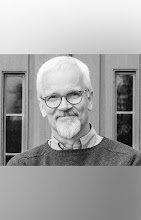
Douglas Bond is author of a number of books for young people and adults, including his Mr Pipes series on Hymn writers, Augustus Toplady (EP, 2012), and The Poetic Wonder of Isaac Watts (RT, 2013). As a hymn writer, Bond collaborates with several composers, including Greg Wilbur; watch for the forthcoming New Reformation Hymns/Parish Psalms album, coming in 2017. Learn more at www.newreformationhymns.webs.com.

Thursday, June 9, 2016

Penned by Subterfuge: How the Sexual-Identity Crisis Alters What We Sing in Worship

NEW REFORMATION HYMN (NRH 01) 

New Reformation Hymns
In the current gender crisis, I wonder if the church hasn't made her own unwitting contributions to the sexual-identity chaos by allowing our feminized culture's priorities to creep into the content and manner of our singing in worship. 

Notice the contrast between what the post-conservative church sings and the lyric of Zechariah 9 and 10, for instance. The Bible's lyric often has heavy-duty language about war and violent conquest: "...mighty men in battle, trampling the foe in the streets," is one in a myriad of examples.

One of the ways we can tell when we are being more shaped by our culture than being shapers of it, is when the Bible's language and themes begin to sound odd to our ears, when we feel like we need to make apologies for the biblical authors, worse yet, for the Holy Spirit. They didn't really mean to put it that way. Couldn't they have been more sensitive to the priorities of our culture? 

This is one important reason the church must continue singing the Psalms and the best hymns of our spiritual forebears. Then, after our minds, hearts, and imaginations have been thoroughly shaped by biblical and historical doxology, only then are we equipped to contribute new appropriate hymns for this generation of Christ's body the church to sing. 

Isaac Watts' father rebuked his teen son for complaining about the abysmal singing in their church. "Don't complain unless you can do better," the wise father urged his son, the young man who would become the Father of English Hymnody. In no way comparing myself with Watts, nevertheless, I have been attempting to be less of a critic and more of a contributor. In that spirit, over the next number of weeks I'm planning to post new installments of my NEW REFORMATION HYMNS. I'll post them in the order in which I wrote them, this one being the first, written fifteen years ago. Over the last couple of years, it has been a delight to work with my friend Greg Wilbur, Dean of New College Franklin, and composer extraordinaire. Watch for the final result of those efforts coming soon (Deo volente).

(NRH 01) The Lord, Great Sovereign (Common Meter, CM, 8.6.8.6.)

He makes his children mighty men,

They bend the battle bow;

So in God's strength, against the proud,

His foes they overthrow! (stanza 3; see the entire hymn below)

4th Mr Pipes--a romp on the high seas
The whole hymn is a loose versification of highlights from Zechariah chapters 9 and 10, a passage on which I haven't seen other hymns written. Martial and conquest themes, one of many of the Bible's themes that capture male interests, are largely missing in much of what the church sings in worship at the moment. Browse through the Psalter. The Psalms are full of this full-armor-of-God theme. It ought to trouble us that this theme is almost entirely absent in modern worship songs.

I'm father of six, four of them male, three of them now married young men, starting their families. I wanted to write hymns on biblical male themes being neglected by well-intentioned lyricist today, but I was worried that I couldn't do it. Then I hit on an idea.  I would have my male protagonist, Drew, in The Accidental Voyage, the fourth Mr. Pipes book, write my first hymn. Then if it was a complete disaster I could blame it on my character. Drew gnawed on his pencil throughout the book, working at the hymn in fits and starts. Meanwhile, I was making--equally in fits and starts--my very first effort at writing this hymn. That was fifteen years ago. 

Honestly, it is no exaggeration to say that I was terrified at attempting to write a hymn. Let me write a haiku or a sonnet, anything but a hymn! I have such deep respect for the Psalms, the Old Covenant hymnal, and for so many hymn writers down through the centuries who have penned such rich Psalm-like and Christ-centered poetry for the church to sing. How could I presume to set my pen to write a hymn? Complain or compose?

So I set my trembling pen to paper. Whether or not it will find its way into the hymnal is entirely in the Lord's hands. Little did I realize fifteen years ago that this would by the first of many New Reformation Hymns. Here it is: 

The Lord, Great Sovereign, shall appear,

His wand’ring sheep he’ll bring

From distant lands, through surging seas,

To shout before their King!


Deceitful shepherds, false and vain,

Have led his flock astray;

God's enemies he'll trample down,

Their lies he will repay.


With trumpet blast, the Lord appears,

His arrows flashing round;

He shields his flock, destroys his foes;

Glad vict’ry shouts will sound.


He makes his children mighty men,

They bend the battle bow;

So in God's strength, against the proud,

His foes they overthrow!


Restored, victorious, gathered in,

Their enemies o'ercome;

God’s children worship round his throne,

And in his name they run!


God’s bless’d, redeemed, and chosen ones,

His children shout and sing!

"All praise to Christ, the Cornerstone,

Triumphant, glorious King!"
                           
 Douglas Bond, (Copyright, 2001)


Take a moment and subscribe to my blog  


Wednesday, October 13, 2010

Bond speaking at ACM Symposium Friday--Homeschool enrichment opportunity

It's not too late to register for the ACM Symposium this Friday, October 15, 2010 in Tacoma, WA. This event is open to everyone and would be a great enrichment to homeschool curriculum for families in the area (students pay only $7.00 for this all-day and evening event: http://acmusicians.org/2010churchmusicsymposium.php). It is not exclusively for musicians!

I will be giving instruction on Church history (The Doxological Genius of Isaac Watts) and on understanding poetry and writing it, examining closely the poetic conventions, biblical allusions, and literary and theological mastery evident in several Psalm-like hymns. There will be addresses and a panel discussion on different worship "styles," how we got where we are, and where the church needs to go in its music and poetry to offer to God worthy sung worship in Spirit and in truth. The symposium is open to all Christians who care about these things.

Debuting at the the symposium will be several new hymns for the Modern Reformation, including three of my own. You will get to hear the music and sing the text under the skillful leadership of the regional Director of ACM, and composer, Ron Bechtel. And you will get to take these resources back to your home and church. To top it all off, there will be excellent live illustrations of worship music, both vocal and instrumental, for your edification and consideration. Register at http://acmusicians.org/2010churchmusicsymposium.php 

Here are samples of seminar titles:
  • The Doxological Genius of Isaac Watts (Douglas Bond, Author and Teacher)
  • How to Hear a Hymn Tune (John Wykoff, Composer)
  • The Imaginative Watts (Douglas Bond)
  • How to Write a Hymn Tune (John Wykoff) 
Church Leaders Roundtable: “Let’s Talk about Worship Music”
  • Why Our Church Has Adopted Popular Music in Worship
  • Why Our Church Has Retained Classical Music in Worship
  • Moderated Discussion by Ron Bechtel and John Wykoff
REGISTER on-line at http://acmusicians.org/2010churchmusicsymposium.php 

Join us!
Douglas Bond
www.bondbooks.net

Tuesday, October 27, 2009

Happy Reformation Day!


REFORMATION DAY, October 31, 2009
John Calvin @500

The following is a hymn text that I wrote with Paul Jones on the 5 solas of the Reformation. Note the allusions to the 5 solas in each stanza and corresponding refrain, Sola Scriptura, Sola Fide, Sola Gratia, Solus Christus, Soli Deo Gloria. Further note the allusion to John Calvin's inscription on his personal seal: "My heart I offer Thee, O Lord, promptly and sincerely," rendered in his original Latin in the title of Paul's tune, Cor meum tibi offero, Domine, prompte et sincere.

Creator God, our Sovereign Lord,
The heavens tell, the stars have shown,
Your splendor, might, and Deity,
But Truth lies in your Word alone.

My heart to you, O God, I give,
And by your Word I live.

In Truth your Word reveals my guilt,
My lost, unworthy self makes known,
But now made new I’m justified
And live and move by Faith alone.

My heart to you, O God, I give,
And now by Faith I live.

Before you made the world you chose,
In love, to send your only Son
To ransom me and make me one
With Christ, my Lord, by Grace alone.

My heart to you, O God, I give,
And now by Grace I live.

O Christ, Redeemer, Savior, King,
Subdued by grace, I am your own;
Enthrall my soul and make me free,
Reformed, redeemed by Christ alone.

My heart to you, O God, I give,
And now in Christ I live.

O glorious God, who reigns on high,
With heart in hand, before your throne,
We hymn your glory ‘round the world
With psalms adoring you alone.

My heart to you, O God, I give
And for your glory live.

Copyright, Douglas Bond, October 31, 2007
COR MEUM TIBI OFFERO Paul S. Jones, 2008


You can follow hymn developments at http://www.bondbooks.net/NEW%20HYMNS.htm and at http://douglasbondbooks.blogspot.com/. I'm working on writing another article to submit to Modern Reformation—this one on hymnody for the Modern Reformation. I have audio lectures on poetry and hymnody at http://www.douglasbond.webs.com/ as well as audio examples of some of the new reformation hymns. A lecture that might be of interest is available for listening or download here: http://www.box.net/shared/lru1ruvxqf