|
| OXFORD CREATIVE WRITING MASTER CLASS Picture yourself here with me on the next OCWMC |
"Drive left. Look right! God, help me to do this right--I mean, correct!" So I tell myself and pray in the days and hours before leading another group of aspiring writers on the Oxford Creative Writing Master Class. At Heathrow, I warily circle the nine-passenger rental van and then lunge into the driver's seat on the right side, murmuring to myself to keep the vehicle on the left side of the road and a weather eye to the Bentleys, Minis, red buses, and black cabbies bearing down on my right side. Though it is not my first rodeo (not to be construed as a cliche; it is a metaphor chosen precisely to reflect how it feels swerving around about every frantically encircling roundabout intersection), I have driven in the UK on the wrong side of the vehicle--and the road--over many years now. But I still pray earnestly before loading the van with precious human cargo and braving the blaring streets, curvaceous back roads, and bustling motorways of Britain.
And then there's the matter of my talking--while driving (whilst motoring, to be more colloquial). One previous OCWMC participant, her hand trembling, passed me an almost illegible note on which she had scrawled out a plea for me to stop using hand gestures as I talk--and drive. "Please, please, keep both hands on the wheel," she implored me (I nodded, looking down at the clutch and gear shifter, wondering just how I was supposed to do that when every vehicle in the UK seems to be equipped with a manual transmission). As I teach my master class writers the evil of exaggerating language, I will avoid pronouncing it "miraculous," but it is a significant answer to prayer, with many instances of divine intervention, that I have never had an accident whilst motoring in Britain (okay, a few close calls; every one of them, I am morally certain, not my fault, like the one en route from London to Oxford opening day of the master class when a raven-colored Peugeot nearly strafed the side of us on the M-40, clearing my arteries, invigorating my vocabulary, and making me still more grateful).
In Oxford, or anytime I talk about writing, I emphasize the importance of figurative language, of metaphor. "The greatest thing by far," wrote Aristotle in his Poetics (384 BC - 322 BC), "is to have a command of metaphor. This alone cannot be imparted by another; it is the mark of genius, for to make good metaphors implies an eye for resemblances." And for the rest of us who are emphatically not geniuses, we work at training our eye and ear so we are equipped to use the most appropriate metaphors, the precise imaginative comparisons, the best mini stories to awaken the imagination and immerse our readers in the larger story.
Which makes me pause and consider driving on the wrong side of the car and the road as a metaphor, a miniature story very much like life itself. The author of the book of Proverbs employed a similar metaphor: "Turn not to the right hand or to the left. Keep your foot from evil." When driving a car, if I turn right when I should have turned left, or if I don't keep my eyes on the road ahead of me, screeching tires, broken glass, mangled metal, and far worse can follow.
Similarly, when writing a book, if I take my eyes off the real issue for my protagonist, or when I lose control of the story arc and the plot wanders aimlessly like an overfed bovine, sniffing at this or that irrelevant morsel, my reader gets distracted, yawns, closes the book, and (after awakening from his stupor), pounds out a scathing review on amazon.
How much worse when this happens in life. When I wander to the right and then to the left, grazing for fulfillment and happiness in this tidbit and that morsel of this life, I will always come up empty, unsatisfied, idolatrous, lost. And damned. The stakes are high. Those who persist with this try-this, try-that, foraging approach to life will end this life and enter the life to come with the most horrific words ringing in their eternal ears, "Depart from me you cursed into everlasting fire where there is weeping and wailing and gnashing of teeth." When we do this in life, the result is infinitely worse than a car smash-up or a bad review on amazon.
Though our culture persists in shrieking the mantra, "There are many roads," or in effect, "Take whatever road feels good. There is no wrong side of the road." Imagine driving or writing that way. Made in the image of God, we all know at the deepest level of our being that there is only one road that leads to heaven. "One road leads home and a thousand roads lead into the wilderness," as CS Lewis put it. Left or right, O the pain of those thousand roads. No one gets to heaven by scrupulously following the right path, the path of self-improvement and good works; or from swerving left, following his heart and doing what he feels.
If not to the right or the left, where are we to keep our eyes? If there's only one way, The Way, how are we to get on--and keep on--the road? There's no equivocation. Nor is there any alternate route. The Word of God makes the path of life plain. Abandon all hope in ourselves and "Gaze upon the beauty of the Lord." It is what we were made for, not just on Good Friday or Easter, We are designed to keep our eyes straight ahead, to "Fix our eyes on Jesus, the author and perfecter of faith." We do this because by his finished work on the cross in place of sinners and his righteousness imputed to those same sinners' specific account, Christ is alone the path to life; in his presence there is fullness of joy; at his right hand their are pleasures forevermore (Psalm 16).
God alone places us by his grace on the right road--and he alone keeps us on it. All other roads lead into the wilderness.
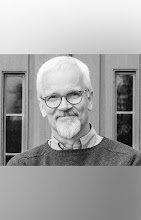
Douglas Bond, author of dozens of books, directs the Oxford Creative Writing Master Class. Contact him about the next OCWMC at bondbooks.net@gmail.com




 Posts