Thursday, May 22, 2014

Magnifying or Mangling the Word of Truth: A Tale of Two Preachers

Same Text Different Message
Summer Vacation and Visiting Churches
This post is an excerpt from author Douglas Bond's forthcoming book, GRACE WORKS (And Ways We Think It Doesn't), (P&R, 2014)


VISITING DIFFERENT CHURCHES on summer vacation can be both a healthy rebuke and a rich blessing. When we encounter joyful reverence in worship and a Christ-centered ministry where we did not expect it, the monster of our pride is confronted; we’re not the only ones who get it right after all. Getting out of our cave and enjoying fellowship with God’s people in a different community, in a different denomination, can help correct our tendency to think that we are members of an exclusive club, that we alone rank as initiates.

My family and I had an uncanny experience while on a recent summer vacation. Two consecutive weeks we visited two different churches, many miles apart and neither from the same denomination. Two very different preachers (neither knew the other), with different gifts, different levels of public speaking skill—and here is the uncanny part—both preaching from the exact same text of Scripture!

Two Kinds of Preachers

Unbeknown to either preacher, that experience was a remarkable demonstration of how the Bible can be disastrously mishandled. These two men represented in flesh and blood the two kinds of preachers: one zealous for finding and elucidating what we must do; the other zealous for discovering and adoring Christ for what he has already done and continues to do in us by the free grace of the gospel.

Hearing those two sermons back-to-back cemented the problem in my mind. Consider with me briefly 2 Peter 1:1–11, the biblical text from which both preachers preached two very different sermons: "Simeon Peter, a servant and apostle of Jesus Christ, To those who have obtained a faith of equal standing with ours by the righteousness of our God and Savior Jesus Christ: May grace and peace be multiplied to you in the knowledge of God and of Jesus our Lord. His divine power has granted to us all things that pertain to life and godliness, through the knowledge of him who called
us to his own glory and excellence, by which he has granted to us his precious and very great promises, so that through them you may become partakers of the divine nature, having escaped from the corruption that is in the world because of sinful desire. For this very reason, make every effort . . ." (1:1–5)

An engaging speaker, the preacher of the first sermon on this text was witty, relational, a fellow who clearly wanted to connect with his flock.

Same Text, Different Message

The first preacher read out the text and then spent two or three minutes hastily summarizing the opening four verses, as if Peter were just giving perfunctory, introductory chatter, “Hi, folks, how’s it going?” sort of material. We heard nothing about Christ’s righteousness (1:1) being the means of obtaining faith, nothing about grace being multiplied to us (1:2), or God’s “divine power” granting to us “all things that pertain to life and godliness” (1:3), nothing about God “call[ing] us to his own glory and excellence” (1:3). And nothing about God granting us in Christ “his precious and very great promises, so that through them” we are being made holy like Christ and so we will escape the corruptions of sinful desire (1:4).

It is no exaggeration to say that this misguided pastor spent virtually no time at all expounding the meaning of these magisterial proclamations. Eager to get on to the word effort (1:5), he settled into the important part of his sermon, where Peter was saying what we must do. It was as if Peter had not grounded what followed in verses 5–11 in the phrase, “For this very reason” (1:5), thereby rooting everything that follows in the doctrinal indicatives that the preacher just skipped over.

The sermon that followed fell somewhere between the relational and the therapeutic, often on the menu of the broad evangelical pulpit, and the covenant moralism gaining steam in some reformational pulpits. This well-intentioned preacher did what so many preachers do when they open their Bibles. They latch onto what they can urge their congregations to be up and doing. But he neglected the glorious foundation: what God has already done in Christ. It was tragic but, alas, all too common.

Godliness Grounded in Christ

One week later, many miles away, we listened as the second preacher invited us to turn to 2 Peter 1:1–11, the exact same text as the week before. I passed the word to my wife and children for us all to sit up and pay particular attention. Clearly God our Father in his kind providence wanted us to learn something particular from this passage of his Holy Word. "Simeon Peter, a servant and apostle of Jesus Christ, To those who have obtained a faith of equal standing with ours by the righteousness of our God and Savior Jesus Christ: May grace and peace be multiplied to you in the knowledge of God and of Jesus our Lord" (1:1–2).

There was nothing perfunctory about what followed. To this preacher Peter’s opening words were not to be skimmed over lightly. They were the foundation on which not only the next paragraphs were built, but also the remainder of the epistle. He took pains to root the coming imperatives in the gift of
faith and the “righteousness of our God and Savior Jesus Christ” (1:1). He proceeded to unpack the riches of this phrase, just how glorious the righteousness of Jesus actually is, to thrill us with the wonder of imputed righteousness. And then he developed what Peter was getting at when he addressed his readers with those words, “May grace and peace be multiplied to you in the knowledge of God and of Jesus our Lord” (1:2). With wonder at saving mercy, he further rooted what followed in grace, given and overflowing in the saving knowledge of Christ secured and promised in the gospel.

By this time in the sermon we had heard the previous week, the minister all about works was elucidating what self-control looked like in marriage, in parenting, in the workplace, in politics, in cultural engagement. And then he really warmed to his address when he launched into the need to diligently “confirm [our] calling and election” (1:10), because it’s all contingent on us fulfilling our part and doing all that Peter is warning us we’d better be up and doing—or else. Listeners to this kind of preaching are left bewildered: election must just be a broad-sweeping covenantal thing for the group, but as far as the individual is concerned, it’s so uncertain that we’d better try harder or we may in the end forfeit the whole enchilada.

Sanctification Rooted in the Redeemer

Meanwhile, in the second sermon, the one rooted in the imputed righteousness of Christ and the grace of the gospel, we were hearing that “his divine power has granted to us all things that pertain to life and godliness, through the knowledge of him who called us to his own glory and excellence, by which he has granted to us his precious and very great promises, so that through them you may become partakers of the divine nature” (1:3–4).

In other words, the pastor who cared about grace was actually expounding the text, taking Peter’s inspired words seriously and thereby rooting sanctification in what the divine power of God has already accomplished in the gospel. As he rounded up on his conclusion, he pointed to the larger context of Peter’s letter; the apostle would end the book as he began it, in an inclusio of grace, “Grow in the grace and knowledge of our Lord and Savior Jesus Christ. To him be the glory both now and to the day of eternity” (3:18).

Some are hasty to claim that preachers who care so much about grace will go light on holiness and sanctification. But a faithful preacher of grace knows that his flock will never be able to fulfill the imperative commands of the Bible without enabling grace. Precisely because he’s so committed to the sanctification of his flock, he will never, never want his congregation to hear imperatives disconnected from their doctrinal foundation in the power of God by the grace of Christ in the gospel.

The best theologians and preachers always get this right. They are careful to be like the apostles, never diminishing the power of God and the grace of God when they preach holiness and sanctification. In a sermon, Sinclair Ferguson put it better and more succinctly than most: "We must never separate the benefits (regeneration, justification, sanctification) from the Benefactor (Jesus Christ). The Christians who are most focused on their own spirituality may give the impression of being the most spiritual . . . but from the New Testament’s point of view, those who have almost forgotten about their own spirituality because their focus is so exclusively on their union with Jesus Christ and what He has accomplished are those who are growing and exhibiting fruitfulness."

I am confident that the first preacher, the one who skipped over the Benefactor to get to the benefits, had the best of intentions. He probably wanted to see more holiness, more piety in his congregation, perhaps especially among the young people. And so he exhorted with zeal their need to grow in self-control, in virtue. But he skipped over the foundation; he failed to dazzle his congregation with Jesus the Benefactor, the source of self-control, virtue, and the rest. Ironically, inverting the priority never produces the desired result: true godliness.

Historically speaking, whenever the piety of a particular group is focused on our spirituality that piety will eventually exhaust itself on its own resources. Only where our piety forgets about ourselves and focuses on Jesus Christ will our piety be nourished by the ongoing resources the Spirit brings to us from the source of all true piety, our Lord Jesus Christ.2

Which One Are You?

That unexpected episode in our summer vacation demonstrates the two kinds of preachers: one hones in on what we must do (the benefits of grace), while the other grounds the benefits and motivates his congregation to godliness by placarding Jesus Christ the Benefactor.

Which one of these men are you? Which one of these men is your pastor? Which one of these men do you resemble when counseling the wayward, when disciplining your children, when engaging culture, when nurturing loved ones in the Word of God? When confronting sin in your own heart?

This post is an excerpt from Bond's forthcoming book, GRACE WORKS (And Ways We Think It Doesn't)

Tuesday, May 20, 2014

A Face for Radio--Interview, Knowing the Truth

Author radio interview with Dog

The Poetic Wonder of Isaac Watts [Listen to interview in archive at http://www.sermonaudio.com/playpopup.asp?SID=520141226371&lo=true]
TUESDAY, MAY 20, 2014Posted by: Knowing The Truth Radio Program | more..1,050+ views | 60+ clicks
"Knowing The Truth" with Pastor Kevin Boling is a live, call-in radio program providing Doctrinal Dialog, Cultural Commentary and Insightful Interviews with some of today's foremost Christian authors and leaders.
To listen live go to www.ChristianTalk660.com
In an age of simplistic and repetitive choruses, many churches are rediscovering the blessing of theologically rich and biblically informed songs. In the latest addition to our A Long Line of Godly Men Profile series, Douglas Bond introduces us to Isaac Watts, “the father of English hymnody.” Douglas Bond urges Christians to delight in the grandeur, beauty, and joy of Watts’ poetry. We pray that you would regain a sense of God’s majesty as we celebrate the God-given poetic wonder of Isaac Watts.

My guest on the program today will be Douglas Bond.

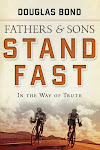
Douglas Bond is the head of the English Department at Covenant High School in Tacoma, Wash., where he teaches literature, writing, and history. He has written numerous works of fiction, many of them for young people, including the Crown & Covenant trilogy and the Faith & Freedom trilogy. Among his nonfiction titles are Fathers and Sons Stand Fast in the Way of Truth and Fathers and Sons Hold Fast in a Broken World.

The “Knowing The Truth” Radio Program, originates in Greenville, SC on a 50,000 watt station covering all of South Carolina as well as parts of North Carolina, Tennessee and Georgia. The program airs live on Tuesday, Wednesday and Thursday from 11:00am – 12 noon EST on Christian Talk 660AM and 92.9FM. Additionally, the program is broadcast live nationally via video webcast on SermonAudio.com.

The host, Pastor Kevin Boling, has conducted over 500 interviews with some of today’s foremost Christian authors and leaders. His guests have also included presidential candidates, ambassadors, senators, congressmen, governors and other political and social leaders.
A Toll-Free Number (1.888.660.9535) is open during the program to take your questions or comments.
Note: You can watch a live video webcast of the Knowing The Truth Radio right here on SermonAudio.com or in the SermonAudio Mobil Device App (download it for FREE in Apple App Store). Also a live audio only stream is available by going to www.ChristianTalk660.com and clicking on the Listen Live button.
Kevin Boling Kevin Boling
Web Link:  CLICK TO FOLLOW EXTERNAL LINK

Tuesday, April 29, 2014

My CHS Students Win 9 of 18 Awards!

CHS Writers NOT in the dog house!
In the regional Writing and Art contest, Our Own Expressions, sponsored by the Pierce County Library Foundation and the Morning News Tribune, with more than 1,200 entries, my writing students managed to win 6 of 12 awards in the short story and poetry categories. And over-all CHS students won 9 of 18 high school cash prize awards (including sweeping the drawing category for 9th and 10th grades--way to go Eva Battle, CHS art teacher extraordinaire!). 
 
CHS students will read their winning short stories and poetry and comment on their drawings at an awards ceremony held on the campus of Pacific Lutheran University later in May. 
 
Note below that Hana Jang, 1st Place in the short story category, is writing fiction in English as a second language; special congratulations to you, Hana!

SHORT STORY:
Grades 9 and 10
1st Place - Abbie Welch, Covenant HS
2nd Place - Noah Peever, Home School
3rd Place - Karli Stevenson, Covenant HS
Grades 11 and 12
1st Place - Hana Jang, Covenant HS
2nd Place - Jessi Pitts, Emerald Ridge HS
3rd Place - Casey Morrison, Covenant HS

POETRY:
Grades 9 and 10
1st Place - Fiona Macdonald, Gig Harbor HS
2nd Place - Myles Moulton, Bellarmine Preparatory
3rd Place - Claudia Speakes, Kalles Junior HS
Grades 11 and 12
1st Place - Claire Summa, Gig Harbor HS
2nd Place - Matthew Pfefferle, Covenant HS
3rd Place - Christina Lyro, Covenant HS

DRAWING:
Grades 9 and 10
1st Place - Bao Nguyen, Covenant HS
2nd Place - Abbie Welch, Covenant HS
3rd Place - Nani Woodard, Covenant HS
Grades 11 and 12
1st Place - Chelsie Conroy, Bonney Lake HS
2nd Place - Hanbi Hyon, Lakes HS
3rd Place - Cole Maurmann, Home School

Friday, April 25, 2014

INKBLOTS--Unexpected endings, pig wars, and gut-level writing

"O my head!" I sometimes feel the same when writing
Inkblots on a spring evening, rain, sun, rain, sun, rain, rain, rain, sun, rain. Five gentlemen and Dr Rogland joins us this evening and the humor already has begun, former colleague of mine, now retired, author of two published books and several manuscripts stewing away in their juices. Welcome. I propose that we try to keep our comments tight and our reading and explanatory to our ten minutes (okay, give or take). And that we continue the dialogue and comments on the blog comments below, which has the added benefit of bringing our distance 'Blots into the discussion. Had a reader from Denver just this week interested in joining us by skype (we haven't figured out logistically how to pull that off within time constraints) and others want to participate in some way. We invite 'Blots and others to comment below with thoughts or questions on writing.

Patrick is in the dock. We decided last week in the interest of getting more of the big picture that we would have Patrick attach a short story to us all and that we would read and critique his whole story tonight. Alan commented on Patrick's mastery of dialogue, is the man as bad as he appears, genetic engineering and zombies, and a weird twist at the end. I thought he should exploit the computer journal dialogue more; started with a more significant role for the Dante or Beatrice and then it faded. Use this far more, in my opinion. Have interruptions from Mary or Dianne, or Nick (by the way, you need to develop Nick more fully; he came out of nowhere near the end, for me). I felt like there were some awkward transitions and a difficult entry to the story. With your explanatory last meeting, it made sense and we were hooked right off, but when I read it on my own, I felt like it was too clipped a beginning, like I needed more context at the gate. Patrick kind of likes it that readers don't entirely know what is going on (more like real life?). Okay, but the contrivance must work for the reader or it won't get finished or reread. Alan compared this piece to Dostoyevsky's Notes from Underground, sort of a short story prelude to Crime and Punishment.

Alan read a blog entry (what he does when he doesn't feel the forward momentum on one of his poetry or fiction projects). This one about a commemoration of the Pig War. We are being Pacific Northwest heavy these days, not by design, just is what it is. The blog begins with a summary of the history leading up to the Pig War conflict, launched when an American settler shot a Hudson Bay pig rooting in his potatoes on San Juan Island. The 1859 dispute was on. The proposed commemoration meal? Pork and potatoes, what else? Alan writes in a chatty manner that flows naturally and is easy to listen to, and filled with fascinating information, in this case, about our local history. Alan is one of those high achievers who are intrigued by everything around them, and never weary of learning new things. Bob pointed out that it could have slipped into broad satire but Alan wisely steered clear of this. Flippancy in print as well as in speech rarely works. As Lewis observed, flippancy "builds up the finest armor plating against the Enemy [God]." Alan is our man who uses a manual typewriter but has not figured out how to practically manage using when he blogs (though he told us some guys are doing it).

John is going to read a little thing he wrote. Parable of the foolish shepherd. As I listen to this, knowing some of the background and the catalyst to John writing it, I am reminded of what Lewis says is the best motive for writing, the motive that will produce the most honest and authentic literature: "Write what you need." If you will allow me to say it, I think John was largely motivated by what he thought someone else needs instead of writing what he needs. We all do this, at least in first draft; that's why the key to good writing is three-fold (at least) rewriting. Patrick suggested using a fable structure, like the three little pigs, three efforts to solve a problem, with three different outcomes. An intriguing organizational structure. John felt like it was a bit harsh, and commented that he wrote it a while ago and might alter and revise it. John realized that he made the servant too perfect and the shepherd the bad guy, almost always an over simplification (like all generalizations). Reminds me of Steinbeck's The Pearl, which he lays out and declares up front to be a parable, a story told with a didactic purpose. We discussed what parables are. Metaphor, this is like that, a story that is like the perceptual truth under consideration, the common thing (vehicle of the metaphor) being something that we know, the high thing (the tenor of the metaphor) being the upper-story meaning, the thing we know less, often in the metaphysical realm of reality. Bible is replete with this. A story that illustrates the instruction being given. Poe, on the other hand, thought that poetry in any case ought not to have a didactic purpose, "The heresy of the didactic," he termed it. But then he was referring to poetry (arguably all imaginative literature) and he was Poe... not the Holy Spirit. I restrained myself from getting into this, but I have engaged in lengthy discussion with other authors about how the best literature penned by pagans or confessed Christians is always purposeful, instructive, is informed by the author's deep concerns about the big issues of life (and if it appears that there is no instructive purpose, that too is indicative of how the author's presuppositions about life and meaning. Being devoted to secularism is no less religious than being devoted to Jesus Christ). 

I read from my Noble Savage novel on the Indian War of 1855-6 in the Pacific Northwest, which I have not touched for a month (with the UK tour to lead and then get back in the saddle and attempt to stay in it). My particular concern is getting dialect right at this point. Noclas is the minor hero (or it may be more major but he is not the principal protagonist), black and a lover of the Bible, and he needs to sound like a black man in the mid eighteen hundreds. Tough one, but I got some valuable input from my brother 'Blots on getting closer to achieving the verisimilitude in his voice that I'm after. Alan pushed back very helpfully on Junebug being too clever, gifted, and hard working for an eight year old. We discussed the way frontier children who had no parents in the picture were forced to grow up really fast--or die. I have some work to do and appreciate so much the critique of these gentlemen. A useful (and fun) 'Blots and welcome again to Bob Rogland for joining us; hope to see you again in the future.


Thursday, April 10, 2014

INKBLOTS, arrogant scientist, Russian governess, Indian culture, and Vietnam

Dr. Wolfe, scientist devoid of humility
Inkblots with five gents this evening, warm sunshine and spring birds flitting and singing on the wisteria at the Bond's gate. Maryhill red and Columbia Crest Amitage all around.

I commented about authentic integration of our writing. Writing what we need rather than trying to please either secularist (and so feel like we need to paste in sketchy material), or the story somehow does not include a gospel priority but the writer feels like it ought to, so he pastes in some Christian lingo to check that box. None of this is good for fiction writing, for compelling story telling, nor is it good for the gospel. I believe the gospel is absolutely my highest priority when I write anything, and I hope that that means it is so integral and essential to where I'm going in the fiction, every detail subordinate to the glory of God, that the story would not be complete, would not work, would be empty and shallow, without leaving the reader longing for truth, heart sick for it. Imagine Jesus telling a parable to titillate secularists or to paste in a Christian message as an obligatory afterthought. Christ's parables, his story telling, was a unified whole, every imaginative device, every detail, marshaled to unmask the problem and placard its only solution.

Alan leads off with a poem he has written that reminds me of Henry Wadsworth Longfellow's Hiawatha from the shores of Gitche Gumee, musical and lyric. Alan read without prelude, no explanation, just launched in. It was magical. After he told us it was autobiographical, inspired by an incident in his life, an uncle who passed away and at his funeral just this week he met another relative; conversation with him led to this prose experiment in an effort to find his way into his fiction work shared recently. Patrick commented on balsam and rock, used repetitively, so it seemed but maybe intentional. All this led into a discussion of Indian culture then and now.

Patrick says his problem is too much material, very fertile times for his imagination lately, it sounds like to me. He has been inspired by author Gene Wolfe. Wolfe wrote a series of stories with key words woven in throughout. Dr. Wolfe and Island of Death, is the name of the story. Felt like it should be a journal but doesn't like the style because it lacks the interactive character of dialogue. What a crack-up! Programmed dialogue between a computer Dante and a pompous scientist, about another scientist who has been stealing or plagiarizing from Dr. Wolfe. Reporters and journalists are found to be the most unreliable witnesses. Willingly deceive. I love the fluidity of your prose, personality coming through clearly through tone of voice, asides, and witty quips. This is one in a series of intriguing short stories, maybe a bit longish for short stories, the largest being 13,000. Alan suggested that his reading group (Who, what, when, where, and wine) read Patrick's short stories and offer their thoughts and reactions.

Doug Mc suggested that we can reconfigure what we do at least some of the time. What if one guy sent out a chapter or short story to all and then we read and came together to critique and comment on the whole story rather than just a ten minute read. Doing Patrick's yarn first this way. Dougie is doing a further episode in his Vietnam yarn, Bruce the hick is reading World Book Encyclopedia then distilling it in his colloquial drawl. Vietnam peasant featured in this episode. What is raspberry and cinnamon that is French in the pastry department? The French and German conversation is a good idea, but I'm not sure if you got everything out of it that was there. The prayer and the Amen came out of order to my thinking. He went on asking for a speedy conclusion to the hostilities, and then the Amen at the end, not first. The background to the history of the conflict does drag a bit in my opinion. I think you need to tighten it up a bit, give us the essential facts only. Maybe you're trying to give us too much all at once here. Could you spread it out, parse it out over more conversations than just this one? Avoid the history bomb, laying out a body of historical context but that is not actually a genuine part of the fiction. Give the reader only what is essential to know at this point in the yarn, the reader wanting more, will read on, then give them more as it is essential to the tale itself. Have the listener receive it, disagree with it, push back in his thinking. Make the history background essential to the fiction you're telling.

I commented about authentic integration of our writing. Writing what we need rather than trying to please either secularist (and so feel like we need to paste in sketchy material), or the story somehow does not include a gospel priority but the writer feels like it ought to, so he pastes in some Christian lingo to check that box. None of this is good for fiction writing, for compelling story telling, nor is it good for the gospel. I believe the gospel is absolutely my highest priority when I write anything, and I hope that that means it is so integral and essential to where I'm going in the fiction, every detail subordinate to the glory of God, that the story would not be complete, would not work, would be empty and shallow, without leaving the reader longing for truth, heart sick for it. Imagine Jesus telling a parable to titillate secularists or to paste in a Christian message as an obligatory afterthought. Christ's parables, his story telling, was a unified whole, every imaginative device, every detail, marshaled to placard the problem and its only solution.

John reads from his Russian yarn. Working on altering the governess so she could be a Huguenot working for a Russian family. Problem of getting Russian down fluently when coming as a French speaker. What is your narrative objective for developing her character? What is her primary role in the story line? All fiction is a contrivance; it is the author's task to convince the reader that the contrivance is authentic, that it works, all skepticism gone.

Tuesday, April 8, 2014

Oxford: student reflections on the tour

CJ led off with appreciation for the time of singing Saturday night with host families in Scotland 

Playing British monopoly Libby found unique with all the British locations

Sarah D was particulate moved by the rich heartfelt praying of Scottish Christians

Shauna was impressed by God's creation seen at Hadrian's Wall. "Made you feel small but safe in the Creator."

Host family tried to replicate an American thanksgiving dinner for Sarah W

Anne appreciated Churchill's Chartwell. And expressed gratitude for Mr. Hannula and Bond

Isabel and Breah appreciated seeing the Holy Spirit at work at Cambridge Presbyterian, and the contrast with the rote formalism at Anglican Canterbury service

Don loved seeing the students interacting and enjoying each other and the leaders guiding them (one of our great parent chaperones, couldn't do it without you)

Evangeline enjoyed the chaperone times together and seeing God's providence bringing us all together for such a warm and enjoyable time spent together

Gareth believes he can sleep anywhere after the night crossing to France

And prayers of heart-felt thanksgiving offered by many conclude our last devotion time of the tour

Off to CS Lewis' church, grave, and his home the Kilns in Headington Quarry


Thanks for all your prayers! God our Heavenly Father has wonderfully answered them. 

Any adults and families eager for a similar adventure, I have a few places left in our Knox @ 500 Scotlad Tour in June. Visit www.bondvoyage.webs.com


We just saw Queen Elizabeth--video

Coming out of Runnymede, suddenly a helicopter went over, blue lights flashing a vanguard of official motor cycles roared by, a flurry of other official looking vehicles--and then a custom black Rolls Royce (I think) passed in front of the coach; wearing one of her lovely hats, sat the queen in the back seat. Notice on the video her (a) hand about to be raised in an English wave. Now if only she had invited CHS students to tea at Windsor Castle. Maybe next time.


http://youtu.be/mTxxRpZTAAw


CHS at Runnymede