Carts Before Horses
Stopping by for a chat after school, one of my fresh, new
English students shared an idea he had for a poem. “How about if I write
couplets organized around what we do and then what God does?” I looked closely
at him. Surely he had to be kidding. But there wasn’t the slightest evidence
that he was aware he had said anything out of order.
After thinking about it for a moment, I asked him if it
wouldn’t be more accurate to reverse the order. He frowned and said, “What I
mean is, we are wise and then God rewards us.”
One of the refreshing things about working with young people
is that they often speak and write frankly about what they have been hearing.
One thing was clear. However well intentioned the spiritual influences in this
young man’s life were, what he had been hearing was that he needed to do
something and then God would reward him for doing it. Whatever the good
intentions of his parents and his minister, the message this young man had
heard had fatally inverted the order of things.
“But if we are wise,” I asked him, “how did we get that way?”
I explained further to him that there was only one way I could see that he
could keep the order of our works and God’s rewards in his couplets. His poem
could feature what we do: our sins of thought, word, and deed; even the
splendid sins of our good works—all that could form the first part. And the
second part could then feature what Jesus has done once for all time in the
gospel: united us with himself in redemption, justification, and imputed
righteousness, forgiving us all our sins by taking our guilt and punishment on
himself on the cross. That would make a grand poem, a hymn of glory to God for
his amazing grace, and it would be so because it kept the order of salvation in
its biblical order.
After growing up in a Christian home and attending church and
youth group throughout his entire life, nevertheless, this fifteen-year-old
young man was caught in a classic theological blunder, one entirely destructive
to the gospel. He had confused what theologians term the ordo salutis, or the order of the different components of
salvation. By inverting the order, by getting the cart before the horse, he had
unwittingly done violence to the gospel.
Order Is Everything
Just as in making an omelet, the order is everything. Cook
the eggs before you break them and you have boiled eggs but not an omelet.
Attempt to whip them before cracking them and you have an inedible mess. Wait
until the eggs hatch into chicks and go to work on them—and you have roadkill.
Ridiculous as this sounds, many of us do the same thing in our thinking about
the ordo salutis, the order of
salvation.
Theologians since the Reformation have described the order of
the components of salvation in this way: predestination, calling, regeneration,
faith, repentance, justification, sanctification, and glorification. But let’s
be honest: most of us don’t naturally think of the order in this God-initiated
way. We are more inclined to give the order from our finite human vantage
point. After all, that’s the way we experienced things. Hence, we prefer to
think that
our faith and believing come before regeneration, for example, and our own
persevering in obedience comes before, and is a
contingency of, glorification. Put more simply, we tend to think that salvation
has to be something to which we contribute something—as my student was
thinking.
Faith Out of Order
One of the more common ways justification by faith alone gets
out of order is when we misunderstand faith to be man’s part in salvation. In
answer to Paul’s question, “Who makes you different from anyone else?”
(1 Cor. 4:7 niv), many
evangelicals today without hesitation would say their faith makes them
different from unbelievers. I posed this question to a fellow who showed up at
a community group meeting in our home one evening. “My faith,” he said, as if
it were obvious. “What makes me different from an unbeliever is my choice to
believe. I heard the message. It made sense to me, and I chose to believe it.”
I attempted to help him see that this meant he was the final arbiter of his
salvation. His will and choice were the things that set him apart from the
unbeliever, not God’s will and choice. He confidently reaffirmed that it was
his will and choice.
When talking about God saving sinners, something seems rather
out of order when the final thing that makes the difference in that salvation
is something the sinner does. It is precisely what Paul is disabusing the
Corinthians from thinking about themselves. “For who makes you different from
anyone else? What do you have that you did not receive?” he asked them. “And if
you did receive it, why do you boast as though you did not?” (1 Cor. 4:7 niv).
The question itself reveals its own answer: everything we are
and have comes as a gift from God; how much more is our eternal salvation from
first to last a gift of God. Any doctrine of salvation that points us away from
the will and purpose of God, the finished work of Christ, the effectual
regenerating work of the Spirit, is just another self-salvation endeavor that
says, “Do this and live”—the same message that every
other religion presses upon its adherents.
What is happening here is another way we get things out of
order. When we give sinners credit for exercising saving faith as an act of
their free will, we are making the philosophical blunder of drawing ultimate
conclusions from only what is immediately verifiable to our limited sight. We
observe sinners as they hear the gospel, fall on their knees, and ask Jesus to
save them, and Jesus does save them.
From our immediate observation, we leap to the
conclusion—against mountains of biblical evidence—that there was a cause and
effect being acted out before us. What we could observe was the sinner’s
repentance and faith, and we draw the conclusion that God passively waited to
save him until he decided of his own free will to believe in God. What we could
not observe, however, was the divine perspective, the saving operation of the
Father, the Son, and the Holy Spirit.
Faith in Order
If we turn faith into a condition of salvation that man must
on his own hook fulfill, there’s no other way to slice it than that our faith
is functioning in the role of our doing something. Protest all we want, faith
understood this way is equal to merit. If God chose you because he passively
foresaw that you would believe, your believing is what makes you different from
the unbeliever, and it would make sense for you to boast in your faith.
When the Reformers preached justification by faith alone,
they did not mean what many evangelicals mean by faith alone: salvation is a
responsible partnership between God and man, and faith is man’s part in
salvation. God does his part, and it’s up to the sinner to come up with enough
faith to close the deal.
They used to get this right in Amsterdam, Geneva,
Edinburgh, and Boston, and in all these places they either produced or adhered
to carefully crafted confessions of faith in which they precisely defined the
language of the gospel, including the meaning of the word faith itself. One of the finest of those statements we find in the
Westminster Larger Catechism.
Question 73: How doth faith justify a sinner in the sight
of God?
Answer: Faith justifies a sinner in the sight of God,
not because of those other graces which do always accompany it, or of good
works that are the fruits of it, nor as if the grace of faith, or any act
thereof, were imputed to him for his justification; but only as it is an
instrument by which he receiveth and applieth Christ and his righteousness.
Why were the Westminster divines so careful with their
language here? They knew that error in our understanding of what faith is would
corrupt the gospel. They wanted to make absolutely certain that everyone
understood that faith is the instrument of receiving and applying Christ’s righteousness,
but what “always accompany it”—that is, the good works that flow from faith—
are not a
part of justification. They chose their words carefully here and throughout the
confessional standards, precisely to avoid the error of including what faith
produces (the fruit of good works) with faith alone in the imputed
righteousness of Jesus alone.
Screwtape to Narnia
All the Protestant confessions make it crystal clear that
faith is not something man must drum up, the deal-closing merit we must
contribute, by an act of our free will, to finish our conversion. In short,
there is no equivocation about the order of faith and regeneration in the
confessions of the Reformation.
But our understanding of these things is often a process. I
find it illuminating to trace the progression of C. S. Lewis’ thinking on
the
ordo salutis, and on faith and
man’s free will. In 1942, when he had been a Christian for eleven years, Lewis
wrote, “The Irresistible and the Indisputable are the two weapons which the
very nature of [God’s] scheme forbids Him to use. Merely to override a human
will would be for Him useless. He cannot ravish. He can only woo. He is
prepared to do a little overriding at the beginning.”
In
fairness, we must remember that Lewis wrote this in the persona of his infernal
demon Screwtape, who, Lewis warns in his preface, does not always get things
right. Nevertheless, Lewis here and elsewhere makes philosophical arguments in
favor of man being capable of making salvific choices from his free will. He
wrote that God “leaves the creature to stand up on its own legs—to carry out
from the will alone duties which have lost all relish.”
When we look closely we can begin to observe that writers are
sometimes at their best when writing poetry or imaginative fiction—and still
more at their best when they have matured in their understanding of the depth
of human depravity and the wonder of the sovereign, electing love that alone is
capable of rescuing dead sinners. In a book published in 1953, fully eleven
years later, Lewis seems to have developed in his understanding of the doctrine
theologians term the
effectual calling.
In
The Silver Chair, when Aslan tells
Jill that he called her out of her world, Jill disagrees. “Nobody called me and
Scrubb, you know. It was we who asked to come here. Scrubb said we were to
call . . . And we did, and then we found the door open.” Jill,
like most, mistakenly thought that she was calling by her own free will and
that it was her calling that had opened the door. A now wiser Lewis has his
Christ figure, Aslan, reply, “You would not have called to me unless I had been
calling to you.”
Written twenty-two years after his conversion, Lewis here wonderfully
illustrates the
ordo salutis: that
God sovereignly and effectually calls and awakens dead sinners first, and then,
and only then, they call on him to save them.
Similarly, in
The
Magician’s Nephew (1950), Lewis has Aslan utter “a long single note; not
very loud, but full of power. Polly’s heart jumped in her body when she heard
it. She felt sure that it was a call, and that anyone who heard that call would
want to obey it and (what’s more) would be able to obey it, however many worlds
and ages lay between.”
Here Lewis gives an imaginative and incremental explanation
of the order of salvation: God’s call comes first and is heard only by some,
but those who hear his voice calling them, not only want to obey his call,
“(what’s more)” they are enabled by the grace of God alone to heed his call.
In his spiritual autobiography Lewis
attempted to sort out what
was happening when “God closed in on me,”
as
he called it. Reflecting back on his conversion and new found freedom in Christ,
Lewis does not describe what happened in the terms he has Screwtape use—God
never uses “the Irresistible or the Indisputable.” He marvels at the divine
mercy that compelled him to come in, and concludes, “God’s compulsion is our
liberation,”
which sounds much closer to a man who believes it was the sovereign power and
authority of God that liberated him from his sins and gave him freedom in
Christ.
But, at the end of the day, does any of this matter, really?
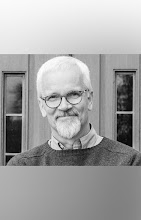
Douglas Bond is a Ruling Elder in the PCA. This post is an excerpt from his new release,
GRACE WORKS (And Ways We Think It Doesn't) (P&R, 2014). Click on
link to hear a radio interview on this new book with Bond and Kevin Boling at Knowing the Truth Radio




 Posts
Posts