Written by Robert Treskillard on December 28th, 2013 @ 12:51:00 pm (46292 views)
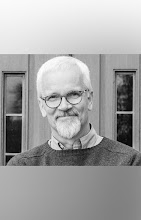
As part of a previous contest, I interviewed award winning author Douglas Bond, and wanted to re-post the interview here for all my loyal blog readers.
This is a great pleasure for me, because Doug and I met at the 2009 Reformation Day Faire up in Peoria, IL. Doug was speaking on the life of John Calvin, and our family was blessed through his gifted teaching and books. We’ve been able to see each other three times since then: twice at conferences in St. Louis, and then again when I flew out to Seattle for the ALA Mid-winter for a book signing.
Another fun detail is that Doug and his wife are great friends with a couple that my wife and I used to work with up in Twin Cities, Rick & Lisa Demass.
So, now for the interview!
TRESKILLARD: At what age did you realize you wanted to write? And if I may ask, what was the first creative thing you remember writing?
 BOND:
I’m not one of those guys who had a passion for writing from my
training-wheel days. Not me! In high school I did everything I could to
get out of writing–hated it. Writing was too much work. In Journalism
class I signed up to be the photographer in large part so I could ditch
out of writing articles. Sorry to disappoint readers who are young,
passionate, aspiring writers. You’ll probably chuck my books out the
window now.
BOND:
I’m not one of those guys who had a passion for writing from my
training-wheel days. Not me! In high school I did everything I could to
get out of writing–hated it. Writing was too much work. In Journalism
class I signed up to be the photographer in large part so I could ditch
out of writing articles. Sorry to disappoint readers who are young,
passionate, aspiring writers. You’ll probably chuck my books out the
window now.
So, all that to say, I’m a late bloomer as a writer. In college, however, I was asked to write an article for the college newsletter. Meanwhile, I was reading Spurgeon and being fascinated with his command of words. I really enjoyed writing that article (truth be told, it probably was terrible, full of fragments, split infinitives, and pedantic ugliness).
Later in graduate school I found that I absolutely loved doing the research and then writing my master’s thesis (it was supposed to be in the 35 page-ish range; mine wound down at 118 pages). Next I began writing some articles for magazines, ones that paid me for their right to publish the articles. That was fun. Shortly after that I began secretly working on writing fiction; I would slink around like a housebreaker, concealing what I’d attempted to write from prying eyes, terrified that sometime, somewhere, someone would find me out.
TRESKILLARD: Far from chucking your boots out the window, they’ll probably be bronzed one day, Douglas … you bloomed at just the right time! So, for question two, which authors, including Spurgeon, have had the strongest influences on your writing?
BOND: I know it seems almost cliche to admit it, but the imaginative works of C. S. Lewis have probably done more to inspire me than any other single author. I have also found great inspiration in the historical fiction of Rosemary Sutcliff, the Swallows and Amazons of Arthur Ransome, Flannery O’Conner, Shakespeare, Chaucer, Milton, Dickens (especially his Great Expectations). I would follow that line-up with the disclaimer that I don’t attempt to write like any one of them, though their works have significantly helped in the on-going process of finding my voice as an author.
TRESKILLARD: That’s quite a lineup of influences, and good company to be in. For the next question, what’s your view on e-books and the new publishing revolution? Are there any self-published e-book plans in your future?
BOND: E-books and the publishing revolution. I love books. My living room, front hall, dining room, bedrooms–every room in my house has books, lots of books, in them, old leather bound ones, new releases, and almost everything in between. I’m conservative by nature and the quintessential tech-tard, so put that together and you might expect me to be a teeth-champing opponent of e-books and the rest. But to be so would be akin to the Renaissance collector of ancient manuscripts setting up a picket line in front of Johann Gutenberg’s house in Mainz, Germany and chanting, “Moveable-type printing–it’s a sin. Move it to the recycle bin!”
Has electronic media changed the way we read and how we process information, maybe even how our imaginations work? I think it has, and not all for the good, I fear. Nevertheless, I don’t see how opposing e-books will solve the real problems. My wife was the first to get a kindle, and even I, techno meat head that I am, have read a few books on my ipad (especially when traveling and doing research abroad).
At the end of the day, however, curling up in front of the fire on a blustery evening, cup of Earl Grey in hand, Bach’s Orchestral overtures playing in the background, and reading a book–a real one, with pages made from trees–will always for me trump the sterility of the touch screen.
TRESKILLARD: Amen! And I love that mock picket-line chant in front of Johann’s house … hilarious! Next up is a question that I don’t intend to be morbid, but rather hopeful. How would you finish the following sentence?
At the end of my life, I want people to remember me and my writing as…?
BOND: Compelling, authentic fiction that when all was said and done left the reader enthralled with Jesus Christ; “I must decrease; he must increase.”
TRESKILLARD: So … If you could have dinner with three people, living or dead, who would they be? And, knowing you, I must also ask the follow-up question of what would you have for dinner?
BOND: That’s a tough question because there are so many I would love to sit down with over a delicious meal and talk and talk and talk. My first would be John Bunyan and his wife (and my wife, of course). I can just picture us sitting around a plank trestle table, wooden trenchers of coarse peasant fare, honey mead to wash it down with, and talking about Pilgrim’s Progress, of course, but I would want to ask him more about his book, The Mystery of Law and Grace Unfolded.
And then a meal with C. S. Lewis and Joy (and my wife, of course) at the Eagle & Child in Oxford (where I have eaten a number of times, but never with Lewis, though reading aloud from his books to some of my students after the meal). We would have steak and ale pie, he and Joy drinking beer, my wife and I, cider (Thatcher’s Gold, if you please), and talking about the change I have observed in his theology of free will from Screwtape (1942) to Magician’s Nephew and Silver Chair (both penned more than a decade later). And I would want to find out just what he disliked so much about most hymns (though I expect being in heaven since 1963 has changed all that). My wife would want to chat with Joy about her knitting, and I think Lewis would not think this unimportant in the slightest–and he would be absolutely right.
I think I would like to sit down with John Knox and his wife at Trunk Close on the Royal Mile in Edinburgh, five children bustling about the place, my dear wife at my side, of course. We would be eating haggis, nips, and tatties, and drinking a Rhone wine he brought over from his time in Geneva. I would want to ask him what he wishes he would have done more of and what he wishes he had not wasted his time doing at all (I suspect, not being from the modern world, he would not entirely understand the second part of this question).
 TRESKILLARD:
Very fascinating! I had at first envisioned one meal with all three
together, but of course three different meals, each appropriate to the
time and person, is much more fun … and having it a family meal and
discussion adds so much as well. Thank you for those details—I almost
felt like I was watching it all happen. And speaking of watching …
what’s this I hear about a DUNCAN’S WAR movie in the works? This is REALLY exciting, and I must know more, so fill us in!
TRESKILLARD:
Very fascinating! I had at first envisioned one meal with all three
together, but of course three different meals, each appropriate to the
time and person, is much more fun … and having it a family meal and
discussion adds so much as well. Thank you for those details—I almost
felt like I was watching it all happen. And speaking of watching …
what’s this I hear about a DUNCAN’S WAR movie in the works? This is REALLY exciting, and I must know more, so fill us in!
Bond: I have gone from excited to cringing over one of my books being turned into a movie. It has been a roller coaster for me. So often when I go to see a movie based on a book I’ve read, the movie disappoints me. And I don’t want that to happen with Duncan’s War. And I especially don’t want the substance to be tampered with in any way; let’s not turn Sandy M’Kethe into a hand-wringing 90s parent. The guys spearheading this movie project won’t do that.
There’s still lots of hoops to pass through for Duncan to go from playacting in the opening scene of the book to actually being playacted in a real movie. But these guys (Phillip Moses, Producer/Director, and James Chung, Art Director, etc.) feel the same way I do about that. Nobody wants to do a lousy movie flop of this book. You’ve heard what John le Carre is supposed to have said, “Watching your book be turned into a movie is like watching your oxen be turned into bullion cubes.” Hence my cringing.
But all that said, they are in the “development and packaging” stage of creating this movie. I’m learning all kinds of new terminology from these guys. And the soft launch at the AFM convention in LA went far better than either Phillip or James anticipated. They were meeting with potential distributors and financiers who seemed very impressed with the grass-roots enthusiasm for Duncan’s War becoming a big-screen film. Over 1,100 likes and lots of people talking about on the fb page (https://www.facebook.com/DuncansWar), and all in about 4 days time. Now they need some deep pockets to make it a reality. Finally, all of this is in the Lord’s able and wise hands, and there’s no better place for me to rest either.

TRESKILLARD: It’s certainly a scary and exciting thing to have this happen … may this process be more like giving juicy steaks that feed hungry souls! So, with the potential for a Scottish movie in the works, it is quite appropriate to ask the next question … If you had to choose one place to live other than Tacoma, where would it be? Britain, Scotland, France, Switzerland, or _________? You’ve written about so many places that I won’t venture to guess the answer.
BOND: That is a good one. Before I answer, I want to pause and think of the line of poetry from Anna Waring, the Welsh poet and hymn writer, “Content to fill a little space if Thou be glorified.” I love traveling. I find it so stimulating to my imagination, and I especially love writing on location. While researching for Hammer of the Huguenots, I wrote in a huge cavern high up in the Cevennes in the south of France where as many as 900 Huguenots would gather in secret to worship the Savior. I sat there in the dark with my iPad and wrote what I was hearing, smelling, feeling, and what it must have been like filled with fugitive worshipers of King Jesus. So right now, I’d say I would want to live with my family in La Roque sur-Ceze, a tiny medieval village in the south of France, near where Huguenots lived and worshiped, suffered and died in the 16th century.
But I really do want to live in a little space where I can glorify the Savior–and after being away I always love coming home to my little corner in the Pacific Northwest.
TRESKILLARD: Your travels definitely add a sense of realism to your novels, and I can’t wait to read that cave scene! Do you have a favorite piece of writing (novel, non-fiction book, short-story, article, poem, or hymn) that you’d like to tell us about?

BOND: I wrote the initial draft of this scene at the early end of my research for Hammer of the Huguenots while sitting in the square around the village fountain at the coastal town of La Ciotat. At that point I wasn’t sure where it would fit in the big story; only later did it find its place near the end of the novel.
BOND: Guilty, big time. The time that first comes to mind (there have been many) is when Sandy M’Kethe was fatally wounded in the rescue in Rebel’s Keep. My father was going through his induction Chemo therapy for AML Leukemia as I was writing the book. He had suffered every complication during six horrific weeks of hospitalization for the mega-doses of chemo they were pumping into his body, with several near-death episodes that brought us to his bedside in the middle of the night. I wrote that scene (I’m starting to choke up recollecting even) with more than verisimilitude informing my imagination; I had just been at my dying father’s side, stroking his brow, holding his hand, praying, singing, comforting and encouraging him with the gospel promises he had taught me. Yes, without apology, I cry like a baby as I write. Which makes it a bit awkward at times. I do a good deal of writing at Collins Memorial Library at the University of Puget Sound near my house. College kids don’t seem to appreciate it when a white-haired dude in his fifties is hunkered over his laptop blubbering like… well, like an old man.
 TRESKILLARD:
That’s a very powerful example, and I can relate. We really do pour our
souls into our writing! For a final question … tell us about the book
you are contributing to the giveaway — HAND OF VENGEANCE. Also, do you have anything new in the works? Any secret projects?
TRESKILLARD:
That’s a very powerful example, and I can relate. We really do pour our
souls into our writing! For a final question … tell us about the book
you are contributing to the giveaway — HAND OF VENGEANCE. Also, do you have anything new in the works? Any secret projects?
BOND: I loved writing this book! Hand of Vengeance, set in 8th century Anglo-Saxon Northern England, is a tale that emerges from the days of the mead hall, the battle axe, and the mounting threat of Viking plunder and pillage along the northern coast of Northumbria. The Lindisfarne Gospels are being crafted an th Venerable Bede is teaching and writing a few mile down the coast. The novel is my first murder mystery–and a tale that explores true biblical romance. Whether you love it or hate it, I doubt that you’ll put it down until the last page. So much enjoyed writing this book.
Today I began writing on my next historical fiction book, set in my backyard–almost literally! I guess it will be sort of a Bond version of some of the favorite frontier stories out there for young adult readers. Mine will have lots of beaver trapping, PNW trading musket shooting, salmon fishing, horses, HMS Beaver steamer for the HBC, small boat sailing, Douglas fir felling, log cabin building, trading and friendship with coastal Indians, frontier tensions between American and British settlers, the Pig War, and the rising storm to the Civil War. A good deal of it set at Fort Nisqually, a short hop from my front door. So no secret about it!
TRESKILLARD: Thank you so much for the interview, Doug. Your new novel sounds like it will be a lot of fun to write … and to read! Any M’Kethe’s involved? Oh wait, that’s another question … this interview might go on forever if I don’t stop.
This is a great pleasure for me, because Doug and I met at the 2009 Reformation Day Faire up in Peoria, IL. Doug was speaking on the life of John Calvin, and our family was blessed through his gifted teaching and books. We’ve been able to see each other three times since then: twice at conferences in St. Louis, and then again when I flew out to Seattle for the ALA Mid-winter for a book signing.
Another fun detail is that Doug and his wife are great friends with a couple that my wife and I used to work with up in Twin Cities, Rick & Lisa Demass.
So, now for the interview!
TRESKILLARD: At what age did you realize you wanted to write? And if I may ask, what was the first creative thing you remember writing?
BOND:
I’m not one of those guys who had a passion for writing from my
training-wheel days. Not me! In high school I did everything I could to
get out of writing–hated it. Writing was too much work. In Journalism
class I signed up to be the photographer in large part so I could ditch
out of writing articles. Sorry to disappoint readers who are young,
passionate, aspiring writers. You’ll probably chuck my books out the
window now.So, all that to say, I’m a late bloomer as a writer. In college, however, I was asked to write an article for the college newsletter. Meanwhile, I was reading Spurgeon and being fascinated with his command of words. I really enjoyed writing that article (truth be told, it probably was terrible, full of fragments, split infinitives, and pedantic ugliness).
Later in graduate school I found that I absolutely loved doing the research and then writing my master’s thesis (it was supposed to be in the 35 page-ish range; mine wound down at 118 pages). Next I began writing some articles for magazines, ones that paid me for their right to publish the articles. That was fun. Shortly after that I began secretly working on writing fiction; I would slink around like a housebreaker, concealing what I’d attempted to write from prying eyes, terrified that sometime, somewhere, someone would find me out.
TRESKILLARD: Far from chucking your boots out the window, they’ll probably be bronzed one day, Douglas … you bloomed at just the right time! So, for question two, which authors, including Spurgeon, have had the strongest influences on your writing?
BOND: I know it seems almost cliche to admit it, but the imaginative works of C. S. Lewis have probably done more to inspire me than any other single author. I have also found great inspiration in the historical fiction of Rosemary Sutcliff, the Swallows and Amazons of Arthur Ransome, Flannery O’Conner, Shakespeare, Chaucer, Milton, Dickens (especially his Great Expectations). I would follow that line-up with the disclaimer that I don’t attempt to write like any one of them, though their works have significantly helped in the on-going process of finding my voice as an author.
TRESKILLARD: That’s quite a lineup of influences, and good company to be in. For the next question, what’s your view on e-books and the new publishing revolution? Are there any self-published e-book plans in your future?
BOND: E-books and the publishing revolution. I love books. My living room, front hall, dining room, bedrooms–every room in my house has books, lots of books, in them, old leather bound ones, new releases, and almost everything in between. I’m conservative by nature and the quintessential tech-tard, so put that together and you might expect me to be a teeth-champing opponent of e-books and the rest. But to be so would be akin to the Renaissance collector of ancient manuscripts setting up a picket line in front of Johann Gutenberg’s house in Mainz, Germany and chanting, “Moveable-type printing–it’s a sin. Move it to the recycle bin!”
Has electronic media changed the way we read and how we process information, maybe even how our imaginations work? I think it has, and not all for the good, I fear. Nevertheless, I don’t see how opposing e-books will solve the real problems. My wife was the first to get a kindle, and even I, techno meat head that I am, have read a few books on my ipad (especially when traveling and doing research abroad).
At the end of the day, however, curling up in front of the fire on a blustery evening, cup of Earl Grey in hand, Bach’s Orchestral overtures playing in the background, and reading a book–a real one, with pages made from trees–will always for me trump the sterility of the touch screen.
TRESKILLARD: Amen! And I love that mock picket-line chant in front of Johann’s house … hilarious! Next up is a question that I don’t intend to be morbid, but rather hopeful. How would you finish the following sentence?
At the end of my life, I want people to remember me and my writing as…?
BOND: Compelling, authentic fiction that when all was said and done left the reader enthralled with Jesus Christ; “I must decrease; he must increase.”
TRESKILLARD: So … If you could have dinner with three people, living or dead, who would they be? And, knowing you, I must also ask the follow-up question of what would you have for dinner?
BOND: That’s a tough question because there are so many I would love to sit down with over a delicious meal and talk and talk and talk. My first would be John Bunyan and his wife (and my wife, of course). I can just picture us sitting around a plank trestle table, wooden trenchers of coarse peasant fare, honey mead to wash it down with, and talking about Pilgrim’s Progress, of course, but I would want to ask him more about his book, The Mystery of Law and Grace Unfolded.
And then a meal with C. S. Lewis and Joy (and my wife, of course) at the Eagle & Child in Oxford (where I have eaten a number of times, but never with Lewis, though reading aloud from his books to some of my students after the meal). We would have steak and ale pie, he and Joy drinking beer, my wife and I, cider (Thatcher’s Gold, if you please), and talking about the change I have observed in his theology of free will from Screwtape (1942) to Magician’s Nephew and Silver Chair (both penned more than a decade later). And I would want to find out just what he disliked so much about most hymns (though I expect being in heaven since 1963 has changed all that). My wife would want to chat with Joy about her knitting, and I think Lewis would not think this unimportant in the slightest–and he would be absolutely right.
I think I would like to sit down with John Knox and his wife at Trunk Close on the Royal Mile in Edinburgh, five children bustling about the place, my dear wife at my side, of course. We would be eating haggis, nips, and tatties, and drinking a Rhone wine he brought over from his time in Geneva. I would want to ask him what he wishes he would have done more of and what he wishes he had not wasted his time doing at all (I suspect, not being from the modern world, he would not entirely understand the second part of this question).
TRESKILLARD:
Very fascinating! I had at first envisioned one meal with all three
together, but of course three different meals, each appropriate to the
time and person, is much more fun … and having it a family meal and
discussion adds so much as well. Thank you for those details—I almost
felt like I was watching it all happen. And speaking of watching …
what’s this I hear about a DUNCAN’S WAR movie in the works? This is REALLY exciting, and I must know more, so fill us in!Bond: I have gone from excited to cringing over one of my books being turned into a movie. It has been a roller coaster for me. So often when I go to see a movie based on a book I’ve read, the movie disappoints me. And I don’t want that to happen with Duncan’s War. And I especially don’t want the substance to be tampered with in any way; let’s not turn Sandy M’Kethe into a hand-wringing 90s parent. The guys spearheading this movie project won’t do that.
There’s still lots of hoops to pass through for Duncan to go from playacting in the opening scene of the book to actually being playacted in a real movie. But these guys (Phillip Moses, Producer/Director, and James Chung, Art Director, etc.) feel the same way I do about that. Nobody wants to do a lousy movie flop of this book. You’ve heard what John le Carre is supposed to have said, “Watching your book be turned into a movie is like watching your oxen be turned into bullion cubes.” Hence my cringing.
But all that said, they are in the “development and packaging” stage of creating this movie. I’m learning all kinds of new terminology from these guys. And the soft launch at the AFM convention in LA went far better than either Phillip or James anticipated. They were meeting with potential distributors and financiers who seemed very impressed with the grass-roots enthusiasm for Duncan’s War becoming a big-screen film. Over 1,100 likes and lots of people talking about on the fb page (https://www.facebook.com/DuncansWar), and all in about 4 days time. Now they need some deep pockets to make it a reality. Finally, all of this is in the Lord’s able and wise hands, and there’s no better place for me to rest either.
TRESKILLARD: It’s certainly a scary and exciting thing to have this happen … may this process be more like giving juicy steaks that feed hungry souls! So, with the potential for a Scottish movie in the works, it is quite appropriate to ask the next question … If you had to choose one place to live other than Tacoma, where would it be? Britain, Scotland, France, Switzerland, or _________? You’ve written about so many places that I won’t venture to guess the answer.
BOND: That is a good one. Before I answer, I want to pause and think of the line of poetry from Anna Waring, the Welsh poet and hymn writer, “Content to fill a little space if Thou be glorified.” I love traveling. I find it so stimulating to my imagination, and I especially love writing on location. While researching for Hammer of the Huguenots, I wrote in a huge cavern high up in the Cevennes in the south of France where as many as 900 Huguenots would gather in secret to worship the Savior. I sat there in the dark with my iPad and wrote what I was hearing, smelling, feeling, and what it must have been like filled with fugitive worshipers of King Jesus. So right now, I’d say I would want to live with my family in La Roque sur-Ceze, a tiny medieval village in the south of France, near where Huguenots lived and worshiped, suffered and died in the 16th century.
But I really do want to live in a little space where I can glorify the Savior–and after being away I always love coming home to my little corner in the Pacific Northwest.
TRESKILLARD: Your travels definitely add a sense of realism to your novels, and I can’t wait to read that cave scene! Do you have a favorite piece of writing (novel, non-fiction book, short-story, article, poem, or hymn) that you’d like to tell us about?
BOND: I wrote the initial draft of this scene at the early end of my research for Hammer of the Huguenots while sitting in the square around the village fountain at the coastal town of La Ciotat. At that point I wasn’t sure where it would fit in the big story; only later did it find its place near the end of the novel.
Caught
Philippe had never felt thirst like this. Burning and constricting so intense that he feared it was irrecoverable. He had halted, and almost collapsed at the village square in the town of Tillac near Navarre. At that particular moment he was so thirsty, hungry, and exhausted, he little cared if the enemy rode into the village and he was discovered.TRESKILLARD: Excellent scene! As a follow-up to that, have you ever found yourself weeping while writing?
He listened to the chuckling of the fountain, a massive stone bath, the water poised on the rim, here and there trickling over in rivulets that filled a narrow moat surrounding the entire structure. Four grinning stone dolphins spewed an unrelenting stream of water from their mouths, dribbles of it falling from their rigid lower lips.
Fountains worked like magnets, thought Philippe, drawing all living things to themselves. No one had to tell creatures to come to fountains. It seemed as natural as breathing to find refreshment in their cool waters. His horse had buried its mouth in the fountain and was breathing in great gulps of water.
Not only horses but all creatures knew what to do at fountains, including pigeons. Pigeons cooed softly from window sills, tile roofs, and the stone niches of the tall narrow arched windows of the parish church. In a flurry of clapping wings and contented squeaks, the gray and white feathered birds descended to the rim of the fountain, there to plunge their heads in the cool water for a refreshing drink. Not satisfied with a mere drink, several of them dipped and bobbed until they had drenched themselves entirely in the cool water. One flew to the top of the fountain, a large round stone capital that reminded Philippe of a cannon ball, there to dry its feathers in the sun. Philippe wiped droplets from his face as more of them flew off to their various perches around the square, dripping water from their feet and beaks.
Extending his hands haltingly, Philippe closed his eyes and breathed deeply at the feel of the cool water. For what seemed like weeks, he had had little time to look at his hands, what is more, to wash them. Ladling handfuls of water onto his arms he scrubbed away the layers of caked on dirt and grit and blood. He could recall few things in life that gave him as much pleasure as bathing his hands that day. And then, when his hands were sufficiently clean, he cupped them and breathed in a long cool drink, and another and another. He was on his knees now. Bathing his face and neck, he drank again in deep silence, as if it were a holy activity too sacred for words.
Through louvered shutters high above the little square, women and children—few boys and fewer still men—peered cautiously at the stranger bathing and drinking at their village fountain.
BOND: Guilty, big time. The time that first comes to mind (there have been many) is when Sandy M’Kethe was fatally wounded in the rescue in Rebel’s Keep. My father was going through his induction Chemo therapy for AML Leukemia as I was writing the book. He had suffered every complication during six horrific weeks of hospitalization for the mega-doses of chemo they were pumping into his body, with several near-death episodes that brought us to his bedside in the middle of the night. I wrote that scene (I’m starting to choke up recollecting even) with more than verisimilitude informing my imagination; I had just been at my dying father’s side, stroking his brow, holding his hand, praying, singing, comforting and encouraging him with the gospel promises he had taught me. Yes, without apology, I cry like a baby as I write. Which makes it a bit awkward at times. I do a good deal of writing at Collins Memorial Library at the University of Puget Sound near my house. College kids don’t seem to appreciate it when a white-haired dude in his fifties is hunkered over his laptop blubbering like… well, like an old man.
TRESKILLARD:
That’s a very powerful example, and I can relate. We really do pour our
souls into our writing! For a final question … tell us about the book
you are contributing to the giveaway — HAND OF VENGEANCE. Also, do you have anything new in the works? Any secret projects?BOND: I loved writing this book! Hand of Vengeance, set in 8th century Anglo-Saxon Northern England, is a tale that emerges from the days of the mead hall, the battle axe, and the mounting threat of Viking plunder and pillage along the northern coast of Northumbria. The Lindisfarne Gospels are being crafted an th Venerable Bede is teaching and writing a few mile down the coast. The novel is my first murder mystery–and a tale that explores true biblical romance. Whether you love it or hate it, I doubt that you’ll put it down until the last page. So much enjoyed writing this book.
Today I began writing on my next historical fiction book, set in my backyard–almost literally! I guess it will be sort of a Bond version of some of the favorite frontier stories out there for young adult readers. Mine will have lots of beaver trapping, PNW trading musket shooting, salmon fishing, horses, HMS Beaver steamer for the HBC, small boat sailing, Douglas fir felling, log cabin building, trading and friendship with coastal Indians, frontier tensions between American and British settlers, the Pig War, and the rising storm to the Civil War. A good deal of it set at Fort Nisqually, a short hop from my front door. So no secret about it!
TRESKILLARD: Thank you so much for the interview, Doug. Your new novel sounds like it will be a lot of fun to write … and to read! Any M’Kethe’s involved? Oh wait, that’s another question … this interview might go on forever if I don’t stop.




 Posts
Posts