Showing posts with label reformation tour. Show all posts

Wednesday, November 1, 2017

Luther's Timing: Why He Nailed His 95 Theses on All Hallow's Eve

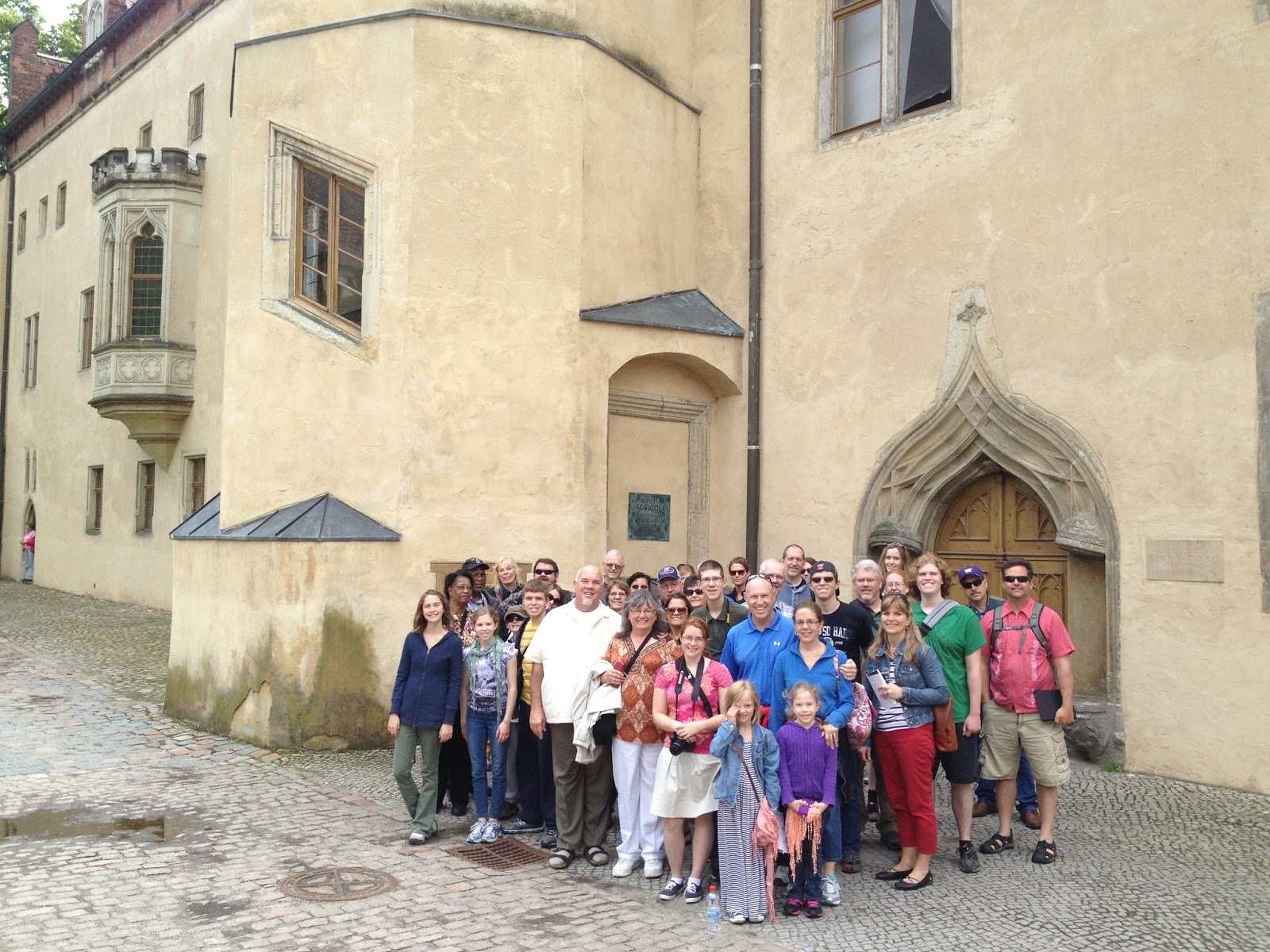
Bond tour group at Luther & Katie's cloister home
All Hallow's Eve, 1517, Luther had timed things appropriately. All Saints' Day, November 1, 1517 Duke Frederick put on a huge exhibition of his latest reliquary acquisitions--the latest additions to his bone collection--pilgrims coming to venerate (and pay handsomely for the privilege), earning 1000s of years off purgatory in the bargain. No coin collector could have been more devout; the duke was serious about his reliquary, and wanted to make Wittenberg into the Rome of Germany. Luther scholar Roland Bainton tallied the elector's treasury of merit: 

"The collection had as its nucleus a genuine thorn from the crown of Christ, certified to have pierced the Savior's brow. Frederick so built up the collection from this inherited treasure that the catalogue illustrated by Lucas Cranach in 1509 listed 5,005 particles, to which were attached indulgences calculated to reduce purgatory by 1,443 years. The collection included one tooth of St. Jerome, of St. Chrysostom four pieces, of St. Bernard six, and of St. Augustine four; of Our Lady four hairs, three pieces of her cloak, four from her girdle, and seven from the veil sprinkled with the blood of Christ. The relics of Christ included one piece from his swaddling clothes, thirteen from his crib, one wisp of straw, one piece of the gold brought by the Wise Men and three of the myrrh, one strand of Jesus' beard, one of the nails driven into his hands, one piece of bread eaten at the Last Supper, one piece of the stone on which Jesus stood to ascend into heaven, and one twig of Moses' burning bush. By 1520 the collection had mounted to 19,013 holy bones. Those who viewed these relics on the designated day and made the stipulated contributions might receive from the pope indulgences for the reduction of purgatory, either for themselves or others, to the extent of 1,902,202 years and 270 days. These were the treasures made available on the day of All Saints."

Luther had taken a great risk posting his 95 Theses decrying indulgences the day before. The duke was his patron, and though he appreciated the popularity his university had gained by Luther's bold teaching and preaching, this was too far. Luther was undaunted because he had seen through the whole hoax of indulgences and a righteousness earned by ones own imagined merit. “The church’s true treasure," he wrote, "is the merits of Christ in the gospel.”

From studying and teaching the Psalms, Galatians, Romans, and Hebrews, Luther had come to know that Rome had flipped everything around and had, thereby, done violence to the gospel, and that venerating the saints and their supposed merits was a supplanting of the merits of Jesus Christ. The realization was at first a personal one. “I must listen to the gospel," he wrote. "It tells me not what I must do, but what Jesus Christ the Son of God has done for me.” 

Transformed by the power of the gospel and the gift of faith, Luther had to tell the Good News to others. And he did, as only Luther could do. “The most damnable and pernicious heresy that has ever plagued the mind of men was the idea that somehow he could make himself good enough to deserve to live with an all holy God.”

Luther knew that the dukes exhibition scheduled for All Saints' Day, November 1, 1517 must be confronted. It was an affront to the gospel of grace, a supplanting of the authority of the Word of God, and an offense to true Christian worship. “The highest worship of God is the preaching of the Word, because thereby are praised and celebrated the name and the benefits of Christ.”

Finally, for Luther the risks to his person were worth it. Why? It was worth it because the Son of God is the only Savior and true friend of sinners. Johann Franck, German Lutheran pastor in the next generation expressed it this way: "Jesus, priceless treasure, fount of purest pleasure, truest friend to me."

Douglas Bond is author of many books, including LUTHER IN LOVE (2017). He leads Church history tours, including the Armistice 100 Tour, June 15-25, 2018, (Reformation tour of France, teen Calvin in Paris, Calvin's birthplace in Noyon; including teen atheist 2/Lt CS Lewis raging at God in the trenches of WW I, Huguenots in Rouen and Amiens, and the failure of Modernism in WW I and WW II). Space is limited so register (what better day to register than All Saints' Day, the day after REFORMATION DAY!). You can purchase a signed copy of LUTHER IN LOVE and his other books at bondbooks.net 

Tuesday, November 1, 2016

The Most Damnable and Pernicious Heresy--Luther the day after Reformation Day

The day after Reformation Day
All Hallow's Eve, 1517, Luther had timed things appropriately. All Saints' Day, November 1, 1517 Duke Frederick put on a huge exhibition of his latest reliquary acquisitions--the latest additions to his bone collection--pilgrims coming to venerate (and pay handsomely for the privilege), earning 1000s of years off purgatory in the bargain. No coin collector could have been more devout; the duke was serious about his reliquary, and wanted to make Wittenberg into the Rome of Germany. Luther scholar Roland Bainton tallied the elector's treasury of merit: 


"The collection had as its nucleus a genuine thorn from the crown of Christ, certified to have pierced the Savior's brow. Frederick so built up the collection from this inherited treasure that the catalogue illustrated by Lucas Cranach in 1509 listed 5,005 particles, to which were attached indulgences calculated to reduce purgatory by 1,443 years. The collection included one tooth of St. Jerome, of St. Chrysostom four pieces, of St. Bernard six, and of St. Augustine four; of Our Lady four hairs, three pieces of her cloak, four from her girdle, and seven from the veil sprinkled with the blood of Christ. The relics of Christ included one piece from his swaddling clothes, thirteen from his crib, one wisp of straw, one piece of the gold brought by the Wise Men and three of the myrrh, one strand of Jesus' beard, one of the nails driven into his hands, one piece of bread eaten at the Last Supper, one piece of the stone on which Jesus stood to ascend into heaven, and one twig of Moses' burning bush. By 1520 the collection had mounted to 19,013 holy bones. Those who viewed these relics on the designated day and made the stipulated contributions might receive from the pope indulgences for the reduction of purgatory, either for themselves or others, to the extent of 1,902,202 years and 270 days. These were the treasures made available on the day of All Saints."

Luther had taken a great risk posting his 95 Theses decrying indulgences the day before. The duke was his patron, and though he appreciated the popularity his university had gained by Luther's bold teaching and preaching, this was too far. Luther was undaunted because he had seen through the whole hoax of indulgences and a righteousness earned by ones own imagined merit. “The church’s true treasure," he wrote, "is the merits of Christ in the gospel.”

From studying and teaching the Psalms, Galatians, Romans, and Hebrews, Luther had come to know that Rome had flipped everything around and had, thereby, done violence to the gospel, and that venerating the saints and their supposed merits was a supplanting of the merits of Jesus Christ. The realization was at first a personal one. “I must listen to the gospel," he wrote. "It tells me not what I must do, but what Jesus Christ the Son of God has done for me.” 

Transformed by the power of the gospel and the gift of faith, Luther had to tell the Good News to others. And he did, as only Luther could do. “The most damnable and pernicious heresy that has ever plagued the mind of men was the idea that somehow he could make himself good enough to deserve to live with an all holy God.”


Luther knew that the dukes exhibition scheduled for All Saints' Day, November 1, 1517 must be confronted. It was an affront to the gospel of grace, a supplanting of the authority of the Word of God, and an offense to true Christian worship. “The highest worship of God is the preaching of the Word, because thereby are praised and celebrated the name and the benefits of Christ.”

Finally, for Luther the risks to his person were worth it. Why? It was worth it because the Son of God is the only Savior and true friend of sinners. Johann Franck, German Lutheran pastor in the next generation expressed it this way: "Jesus, priceless treasure, fount of purest pleasure, truest friend to me."

Douglas Bond is author of a number of successful books, with LUTHER IN LOVE, forthcoming Winter, 2017, a biographical novel on Martin and Katharina Luther. Bond speaks at churches and conferences, and leads Church history tours, including the LUTHER 500 TOUR, June 15-25, 2017.  


Tuesday, June 25, 2013

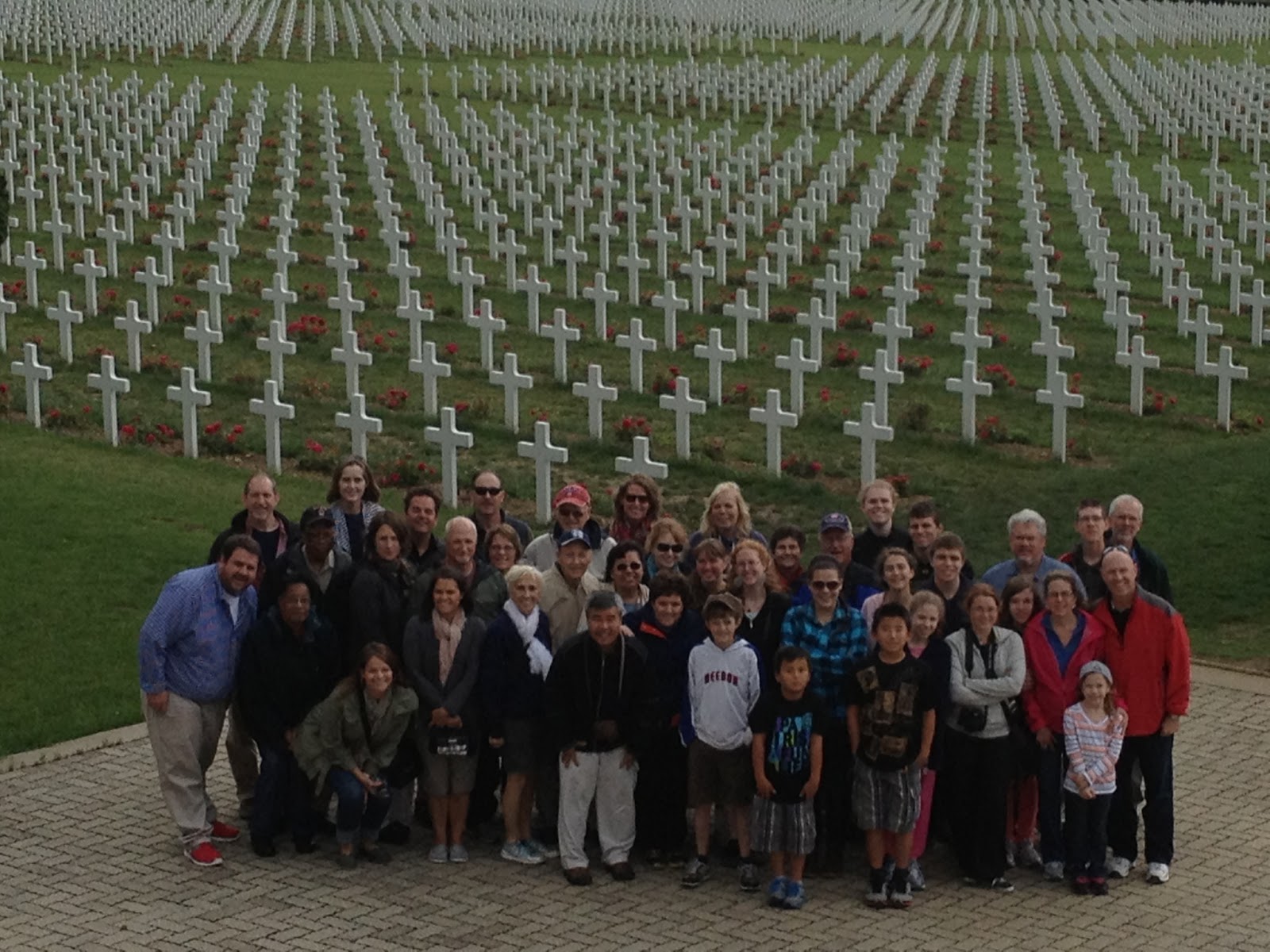
BOND REFORMATION TOUR: Sobering moments at Verdun, WW I battlefield and burial ground

Cross of 1000s of fallen French 20 year olds
After a nice French breakfast by our hostess in Pierrefonds, we loaded up the coach and headed for Strasbourg, a stop at Verdun battlefield for lunch on the way. I can only imagine the horror of February 21, 1916 when the first deafening artillery barrages of this bloody battle commenced their deadly work. So many young men's bodies were unidentifiable in WW I they had to make a special area for holding the skulls and bones, all of real young men who felt their impending ruin in the instant before they were killed in the deadly trench warfare of WW I. 10,000,000 soldiers died, average age, 20 years. We
witnessed a flaming truck fire on the A4 to
Bones of sons who were never identified
Strasbourg which made me think of the inferno of reality that burning at the stake was for that first Paris Reformation martyr in 1512.

Here is what I read from a chapter in HOLD FAST in a Broken World as we pulled away from the fields of crosses and the interred bones of fallen boys. 


...It was November 29, 1917, Jack’s nineteenth birthday. It was also his first day of trench warfare. Some birthday party! Later he wrote about that day. “The first bullet I heard ‘whined’
Truck trailer conflagration on the A4
like a journalist’s or a peacetime poet’s bullet. At that moment there was something not exactly like fear… a little quavering signal that said, ‘This is War. This is what Homer wrote about.’”
One day he had been a fresh young college student; now he was a soldier. After a hasty few months of training he was dubbed a Second Lieutenant in the Somerset Light Infantry and shipped off to France. Near Arras he heard that first of many bullets. When not dodging those bullets, he wrote down reflections on his experience.

The war—the frights, the cold, the smell, the horribly smashed men still moving like half-crushed beetles, the sitting or standing corpses, the landscape of sheer earth without blade of grass, the boots worn day and night till they seemed to grow to your feet… I have gone to sleep marching and woken again and found myself marching still. Familiarity both with the very old and the very recent dead… I came to know, and pity, and reverence the ordinary man.

April, 1918 at Mt. Bernenchon, near Lillers, France, an artillery shell whistled louder and closer than the rest. Then it hit. Erupting in a deafening explosion, the shrapnel instantly killed Jack’s friend, who had been a father figure to him. And it hit Jack. He wrote, “The moment just after I had been hit… I found that I was not breathing and concluded that this was death.” Perhaps at the field hospital at Etaples, perhaps at a convalescent camp on the Salisbury Plain, embittered by his experience, Jack began writing a poem:

Come let us curse our Master ere we die,
For all our hopes in endless ruin lie.
The good is dead. Let us curse God most High.

Laugh then and slay. Shatter all things of worth,
Heap torment still on torment for thy mirth—
Thou art not Lord while there are Men on earth.

Jack was his nickname. His real name was Clive Staples Lewis. The lines above appeared in his first book, Spirits in Bondage, a collection of poems Lewis wrote while a young atheist and that he described to a friend as “mainly strung around the idea that nature is diabolical and malevolent and that God, if he exists, is outside of and in opposition to the cosmic arrangements.”
Perhaps after suffering the horrors of WWI, his bitterness and cynicism is more understandable. There were horrors aplenty. On the first day alone of the Battle of the Somme, 20,000 young men’s lives were cut short, many of them so mangled by artillery shells, by the tramping feet of advancing and retreating soldiers, the debris, mud, and carnage that in the five-month battle more than 50,000 soldier’ bodies were so obliterated that they have no known graves. Between 1914 and 1918, an average of 5,600 young men died each day of those five years, more than ten million lives. No wonder Lewis penned the cynical lines “laugh then and slay.”...