Showing posts with label Fathers and Sons. Show all posts

Friday, June 1, 2018

The Death of Meaning and the Death of Art


"Life doesn't mean anything."
Meaningless goodness?

More than twenty years ago I ducked out of a San Francisco rain shower into a doorway, as it turned out, the doorway to a steep staircase leading up five flights to an artist’s loft. I entered and saw the strangest sight.

One entire wall was spanned by a wooden frame stretched with a canvas. But not just any canvas. This one was a hodgepodge of old clothes: jeans, t-shirts, overalls, zippers, buttons, and snaps--a sort of grab-bag, thrift-store canvas. I watched in amazement as the artist smeared paint on his canvas, dipping randomly from a variety of paint cans.

“Unusual canvas,” I ventured at last.

“Pretty cool, huh?” he replied, grinning at me as he continued to apply paint over his shoulder with a large brush.

After several moments of chat about his creation, I asked if his artwork was didactic.

Di—what?” he replied.

I tried again. “Does it mean something?”

“Mean something?” he snorted, flicking a wet brush at a pair of paint-stiffened trousers. “Of course it doesn’t mean anything. Life doesn’t mean anything.”

“So why do you bother doing it?”

“Because I’m good at it.”

Curious about the criteria he used to come to this absolutist conclusion, I probed further. How could life be meaningless and he be good or bad at anything? If it was meaningless wouldn’t it be impossible to measure goodness or badness? He frowned.

Believing that life doesn’t mean anything, after all, is an evaluative perspective, a belief. As C. S. Lewis observed, “If the whole universe has no meaning, we should never have found out that it has no meaning.” Thus, by denying that life means anything, he unwittingly, admitted that meaning does exist--absolutely. If it didn’t we would never have had the discussion, nor would he bother creating art that attempts to mirror his nihilistic philosophy of life. At this point, the intricacies of his painting seemed to require more of his concentration. So I left.


Art as religion

In the same breath that many artists and academics declare that there are no absolutes, they say things like, “Art is a means of giving order to the chaos of experience.” “Art represents the source of human values.” “Art gives meaning to life.” Cultural Editor for World magazine, Gene Edward Veith, suggests that these statements are various ways of placing “art and the artist squarely in the position of God—as creator, lawgiver, and redeemer.”

Listen to almost any artist or art critic speak about art and you will hear the terminology of religion: creation, inspiration, transcendence, vision. In this pseudo-religious milieu, artists are the high priests, works of art are the equivalent of relics, the elite appreciators are the worshipers, the adulations uttered are the responses prescribed in the liturgy, taxes to support artists are the forced tithes, grand museums are the temples, and the baffled masses scratching our heads are the equivalent of the heathen unbelievers. Absurdly, all this in a world that demands a separation of church and state!

The resulting “chronological snobbery,” as C. S, Lewis dubbed it, can have the effect of making you feel unsophisticated, a sort of aesthetic atheist. You may begin to feel like your world view is pretty out of touch, not very intellectual. You may even be tempted to feel ashamed of being a Christian. At the end of the day, however, all this is merely another form of idolatry, another way of putting something else in place of the grandeur of truth and making truth look silly. It takes first-rate deception to pull it off, but, then, that’s what the devil is so good at. 


Laws governing freedom in art

There is one constant for the Christian young man trying to sort out what he is to think about art: artistic fashion changes constantly. Ironically, as artists speak in religious terms about their art, a form of self worship, they venerate something that is inherently changing, something that in a very short time will be sneered at by the next generation of artistic gurus.

Art reflects the temper of its culture,” wrote Gene Edward Veith. And a culture that is constantly being shaped and reformed by the transient appetites of people groping for the next amusement, for the next entertainment thrill, for the latest technology, the newest fashion in clothes, or music, or cars, or coffee—will produce art that reflects these flighty, laser-light-show changes.

Still there is another unchangeable law among the artistic elite: the more innovative the better. This rigid law leads immediately to another: the more bazaar, the more shocking, the more valuable the art.


Art in a culture of death                                                                      

Perhaps there is no better example of this than the sensational “death art” of German doctor, Gunther von Hagen, who has developed a technique whereby he can turn human tissue into plastic and shape corpses into “art.” With the help of his father, a retired Nazi SS sergeant, Hagen set up a plastanation factory in Poland where on his father’s last visit he sent sixty human beings to death camps during the war.

Hagen’s art features a dead man riding a skinned horse, the man’s corpse positioned holding both the horse’s brain and his own. It gets much worse. With the aid of US taxpayers, human corpses, skinned and contorted into grotesque life-like, sometimes provocative poses, have created a freaky sensation in American art and science museums.  Since 1997, his “Body Works” art has been viewed by 17 million museum goers, including thousands of school children, raking in some $200 million dollars in the bargain.

For the Christian, this should not be a close call. In Holy Scripture we are taught that our bodies are not our own, that they are temples of the living God. When man made in the image of God dies his body is to be buried, there to await the resurrection of the body; it is not to be burned, mutilated, or desecrated—not even in the all-excusing name of art. Hagen’s morbid creations seem to epitomize what Gene Edward Veith calls “art in the culture of death.”  


Beauty and the beholder

            A former student, frustrated at the ugliness all around him while deployed on board ship during the Global War on Terror emailed me with questions about art and beauty. He wrote: “Being surrounded by the people I have been around for the last few months has started my mind on a question. What makes some people capable of enjoying beauty and others not? Why am I able to enjoy literature, poetry, and J. S. Bach and my shipmates are not? Secondly, what makes something beautiful? I know we talked about this in high school. I’m ashamed to say that I probably wasn't paying good enough attention, but I was hoping for a refresher.”

My reply: “Confusion results when postmoderns shape the argument by insisting that everything, including beauty, is simply a matter of taste: like favorite flavors of ice cream. It is critical to their argument that there be no universal qualities of beauty. Their insistence notwithstanding, beauty is not in the eye of the beholder. Though art seems subjective, any thoughtful Christian is reality-bound to disagree with the elitists here. Why? Because there are universal non-cultural, non-ethnic agreements about beauty.

“Few would attempt to disagree that all peoples, wherever they are in the continuum of civilization, find beauty in a sunset, in a mother tenderly caring for a newborn, the vastness of the ocean, the music of the breaking surf, sunlight sparkling on a mountain lake, the soaring of an eagle —all this creates a sublime wonder in everyone regardless of culture, ethnicity, or gender. The things that are truly beautiful imitate the parts of our world less tainted by the fall, or they create a sense of longing for those things. When art features sin it ought to be in a way that unmasks fallen-ness for what it is. In the end, all true art is redemptive; it lifts us above the base things and gives us a longing for the perfections of heaven.

“So why do the guys on the ship not appreciate Bach and beautiful things? One explanation is that they have been so bent by pop culture and the need for immediate gratification that they have no appetite for transcendent beautiful things. They are enslaved to immediate and tactile gratification in the music they listen to, the pornography they devour, and the games and videos to which they have made themselves willing slaves.

“Real beauty represented in fine art lifts us out of ourselves, elevates us above our desires for twisted gratification and shows us a glimmer of what a world would be like if it were not wrenched from its original design into something barbaric and crude.


Hell on the ship

“It is all very tragic, Stuart. The people on your ship are lost, and their indifference or disdain for true beauty is simply an expression of their lostness. I hope this will deepen your compassion for them and your appreciation for a mother who introduced you to art and beauty when you were very young. Moreover, I hope it will create a deeper longing for heaven and eternity where all that is bent and ugly, the rap, pornography, drunkenness will vanish and Bach and Rembrandt—and a host of other great artists--will be loved by all!

“The fact that beauty has survived, even in our fallen world, is further demonstration of the truly great artists’ eternal conception of beauty. Perhaps Bach has outlived the vicissitudes of the centuries because he struck the chord of eternity in his music. His is music that must endure. And what’s true of music must also be true of visual art and the rest. Raunchy, throw-away music, like raunchy visual art, twists goodness out of shape and then celebrates the deformity instead of the eternal beauties.

“The pounding ugliness of what your shipmates listen to does not strike the chord of eternity, perhaps because what they prefer has broken the instrument with chaos and a celebration of all that is unworthy. Unworthy and ugly, it celebrates not the hints of heaven in this fallen place; it celebrates the relentless foretastes of hell that are strewn all about us. Hell will be many things, but one thing it will be is the absence of beauty. There will be nothing to lift a man above the ugliness that litters hell. I don’t doubt that the ship may sound and look like hell, but your job, Stuart, is to flood that floating Hades with the light of truth, beauty and the love of Christ. Press on, Sailor!”


Art as imitation

Everyone wants to be original--especially artists. But herein lies the problem and the great challenge. All art is imitative. Art by definition is not the real thing; it is the artificial thing—thus, the source of the name “art.” So art that imitates dark and sinful things in non redemptive ways is imitating the wrong things. Like the “art” preferred by sailors on Stuart’s ship, that art will inevitably be an ugly imitation of hell.

It all starts with theology. Only in a world severed from moral absolutes can art be anything the artists wants it to be, but not so in the real world. In our world an artist can bag up his own excrement, dub it “art,” and send it to museums to be displayed at the expense of the grossed-out, but dutifully un-protesting public. In God’s world--the real world--this is non-redemptive and ugly--and therefore not art.

            It is perhaps not surprising that man’s theological rebellion against, God the ultimate original Creator of all beauty, finds virulent expression in art. Many artists are affronted that they cannot be ultimate originators of anything. Desperate to assert their authority over creative expression, they are driven to innovate. They don’t want to be seen as imitators of anything or anyone—especially not the Creator God of the Bible. Thus, in a world devoid of absolute values, the value of art is measured by individual expression, innovation, and the bazaar. And artists continue to insist that their “Art represents the source of human values.”

Play by the intellectual elitists’ rules and you will no longer be able to define beauty or art. Accept the cultural elitists’ supposed authority over art and that authority will encompass every other area of life. It’s what they want. Remember how expansively they speak about art: “Art gives meaning to life.” Accept their authority over art and eventually things like truth, liberty, justice will also be defined by the elite. Tyranny in art leads to tyranny in everything else.

When political leaders see themselves as “the makers of manners,” as Shakespeare’s Henry V quipped to his battle-prize bride, law and justice are redefined for the self-gratification of the tyrant. So in matters of art. The elite are not the makers of artistic manners, though they work very hard at intimidating us into believing this. Art, like truth and justice, must be guided by universal absolutes, otherwise we live in an inconsistent world, a world none of us can count on, a world without gravity, a chaotic and ugly world.

Socrates, on a quest for the source of wisdom, discovered that Greek artisans, though skillful with stone, were unwise because they projected their skill with the chisel into the notion “that they also knew all sorts of high matters.” Socrates concluded his inquiry with the words, “God only is wise,” or put another way: Man’s skill, his wisdom, in any field is the gift of God, the great originator of all skill.

A wise ancient poet put it still better. “The fear of the Lord is the beginning of wisdom, and knowledge of the Holy One is understanding” (Proverbs 9:10). Do you want skill (wisdom) to appreciate or create beautiful art? Fear the Lord; he alone is the “beginning of wisdom.”

A wise man, then, acknowledges that his skill is not innate but derived, given to him from above, a gift of God, regulated by his laws. So throughout the Bible, art is a means of reflecting the glory of God, the originator of all creative beauty. However unsophisticated it sounds to the world’s ears, God, de jure, by right, defines both beauty and art.


Gaze on ultimate beauty

Perhaps the advice biblically informed Shakespeare has Hamlet give actors helps shed light on these questions about art. The Bard wrote that the purpose of his art was “to hold the mirror up to nature, to show virtue her own feature.” Shakespeare’s summary of the imitative purpose of art sounds odd in a world that is morally, intellectually, spiritually, and aesthetically adrift. When the world rejects absolutes it loses the capability of showing “virtue her own features” in art, or in any other dimension of life.

Though it is possible for an artist to create a worthy image of something that is not at first blush beautiful (crucifixion is not beautiful), all artistic endeavor must be regulated by the light of God’s word. Paul in his letter to the Philippians gives us the final word about art and life: “Finally, brothers, whatever is true, whatever is noble, whatever is right, whatever is pure, whatever is lovely, whatever is admirable—if anything is excellent or praiseworthy—think about such things.”

Therefore, the Christian young man will only set before his mind and eyes art that leads to truth, purity, and loveliness. Art worthy of the title must be excellent and praiseworthy. But not according to the transient opinions of elitist critics—excellent and praiseworthy according to God’s definition. And know this, in the Bible, “excellent” and “praiseworthy” are not subjective terms. 
Vast and wonderfully varied as human creativity and art is, a subject worthy of a lifetime of enjoyment and discovery, how does a young man keep his way pure in matters of art? Be like the Psalmist: “One thing I ask of the Lord, this is what I seek, that I may dwell in the house of the Lord all the days of my life, to gaze upon the beauty of the Lord…” Live your life gazing on the beauty of the Lord and you will have little difficulty defining beauty, appreciating beauty, or creating beauty.    

Douglas Bond is author of more than 25 books, conference speaker, European tour leader, award-winning teacher. This post is an excerpt from his book HOLD FAST In a Broken World, in his Fathers & Sons devotional series. Subscribe to his blog and his website bondbooks.net.  

Thursday, April 30, 2015

Spiritual Cancer, Gunpowder, and Fleabites: The Anatomy of a Fall


"His pride led to his downfall."
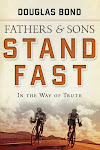
The Way to Fall: II Chronicles 26:5, 16 (excerpt from STAND FAST, by Douglas Bond)                                                                         
Uzziah’s downfall
            “As long as he sought the Lord, God gave him success,” the inspired historian records of young Uzziah. And was he ever successful! A warrior king almost on a par with King David, he defeated the mighty Philistines and demolished the walls of their principle cities, and waged successful campaigns against the Arabs and the Ammonites. No other king could boast of so disciplined an army and of such deadly war machines--catapults and mechanized equipment for firing arrows. For his army and weaponry, even for advances in farming, Uzziah was the envy of ancient kings.
But something was not right: “As long as he sought the Lord…” With those words, the chronicler hints that Uzziah is not going to stay the mark. This young king had humbly sought help from the Lord and “was greatly helped.” But here’s the rub, “after he became powerful his pride led to his downfall” (II Chronicles 26:15b, 16a).
So it will be with you if you do not persevere in seeking after God. On the heels of urging you to seek the Lord early, I wonder if some young men jump to the conclusion that seeking the Lord is a youthful activity, that if you do enough of it in your youth you can live off the interest in your adult life. No way. Seeking the Lord is a continuum. It is daily rising up and calling him blessed. It is hourly vigilance over besetting sin. It is daily diligence in the Word and prayer. It is humble worship, seeking the Lord in his house on the Sabbath day. Genuine seeking is always in the present perfect tense--continuing, pressing on, straining every spiritual muscle after Christ—all things Uzziah stopped doing.
Continue doing these things and you will have success. God does not make idle promises. You will succeed in mortifying sin, in effectual prayer, in heartfelt worship, in humble service, and at the last you will have the celestial success of Satan conquered and heaven won. Forget riches and fame—there’s no greater success.     
            But many men—young and old—are brought low, like Uzziah, because when they gain a measure of success they become proud; they fail to give God credit for his gracious work in them, his gifts given to them, his successes. 

Sports and pride
Moments before the 500 meter US Sprint Kayak Nationals final I asked one of my sons what his race strategy was. “I win, they lose,” he said with a grin. He’s a big Ronald Reagan fan and likes quoting Reagan’s Cold War strategy. Two days earlier he’d lost the 1000 meter sprint to a Hungarian-born paddler by 4,800ths of a second and was absolutely determined not to cut things so close. He did win the 500 and by a bigger margin. And then the monster pride rears his ugly head.
Competitive sports, young men, and pride are a union forged in hell. If you are an athlete—or the father of one--you must particularly beware of pride. Why? Because, as C. S. Lewis put it:

Pride is essentially competitive—is competitive by its very nature. Pride gets no pleasure out of having something, only out of having more of it than the next man. We say that people are proud of being rich, or clever, or good-looking, but they are not. They are proud of being richer, or cleverer, or better-looking than others. It is the comparison that makes you proud: the pleasure of being above the rest. It is Pride—the wish to be richer than some other rich man, and (still more) the wish for power. For, of course, power is what Pride really enjoys.
           
Most young men love competition. Men thrive on it. And we love power. We love being strong and being in control of people and situations. Many great things have been accomplished by powerful men straining to be the best. Consider General Bradley’s quip as George Paton led the 3rd Army in victory after victory, ever deeper into German-held territory in WW II: “Give George another headline and he’ll be good for another thirty miles.” It’s embarrassing, but we’re inclined to do more if we’re getting lots of credit for doing it. Feed our pride and we’ll conquer the world.
Unlike war, where pride might motivate a young man to do great deeds that benefit others, in sports young men are easily consumed with shameless self-interest. Listen to the boasting of professional athletes. Watch the swagger of the varsity basketball jock. See the jutted chin and hauteur of the All-American quarterback. Gaze in disgust at the unabashed self-conceit of the running back as he struts and preens in the end-zone. Listen to your teammates. Hear your own words. Look into your own heart. If you are a competitive athlete, beware of pride. 
“If sports are supposed to build character,” wrote Brad Wolverton in the Chronicle of Higher Education, “recent evidence suggests that college athletics is falling down on the job.” He cites a study of the moral reasoning of 70,000 college students conducted over two decades. The result? “Athletes have significantly lower moral-reasoning skills than the general student population.” Moral reasoning—what the ancients called virtue--leads you to use your strength and skill in the interest of others. Competitive sports can flip things around. So impressed with your own athletic prowess, you sneer in disdain at others. Gradually, you begin to think of yourself as a worthy object of the most devout—and disgusting--self-worship.
Once on your knees before yourself, the absurdity of it all never occurs to you. How ridiculous for you to be puffed up over strengths and skills God ultimately gave you! But seeing your pride for what it is requires a changed heart.
Only a grateful heart will keep the nonsense of your pride in check. Just when you’re swelling up at your victory, offer thanksgiving that God gave you a healthy body, that he gave you the opportunity to develop your skill, and if you’re really good at it, the particular talent that sets your performance above the pack. Remind yourself that this is God’s doing.
Then brace yourself like a man. The devil slithers near. “Yes, but you’ve worked hard—harder than the rest,” he hisses in your ear. “You’re first on the water and last off every workout.” Stop your ears. The devil woos with “honest trifles.” Believe him and, as Shakespeare put it, he will “betray you in deepest consequence.”

Insanity from hell  
C. S. Lewis has little good to say about pride. “It comes direct from Hell,” he wrote. “Pride is spiritual cancer; it eats up the very possibility of love, or contentment, or even common sense.” He’s just getting warmed up. “The essential vice, the utmost evil, is Pride. There is no fault which makes a man more unpopular, and no fault which we are more unconscious of in ourselves.” He argues that all other sins “are mere fleabites in comparison: it was through Pride that the devil became the devil: Pride leads to every other vice; it is the complete anti-God state of mind.”
In one of the Bible’s classic passages on pride, the prophet Daniel records the history of how pride ate up the common sense of another great king of the ancient world. Nebuchadnezzar designed and built the magnificent hanging gardens of Babylon, one of the seven wonders of the world. It was a splendid sight, and Nebuchadnezzar was intensely proud of it. Like Uzziah, Nebuchadnezzar grew so proud that he gave himself credit for the splendor of his entire empire. Seizing glory that belonged to God, and setting himself up as God, he personified pride, “the complete anti-God state of mind.” For this, Nebuchadnezzar became a madman, more like a wolf than a human.
For a just God, the punishment always fits the crime. No punishment could have been more fitting for this proud man. Pride dehumanizes a man. You are most human when you are closest to God, when you acknowledge his ways, when you bow before his sovereignty, when you say that God does what he pleases, that his kingdom is an eternal kingdom, when you say, “Heaven rules!” But pride makes you see things upside down and inside out. Pride, like insanity, grossly distorts reality. 
Nebuchadnezzar’s self-conceit made him believe the utter nonsense that he had made himself, his strength, his intellect, his very life. Believing the ridiculous notion that you have accomplished anything by your mighty power, for “the glory of [your] majesty” is nothing short of insanity.
Thus, God punished Nebuchadnezzar by letting the full impact of his pride come down on his head. Chained to a stump, eating grass like a beast, Nebuchadnezzar finally learned that “Those who walk in pride [God] is able to humble” (4:37). Finally, he learned that “Heaven rules” (4:26).
Nebuchadnezzar’s son Belshazzar, however, didn’t get this. Fathers train sons, alas, more persuasively by our vices than by our virtues. Son Belshazzar lost his entire kingdom to the Medes and the Persians--and his life--because “[he] set [him]self up against the Lord of heaven,” and because he “did not honor the God who holds in his hand [his] life and all [his] ways” (5:23).
Walk in pride and you lose your common sense. Persist in pride and you become a madman. Press on in pride and you end up where pride began: hell. God resists the proud. He gives grace to the humble. Walk in humility--or prepare to eat grass.
  
Know it all
 Anglican bishop J. C. Ryle called pride, “the oldest sin in the world. Satan and his angels fell by pride. Thus pride stocked hell with its first inhabitants.” Ryle warns that, next only to Satan and his angels, “Pride never reigns anywhere so powerfully as in the heart of a young man,” and it puts young men in particularly dangerous positions. “Pride makes us rest satisfied with ourselves, thinking we are good enough as we are.” And when you think you are good enough as you are you are in deep weeds. You fail to be teachable. Why bother learning when you’re smug and satisfied with yourself?
Lewis in the opening letter of Screwtape Letters gives demonic lesson one in tempting a young man into hell: “Best of all, give him the grand general idea that he knows it all.” This is an easy sell for him. It’s a strategy that has worked exceptionally well for the devil over the millenniums and it continues to work on your soul. But it’s a temptation entirely dependent on your pride. We love believing this lie.
Similarly, Ryle argues that pride “closes our ears against all advice.” How many times have you resented your father’s advice this week? You feel like you already know what’s best for you, so why listen to his advice. I remember this resentment at the words of my father. You’ve got to get over this, and Ryle offers particularly valuable advice to curb this foolish expression of your pride. Don’t close your ears to it.

Do not be too confident in your own judgment. Cease to be sure that you are always right, and others always wrong. Be distrustful of your own opinion when you find it contrary to that of older men than yourself, and especially to that of your own parents. Age gives experience and therefore deserves respect. Never be ashamed of being a learner. The wisest men would tell you they are always learners, and are humbled to find after all how little they really know.

I recently watched and listened to a twenty-two-year-old fool publicly dress down a man of fifty at a regatta where everyone was supposed to be having fun. It was shameful. But you would never do that. Not out loud, maybe. But how often have you responded to advice with internalized smart-mouthed, know-it-all comments? True, it’s better manners not to speak disrespectfully, but the pride is still there deeply rooted in your heart. Being a Christian man is about rooting it out.

Pride and gunpowder
“To be proud,” continued Ryle, “is to be more like the devil and fallen Adam, than like Christ.” But you’re called to be like Christ who was born in a barn, became friends with sinners and sick people, washed his disciples’ feet, was despised and rejected by the big shots of his day, finally submitting to the most ignominious suffering and death for our salvation. If anyone had a right to be proud, it was the second member of the eternal Godhead, but Christ was not proud.
Neither was his follower John Newton. When Newton took up his ministerial duties and moved into the Old Vicarage in Olney, in 1764, he rearranged his garret study. Instead of looking out on the lovely river valley and the fourteenth-century gothic church, he looked on the rows of tenement houses where the needy of his parish lived and worked. Soon the upper-crust in Olney resented Newton: He was too busy with the poor to attend them when they held court at their fine dinners and balls. They despised a minister who refused to fawn on them like Jane Austen’s ministerial caricature Mr. Collins, who made himself a laughingstock by constant gushing over his venerable patroness, Lady Catherine de Bourg.
In Newton’s day the ministry was a way to schmooze with the rich and famous, things Newton never did. But he knew many ministers who did and so gave this advice to a young pastor: “It is easy for me to advise you to be humble, but while human nature remains in its present state, there will be almost the same connection between popularity and pride, as between fire and gunpowder: they cannot meet without an explosion, at least not unless the gunpowder is kept very damp.”
How do you keep your pride damp? By having the same mind as Jesus. He came “not to be served, but to serve and to give his life a ransom for many.” Be honest about your powers. Christ’s are infinite and original; yours are derived and pathetically finite. He is God; you are not. Yet, Christ was humble, and he calls you—who have no right to be proud—humbly to follow in his steps. And best of all, he enables you, by the grace and power of Jesus, to grow in the grace of humility.

Be little
Irrational as it is, many Christian young men swagger on in their pride. They speak condescendingly to parents and teachers. They are rude. They are so “wise in [their] own eyes” (Proverbs 26:12) that they strut as if they know it all.
But maybe you are bright, gifted, talented, strong, and highly capable. Compared with the rest of teenaged young man on the planet, most of you are highly privileged. Some of you believe it when your grandparents gush at how gifted you are. Maybe you are gifted. So how do you avoid pride?
            Listen to humble, gifted tinker John Bunyan in Grace Abounding to the Chief of Sinners as he addresses the gifted young man’s sin. “Gifts being alone [are] dangerous because of the evils that attend those that have them—pride, desire for vainglory, self-conceit.” He warns that if a young man rests in his gifts and not in the grace of God he will “fall short of the grace of God.” A wise young man “has cause also to walk humbly with God and be little in his own eyes, and to remember that his gifts are not his own, but the church’s, and that by them he is made a servant to the church.” There’s that word again—servant.
Avoid pride by humbly using your gifts, great or small, to serve others in Christ’s name and by his grace. And for the rest of us who may not be so gifted, Bunyan memorably concludes that “Great grace and small gifts are better than great gifts and no grace.”
Talented, gifted as you are, you are not nearly as great as the devil wants you to believe. The devil loves pride because pride makes you an idol worshiper—with you as idol. He’ll do anything to keep you from worshiping the living God, giver of all gifts.
Swollen with pride at his success, Uzziah forgot all this. “His pride led to his downfall.” Not content merely to be king, Uzziah usurped the priestly role, was struck with leprosy, and “excluded from the temple of the Lord.” Young men, walk humbly with your God. Gratefully appreciate your gifts and the gifts of others as if they were gifts of God—which they are. Humbly “serve the Lord with gladness,” knowing your great daily, hourly, moment-by-moment need of the preserving grace of Christ who promises to complete the good work he has begun in your heart. Keep your eyes on his strength, not on yours.

Saturday, March 22, 2014

A TRAGEDY: Teens Unprepared for Life... and Eternity


A TRAGEDY: Teens Unprepared for Life... and Eternity, by Douglas Bond
Book Review: Preparing Your Teens for College (Alex Chediak, Tyndale, 2014)

Given the statistics, every Christian parent ought to be horrified at the prospect of sending their children off to college. If the collaborative statistics about young people between the ages of thirteen and twenty-nine can be even partially trustworthy, Christian parents have every reason to be seriously concerned about what lies ahead for our young people. The grim news: 60% of twenty-somethings who went to church when they were kids, the studies indicate, when they reach their enlightened twenties no longer have any connection to church. It gets worse.

Studies reveal that of the minority who do still manage to drag out to a church service once a week in their twenties, a statistical majority of them shop for a church that emphasizes youth relevance rather than a biblical Christ-centered approach to preaching and ministry. The studies conclude that 55% who do go to church are more interested in hanging out with their friends rather than knowing the God revealed in the Bible. Again, it gets worse. When our young people are asked what the gospel is, far too many stammer out an anemic limp-wristed explanation, a “therapeutic moralistic deism,” rather than the radical good news of justification by grace alone, through faith alone, in Jesus Christ alone.

The lives of too many who have grown up in Christian homes are a three-act tragedy: Act I: Life in the home aping their Christian parents; Act II: Life in the world feeding pigs and thinking they’re having a jolly time; Act III: Eternity.

Every honest Christian parent knows the story, a tragedy: another Christian family horrified, heart-broken, and humiliated at the rebellion and defection of one or more of their children. Presumptive self-confidence in our parental faithfulness notwithstanding, one of our children will be next, perhaps all the more likely so because of our delusional certainty that it only happens to other people’s kids.

A significant chunk of my motivation for writing my books for Fathers and Sons to read together came from tragic encounters with externally conforming church kids chucking their presumed faith over the rail, Christian parents grieving the rebellion of their kids, or, perhaps worse, their shrugging indifference to the gospel. And then there’s the worst of all: the externally conforming moralist, who lives two parallel lives, who looks like the rule-keeping elder brother on the outside—goes to youth group, goes to church, goes on mission trips, goes off to Christian college—but in secret is living with the pigs. And then the tragic tale begins to unravel.  

Given the prevalence of this three-act teen tragedy, what ought Christian parents to do? Drop everything and read Alex Chediak’s new book Preparing Your Teens for College.
 
Alex’s latest book “is a comprehensive survival manual on getting teens ready for whatever comes after high school.” Dr. Chediak, a professor in a Christian college, covers the entire range of issues parents need to know about college—and about their kids. He has laid the book out in six sections: Character, Faith, Relationships, Finances, Academics, and the College Decision itself. I like his emphasis on talking with our children, and continue talking with them, especially continue talking with them if they are the strong, silent male types (like two of my six), organize life around keeping the lines of communication wide open. 

Chediak covers such conversations as “training teens to take initiative, accept correction, delay gratification, and be firm in their Christian convictions while gracious towards those with other beliefs.” He writes about the importance of instilling in our children discernment in relationships and about establishing friendships that build up their faith, not tear it down. He covers the importance of maintaining an intentional purity in relationships with members of the opposite sex.  

Among the many other challenges facing Christian teens, our young people are growing up as members of what is being called Generation Broke. So it is extremely helpful when Chediak takes on the topic of money. College is expensive (one of my sons begins law school in the autumn and is married to a wonderful Christian girl—who attended a Christian college, one that encouraged her to go into tremendous debt for her college education, so I care a great deal about this topic). He helps parents help their teens learn to manage their money and how to practice financial stewardship. If they haven’t already, they will be getting credit cards in the mail, free money for the taking—and for taking away freedom. Chediak gives practical guidelines and strategies for avoiding the pitfalls of consumer debt and excessive student loan debt. 

But what about right now, the years immediately before college? Throughout the book Chediak helps parents prepare their teens for college by helping them motivate their young people to doing all their work as unto the Lord; he urges teens to use their high school years more intentionally, as a time to discover and nurture their academic talents and other interests. I appreciate the fact that Chediak, a college professor, does not make the blunder of assuming that all of our children ought to be planning to go to college (73% of college graduates who do get jobs, get jobs doing something they would not have needed their degree to do). He provides helpful encouragement that can aid parents and teens in making careful decisions about whether to pursue a four-year college, a two-year college, technical trade school, or other forms of vocational training. 

The book is enhanced by unique features that I found helpful: practical sidebars, tips, and links to other resources for studying specific topics in more detail; testimonials from the lives of real teens which demonstrate the principles explored in the book. Every chapter concludes with study guide questions—good ones! So often questions are less than helpful in books I have read that include them. But not this one. These questions help parents engage in meaningful conversations, ones designed specifically to preparing them for college. 

I do take issue a bit with the title. Chediak and his publisher may have sold themselves short. Preparing Teens for Life, might work better, in my opinion. Or it could have a subtitle: Ending the Tragedy. I applaud Alex for writing such a useful and compelling book, one I highly recommend for parents who are serious about preparing their young people for lives of joyful gratitude for the unmerited mercy of Jesus. 

Douglas Bond, is a PCA ruling elder, high school teacher, and author of STAND FAST In the Way of Truth, and HOLD FAST In a Broken World, and other books for young people and adults. Learn more at www.bondbooks.net