Tuesday, May 30, 2017

Writing Better Than Our Literary Heroes--Inkblots


Writing like Victor Hugo tonight

INKBLOTS
New writers on board this evening. Welcome to you all. 

Sixteen-year-old Maya leads off with her French Revolution era historical novel. Protagonist a young apprentice in Versailles.Rain falling like the verse of Milton or Spenser. Wonderfully read, so appropriately inflected. All is wrong with the world, and then personified. Enter our story… Is your narrator a participant in the story? Maya writes like a 19th century novelist, a Dickens feel or maybe Stowe. Our solemn young man, whom we have attempted to sketch. I am assuming that the narrator is not the apprentice (no apprentice would likely have that level of vocabulary). They were desperately in love. Show this by subtle looks, by gestures, a hand placed, an act of service and show the devotion. Let the reader say to himself, they were desperately in love. The more I listen, the more I want to guess who Maya’s favorite author is. My guess, Jane Austen, or Charlotte Bronte. Rich narrative. But the narrator tells us what to think about many things; I would like to hear them talk, draw conclusions from observation.

Maya critiqued herself and said she feels like it is too much description.  But John liked the narrative but wondered if she uses any dialogue. This was the opening chapter. Patrick described how he had written extensive narrative like this but after critique went back and altered 90% of what he wrote, and it was significantly better. There is a tendency to feel that as a writer we have to show how well we can write. Telling rather than showing. We talked about the intrusive narrator. This creates an unreality for the reader. We don’t have someone at our shoulder telling us what to think about everything we are seeing. All description has to drive the plot forward and develop the character. We did not have a point of view to care about. Maya could create a first person narrator who is involved in the story, invested in it. Then the higher register language makes sense, given the 18th century setting. Maya, who is sixteen, writes with the vocabulary, the syntax and verbiage, of a well-read, mature literary enthusiast.

Sydney, Maya’s older sister, reads from her blog, sounds like a favorite genre. When God Writes Poetry. She proceeds to contrast propositions and poetry. Propositions are the voice of objective truth… poetry drapes beauty. Its power. We need both, propositions and poetry, God is the source of both. We are variously drawn to one or the other, but both tendencies are in error. We need logic and wonder. She creates a parallel with the pillar of cloud and the pillar of fire. Entire world is a poem. We are not merely mater, and we are not simply disembodied spirits. This world is the ultimate proposition draped in poetry. I think the subheadings are helpful in a blog. Remarkably mature writing in this piece, appropriate language, and use of poetic devises embedded in and ably demonstrating her point. 

I would suggest a leading sentence at the end of one subsection that connects to the topic sentence beginning the next subsection, a sort of passing of the baton. Good use of appropriate quotations, Lewis, Piper. Spurgeon makes an argument for using imaginative devices, entertaining characteristics in our writing, commenting that another writer’s work was “most reliable, but dull.”

Jonathan reads, “This is weird,” he warned us, sort of sci-fi. Detonation Chamber, short story title. Jonathan begins medias res, a tense moment, a man with a gun in one hand, his other hand a fist poised over a red button. Why “the madman” rather than a name? Maybe I will answer that as I listen more. Dr. Hume’s asexual offspring is the madman. Got it. I’m not so sure that the backstory came in too early (though others commented that it came too early), but I do think it could have been trickled out in the midst of the tension of the moment, augmenting the suspense.

I have many literary heroes, authors that have shaped me in significant ways, whose writing inspires me, or something about their life and struggles prods me, goads me onward. I used to attempt to imitate them, their verbiage, syntax, imaginative comparisons, everything about them. I am learning, however, to glean all I can from what my literary heroes do well, but I have stopped trying to write like them. In fact, I intentionally try not to write like they do. That was Shakespeare, or Milton, or Chaucer, or Sutcliff, or O'Conner, or Bunyan. Not. Bond. Imitation is good just as crawling and toddling are good and appropriate--for infants and toddlers, but not for grown ups. We heard some amazing writing at 'Blots the other night. My advice to all of us, and all aspiring writers: Write with appreciation for your literary heroes, but press on to find your own voice. 

I was recently heavily edited, more so than I have ever been in my writing career, by an eager young editor. The result? I didn't even recognize the piece I had written. It was no longer my voice. It was the editor's voice, vigorously writing over mine. I'm not a good writer, but I am improving as a re-writer, presumably one of the reasons why I had been asked to write the piece for the magazine. 

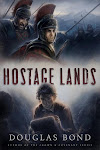
My latest release: rewind 500 years with this one
My newest book, adult novel on Martin and Katharina Luther, is now available, free shipping, signed by the author, at bondbooks.net. I don't think you will be disappointed. Here's what one reviewer wrote about it: Luther in Love is a lovely book, a pleasure to read, a creative and astute project, a page-turner, faithful to Luther’s voice as a Reformer, a preacher, a theologian, a son, a friend, a father, and a husband.”

AIMEE BYRD, author of Housewife Theologian, Theological Fitness, and No Little Women


June 6 will be, DV, our next INKBLOTS meeting.

Friday, April 14, 2017

Driving, Writing, and Living On the Wrong Road

"...a 1000 roads lead into the wilderness." CS Lewis
"Drive left. Look right! God, help me to do this right--I mean, correct!" So I tell myself and pray in the days and hours before leading another group of aspiring writers on the Oxford Creative Writing Master Class. At Heathrow, I warily circle the nine-passenger rental van and then lunge into the driver's seat on the right side, murmuring to myself to keep the vehicle on the left side of the road and a weather eye to the Bentleys, Minis, red buses, and black cabbies bearing down on my right side. Though it is not my first rodeo (not to be construed as a cliche; it is a metaphor chosen precisely to reflect how it feels swerving around about every frantically encircling roundabout intersection), I have driven in the UK on the wrong side of the vehicle--and the road--over many years now. But I still pray earnestly before loading the van with precious human cargo and braving the blaring streets, curvaceous back roads, and bustling motorways of Britain.

And then there's the matter of my talking--while driving (whilst motoring, to be more colloquial). One previous OCWMC participant, her hand trembling, passed me an almost illegible note on which she had scrawled out a plea for me to stop using hand gestures as I talk--and drive. "Please, please, keep both hands on the wheel," she implored me (I nodded, looking down at the clutch and gear shifter, wondering just how I was supposed to do that when every vehicle in the UK seems to be equipped with a manual transmission). As I teach my master class writers the evil of exaggerating language, I will avoid pronouncing it "miraculous," but it is a significant answer to prayer, with many instances of divine intervention, that I have never had an accident whilst motoring in Britain (okay, a few close calls; every one of them, I am morally certain, not my fault, like the one en route from London to Oxford opening day of the master class when a raven-colored Peugeot nearly strafed the side of us on the M-40, clearing my arteries, invigorating my vocabulary, and making me still more grateful).

In Oxford, or anytime I talk about writing, I emphasize the importance of figurative language, of metaphor. "The greatest thing by far," wrote Aristotle in his Poetics (384 BC - 322 BC), "is to have a command of metaphor. This alone cannot be imparted by another; it is the mark of genius, for to make good metaphors implies an eye for resemblances." And for the rest of us who are emphatically not geniuses, we work at training our eye and ear so we are equipped to use the most appropriate metaphors, the precise imaginative comparisons, the best mini stories to awaken the imagination and immerse our readers in the larger story.

Which makes me pause and consider driving on the wrong side of the car and the road as a metaphor, a miniature story very much like life itself. The author of the book of Proverbs employed a similar metaphor: "Turn not to the right hand or to the left. Keep your foot from evil." When driving a car, if I turn right when I should have turned left, or if I don't keep my eyes on the road ahead of me, screeching tires, broken glass, mangled metal, and far worse can follow.

Similarly, when writing a book, if I take my eyes off the real issue for my protagonist, or when I lose control of the story arc and the plot wanders aimlessly like an overfed bovine, sniffing at this or that irrelevant morsel, my reader gets distracted, yawns, closes the book, and (after awakening from his stupor), pounds out a scathing review on amazon.

How much worse when this happens in life. When I wander to the right and then to the left, grazing for fulfillment and happiness in this tidbit and that morsel of this life, I will always come up empty, unsatisfied, idolatrous, lost. And damned. The stakes are high. Those who persist with this try-this, try-that, foraging approach to life will end this life and enter the life to come with the most horrific words ringing in their eternal ears, "Depart from me you cursed into everlasting fire where there is weeping and wailing and gnashing of teeth." When we do this in life, the result is infinitely worse than a car smash-up or a bad review on amazon.

Though our culture persists in shrieking the mantra, "There are many roads," or in effect, "Take whatever road feels good. There is no wrong side of the road." Imagine driving or writing that way. Made in the image of God, we all know at the deepest level of our being that there is only one road that leads to heaven. "One road leads home and a thousand roads lead into the wilderness," as CS Lewis put it. Left or right, O the pain of those thousand roads. No one gets to heaven by scrupulously following the right path, the path of self-improvement and good works; or from swerving left, following his heart and doing what he feels.

If not to the right or the left, where are we to keep our eyes? If there's only one way, The Way, how are we to get on--and keep on--the road? There's no equivocation. Nor is there any alternate route. The Word of God makes the path of life plain. Abandon all hope in ourselves and "Gaze upon the beauty of the Lord." It is what we were made for, not just on Good Friday or Easter, We are designed to keep our eyes straight ahead, to "Fix our eyes on Jesus, the author and perfecter of faith." We do this because by his finished work on the cross in place of sinners and his righteousness imputed to those same sinners' specific account, Christ is alone the path to life; in his presence there is fullness of joy; at his right hand their are pleasures forevermore (Psalm 16).

God alone places us by his grace on the right road--and he alone keeps us on it. All other roads lead into the wilderness.     

Douglas Bond directs the Oxford Creative Writing Master Class. Contact him about the next OCWMC at bondbooks.net@gmail.com

Tuesday, April 11, 2017

Gloom to Radiance: reflections from Oxford


Addison's Walk, Oxford

Two days home from leading the latest Oxford Creative Writing Master Class, and, now that the phantasms of jet lag have faded, I'm eager to share a highlight from one of our OCWMC participants.

Mary Lynn Spear is no literary neophyte. Bringing a depth of artistic experience to the master class, and an imagination well-seasoned to wonder, Mary Lynn wrote an enchanting piece that exposes a breathless insider's vantage point on the array of literary stimulation lying around every country footpath and cobbled street corner.  
______________________________________________

I went for a walk in the Cotswolds today.  Not so very far from where Churchill was born, and CS Lewis walked. It’s no wonder this place breeds inspired men.  A hundred birds sounded, and I saw a pheasant skitter out across the path. Wood pigeons cooed incessantly in the trees before bolting up into the sky feather-powered, adding drumbeat to endless birdsong.

But it was the sun—the sun breaking over plowed fields and green paths through the hedgerows glistening with morning dew. The sun, illuminating a honey stone cottage in the distance, bordered by undulating ribbons of green and broken brown. The sun, glowing through white blossoms on branches stretched in morning praise, white scattered on the grasses beneath--so many fallen stars soon to go the way of all un-branched things.  …the branch cannot bear fruit by itself, unless it abides in the vine. The sun, laying softly on moss mounds trailing off into the underbrush.

They are like a dream, like grass that is renewed in the morning.  In the morning it flourishes and is renewed; in the evening it fades and withersSatisfy us in the morning with your steadfast love, that we may be glad and rejoice all our days.

I stopped and read Psalm 90. Yesterday we sat in Baliol College’s hall, where farmer-boy John Wycliffe, economist Adam Smith, and atheist Richard Dawkins studied and thought the great thoughts which would move men and nations. How Moses’ words turn in to the core of humanity, like an x-ray machine opening up the secrets of the inmost being and revealing the spiritual skeleton which forms man. How they open up my ways, night-vision seeing into the gloom of wandering days and sight struggling with unbelief.  Always, always, God is good. It is easier to take heart, in a woodland forest kissed by the morning.

Make us glad for as many days as you have afflicted us, and for as many years as we have seen evil. Return, Oh Lord, how long? Have pity on your servants!

Massive beams soared over the expanse of Baliol’s ceiling, keeping mysteries they had looked down upon for centuries. But grounding them to earth still stood the stone walls, stained with drips downward like so many spoiled thoughts and dreams birthed in this ancient room. Carvings of design and beauty traced across wooden walls. Yet the dust on them spoke of days passing into night. You return man to dust and say, “Return, O children of man!”

Faces of men looked on from vast, gilded paintings: men who posed to be remembered by posterity, but who knows now, who they were? You sweep them away as with a flood; they are like a dream, like grass…

Under their noble white collars so dated, billowing sleeves and august look, what secrets lived? You have set our iniquities before you. Our secret sins in the light of your presence.

Some of these walls have stood a thousand years, yet more. For a thousand years in your sight are but as yesterday when it is past, or as a watch in the night. You sweep them away as with a flood, they are like a dream, like grass.

Yet-to-be-famous faces filled this hall, saw while not seeing these familiar walls; left their scuff on floors and bowed the benches deeper, who became fine artists of philosophies destined to raise up, and to ruin. For we are brought to an end by your anger; by your wrath we are dismayed. You have set our iniquities before you…
\
I am here in Oxford for a writer’s conference.  I am supposed to write. This desire to  write, it burns in me for giving just a few, effective words for our children’s children, and for those setting the breakfast table every morning for a posterity who will turn their faces upward or inward, outward or into the depths. Let your work be shown to your servants, and your glorious power to their children. I do not know if God will give me words. I do not know if He will withhold words and make the pressure of thoughts without words an affliction of its own kind. I do not yet know what will be.
Let the favor of the Lord our God be upon us, and establish the work of our hands upon us; yes, establish the work of our hands.

---------------------------

Next morning I started out under a lowering sky, and the world seemed changed. I’ve thought a time or two about how life under common grace must be like the world at dawn: not black, but grey with enough light to see and do.  Contrast life in Christ, not grey but gold, emblazoned with Light, seeing and doing for eternal days.

The path on which I set one foot after another is the same chipped mulch as any other person on the planet would find it. Birds still sound out in number, but I confess more tentative than yesterday. I almost want to say that the white of the blossoms show more white-ly against the gray sky, perhaps like true goodness and truth against the graying of modernity.

But altogether, the fields don’t gleam gold today, or the sunrays flaunt their abundance over steaming soil of the plowed hills.  Dew doesn’t expend a million diamonds, and the sod beside the path is just damp, a bit cold, last year’s leaves dead-fallen among them.  A closed sky wrapped in clouds stands still and somber over the future of this day, over the distance of the horizon.  No birds startle hastily to wing, though a few brave ones sing. Cooing of a pigeon is answered by another but somehow they sound mournful in the gloom under the trees. I thought I remembered them sounding peaceful. I thought I remembered a little kingdom shining under those trees, amid the moss and bracken, where felled flowers shone. The wild yellow primroses stay closed, their heads bowed.

What marks us called by His Name, compared to those nameless who pass us on the sidewalks of Seattle and London? With what difference do we walk through? In our world, where Christ says to us, “…you are my friends…I have called you friends…” the dark places shine in the light of His Presence and the rough places are made plain. The people who walked in darkness have seen a great light; upon those who dwelt in the land of gloom a Light has shown.  Hidden in Him we see not only night turn to grey but the sun break over the hills and flood gold into secret places. He is the radiance of the glory of God, and the exact imprint of His nature. The Light walks with us and in us.

We met Lili yesterday.  She up and walked into our lives in an Oxford cafe, and spent the day with us.  She didn’t want to hang around if we were some religious sect, she said. But she stayed, and I think she had a memorable day.  We walked the streets of Oxford and she pointed out how rare it was to hear footfall any more—people’s shoes are mostly silent. “Silent feet,” she said, and told me about her poetry and we talked about the mystery of trees. Addison’s Walk we found blooming wildly, that place where CS Lewis spent his last night as an atheist before the Light found him. She stayed, and told me all about her atheist self, how she’d walked into that church at thirteen and looked around, pronounced them all hypocrites in her mind, and walked out the door. How could God possibly be a Person, she wondered? Does that mean He has a male anatomy, she asked, just not in those words exactly; and then laughed and said she’d bet I didn’t expect to be talking about that today. But she looked curiously at me when I said I knew Him, and that I could not be good apart from God.

No light until He fills up with Light.

I think…I think she gave up a sunny day, back at thirteen years, and took up an overcast in its place. She met us at sixty-nine years, hours sans color, and she was captivated by a glimpse into the sunlit places.

With what words does one begin to explain?


Mary Lynn Spear (OCWMC, April, 2017)

For more information about future Oxford Creative Writing Master Class opportunities, email me at bondbooks.net@gmail.com and visit bondvoyage.webs.com