Wednesday, March 29, 2017

Can't Find it Grind it--Writing to Love Your Neighbor (Inkblots)

I'm off today to spend the week with 8 writers in Oxford
Six bludgeoned 'Blots this rainy evening (Patrick told us a horrible story, not fiction, about being attacked and beat with a rock. I hope he mines this in his book nearing completion). Alisa shared with us about the final work on Swiftwater, final editorial work and some frustration and final revisions, but light at the end of the tunnel. The buck stops with the author in an author consortium publishing venture, so we want to see this as an opportunity, one that makes the final book all that much better. Heaps of deleting and rewriting going on around here. and brainstorming. And we discussed stream of consciousness writing (Ulysses) and how much Jonathan and Patrick do not like it. Rachel reads:

Rachel's Russian cheese-smuggling yarn, fascinating and deeply hunger-inspiring. Rachel reads her work so well, with such feeling and unique character and voice. Does the simile of the barrel of a rifle following its target work? Not sure, but worth discussing. On further reflection, I think it is a similar problem as active passive voice, where the subject is receiving action instead of doing it. Rifles don't act. Shooters of guns act. Rachel drops the bomb that guys do stupid things for girls all the time. Mark is bitter, but Trusov just wants his cheese. John commented on the rifle simile, that the hunter should be following. Ingrid is a stick-to-the-man type character. Patrick suggested that Ingrid needs to have leverage on Mark and he is motivated by self-interest, but the leverage conveys to the reader that this is authentic.

Jonathan told us about a book called Story Grid, compiled from an editor's blog posts, from a successful editor. Every story has three acts, using the Silence of the Lambs, which morphed into a movie so easily and needed virtually no change from book to screen (not an endorsement). Patrick shared with us about "finishing" the book and some of the revisions he made and why he made them. His rewriting is like a case study on himself, where he was when he wrote the first draft and where he has progressed. The two biggies that Inkblots returns to (I hope more than these, but certainly not less than these), showing and not telling, and remaining in character point of view. If you fail to do the latter the reader is confused, disoriented, halting and uncertain about whose world they are supposed to be in, which character are they supposed to care most about? An important part of loving your neighbor as an author is loving and respecting your reader; jolt them all over the anthropological map and you are not loving your neighbor. We don't want to read like a young man who asked me to teach him how to drive a stick shift. "Can't find it, grind it" only works on somebody else's clutch; mine was burned up. We do this to readers when we don't write with point-of-view integrity.

It is possible to shift points of view, but it must be done with care and conventionality. All that to say, Patrick discovered that he did not have a clear perspective soon enough for the reader to get immersed in the yarn. Lewis does the shift from Peter back to Lucy, to Susan and Edmond, but even at that there is a dominant character and every reader knows it, Lucy. Tolkien-era Arthur Ransom does it with the siblings in Swallows & Amazons. But beware. The cliff looms precipitously when you do.


Patrick reads from the revised Adam & Steve yarn, a parody on same-sex marriage, in which he creates a sense of the actuality of having the technology to impregnate one of the two males, using elaborate and costly medical research, heavily funded by federal dollars, no doubt, forcibly extracted from gullible brow-beaten taxpayers. I wonder if Patrick gives too much away with the superlatives he uses to describe the monstrous process to pull off this Frankensteinian genetic fiasco. Patrick clearly has had a ball writing this bazaar reality scenario. Be sure to play up the bold social experiment and let the reader feel sick. Humor is a two-edged sword, and if you're not careful you will expose your hand too soon in the story, and the ones you want to prod may see through the ruse and bolt deeper into the wastelands if you are not careful.

John reads some of his rewrite after last Thursday's major revision and critique work with Editorial Director Mary Lynn Spear in the Scriptorium last week. John launched right into the major rewrite. Avoid writing "obviously in thought"; instead show the posture of obvious thought, in facial expressions. This is a weighty discussion between a daughter who is pregnant and has considered taking her own life. It feels a bit over written, too much actually said that would be better conveyed in some thoughts, some inferences, conclusions drawn from the uncomfortable mannerism of the mother or the daughter. Can you show development to the relationship between the mother and daughter, beginning with awkwardness and gradually, with fits and starts, becoming more congenial. I feel like it is too congenial and over stated at least in places. I'll just be in the kitchen if you need me. Kill the word just, seemed, and the other qualifying verbal tics. It is tough writing this kind of conversation. There has to be more circular avoidance, then move in, and blurt it out. Even though the family is undergoing change, good changes, going to church together, nevertheless, everything isn't all okay. It doesn't work that way in a broken world. Show genuine change, yet with the realities of the habits of life, and the reality of abiding sin, still with hope, but not oversimplified, everything is all okay now.

Advance copy of LUTHER IN LOVE just arrived!

Monday, March 20, 2017

2 GRACE AWARD Finalist Bond Books for 2016

Thanks to the many of you who nominated my books for the GRACE AWARDS (2016). Not one but two of them are GW finalists (as near as I could tell, the only two books by the same author to make the finals), for which I am grateful to God.
YOUNG ADULT: (including Middle Grade and New Adult)
THE REVOLT by Douglas Bond ( P&R Publishing) ~ In his short career as a battle secretary, Hugh West’all has come close to death many times. But when he leaves the war behind to enter the hallowed halls of Oxford, he meets John of Wycliffe and soon embarks on a mission even more exciting—and perhaps just as dangerous. Using his scribe’s quill to translate the Bible into English, the language of the common people, Hugh begins to understand the beauty of the gospel as never before. But he and his friends are up against the corrupt monolith of the medieval church, and it will stop at nothing to crush Wycliffe’s work.
https://graceawardsdotorg.wordpress.com/2017/03/18/andthe-grace-awards-2016-finalists-are/


ACTION-ADVENTURE/WESTERN/EPIC FICTION: (exploits, quest, daring, expansive)
THE BATTLE OF SEATTLE by Doughlas Bond (P&R Publishing) ~ It’s 1855 in the Pacific Northwest, and hostility between white settlers and native tribes is rising quickly, leading to deaths on both sides. As tensions mount, young William Tidd joins Charles Eaton’s Rangers on a mission to hunt down Chief Leschi of the Nisqually. If they can stop him, they may be able to end the bloodshed before it gets worse . . . but not everyone wants peace with the enemy. Is all-out war inevitable? Through skirmishes, raids, close calls, and betrayal—William’s assumptions, beliefs, courage, and friendships will all be challenged in a few breakneck weeks.
https://graceawardsdotorg.wordpress.com/2017/03/18/andthe-grace-awards-2016-finalists-are/

When is a Book Finished? Inkblots

Four diehard 'Blots tonight, weather abated after blustery morning (no worries about maple tree falling on the Scriptorium, thanks to my eldest son and contacts). It is a delight after a busy day to sit down, breathe and enter the world of writing and literature with fellow 'Blots.

We discussed when to share your manuscript with a potential reader. I advised folks to revise and rewrite until you feel like you have your manuscript where you want it to be, including proof reading. Respect your reader who will spend hours of their time poring over your work. Nothing is more disheartening than to offer a critique only to hear, "Oh, I rewrote that whole section last week. I've made all those changes already." In other words, I can really do this without you, but keep reading anyway.

There are several levels of readers. You need a fast global reader (John Schrupp) who can give you perspective on the whole work, character arc, plot unity, and so forth. Then there is the unique reader who can read globally and for precise proofing details ('Blots Editorial Director Mary Lynn Spear is one of these rare people). There are many good proofreaders and editors out there (I'm glad because I have nothing like enough time to be that for very many others), but whomever you choose, you will need a careful and experienced proofreader and final copy editor. Expect to pay for these reading services. A great deal of time and skill goes into proofing and copy editing a manuscript. Getting grammar and punctuation correct can make or break a book. The chronic problem for indie published books is shoddy copy editing. InkBlots Press must at all cost avoid producing books that have not passed through the critical gateways that make for a first-rate finished book. 

Alisa leads off reading from her forthcoming The Emblem, written before Swiftwater, due to release later this month. Kelly, protagonist, or Jamie? Heather standing on the patio instead. Show us Heather seeming to have something to say to her (to Kelly, right?). What does a person look like when they are about to say something? You don't need uncomfortably from foot to foot because you make it clear that she is uncomfortable. The flats feel like they are going to become something of a symbol, a good idea. Without trying to interfere--I think you showed that, or were about to, rather than telling us that. She could berate herself for never wanting to interfere, get involved in the lives of others, and feeling like she had nothing to offer, someone who just went along with whomever was dominant in the room. Colored woman. We talked about this the other day, the difficulty of being in a historical context and avoiding using our preferred verbiage at the moment. They didn't use African American in the '20s, though they did use the n word, and rightly you did not, in my opinion. Patrick suggested he would like to hear more internal conflict material in italics.

Patrick pointed out how important it is to have a character who may be deeply flawed in certain areas, but they are competent in doing something, plumbing, woodcarving, listening to the woes of others, solving problems; the reader will be drawn to a character who is competent in doing something well.

Patrick reads near the end of his speculative fiction work, a Rahab character, apostate brother comes, shoot out, escape. This is after all that, back window of the truck shot out. Gabe fell asleep. A Sarb attack on a free human colony, hurl the disposables in first. If that doesn't break through the lines, send in the real troops to finish things off. A mass of feral Sarbs. Engine squealed and a zombie let out a visceral scream. Just as you read that I was about to write that I thought you needed to give us more sounds, so take it or leave it. You are sticking well with Gabe's reaction to the chase scene, the truck about to careen out of control. This is vivid, but I do think we need to hear more of the sounds of a truck doing what this truck is doing. What does that sound like? Were there smells? The over heating engine, human sweat super charged with fear? What do Sarbs sound like? Do they have a ferocious battle cry, heavy breathing, laughter, slavering? Do they smell as they get closer? Could you detect them simply by their smell? What does it smell like? When Gabe charges out of the wrecked truck, what is he thinking? Are Sarbs always unarmed? Do we know this already? When the Sarbs stand their ground, what do they look like, sound like? Are they leering, shouting, chanting--growl and hiss, I heard that, but I think the sounds of these creatures would be bone-chilling. The conversation sending the girl Duplicity who is a half Sarb for help. It should feel more frantic, desperate, do-or-die. It seems like this would work better if the girl offered to go for
LUTHER IN LOVE, due any day
help, and Gabe wouldn't hear of it, but she insisted. She may have come to the same conclusion about Sarbs smelling non-Sarbs, and voiced it to Gabe. Switch this around and I think you will have a far more powerful moment. Duplicity does make it through, and Gabe seems to react with more emotion than he showed below.

I read part of my Luther article for Modern Reformation Magazine, deadline looming. Reformation Romance, working title. Luther in Love is finished and in production, hopefully available by next week. I have learned so much writing this book! And I have gained a far greater appreciation for the sometimes-difficult role God calls some couples and families to. Pre-order at bondbooks.net

Wednesday, February 15, 2017

Do you like these books? Nominate for GRACE AWARDS 2016

3 Bond releases in 2016 eligible for the GRACE AWARDS
I was contacted the other day by a reader who nominated one of my three books published in 2016 for the Grace Award. I would be so grateful if other readers who liked WAR IN THE WASTELAND, THE REVOLT, or THE BATTLE OF SEATTLE would take just a few moments and nominate one or all three of them--before February 28, the drop-dead deadline for nominations.

Believe me, I know it feels kind of awkward to ask this, but the first judicatory stage of the awards is based solely on popular vote, which means the more nominations from readers the higher the book ranks in the contest (before it ever actually gets judged on its own merits).

Another thing to keep in mind if you decide to nominate more than one of my three titles from 2016 (none of my books published in a different year are eligible): There are several categories for the books as you will see at https://graceawardsdotorg.wordpress.com/, so it is important not to nominate my books within the same category thereby making them compete with each other.

Thank you for considering doing this. It's easy and only takes a few minutes to nominate a book. Here is the site again: https://graceawardsdotorg.wordpress.com/. Please share with other readers, if you would.

Thanks, heaps! Don't forget the deadline February 28, 2017: https://graceawardsdotorg.wordpress.com/

CRITICIZE ME! The best writers welcome criticism (INKBLOTS)

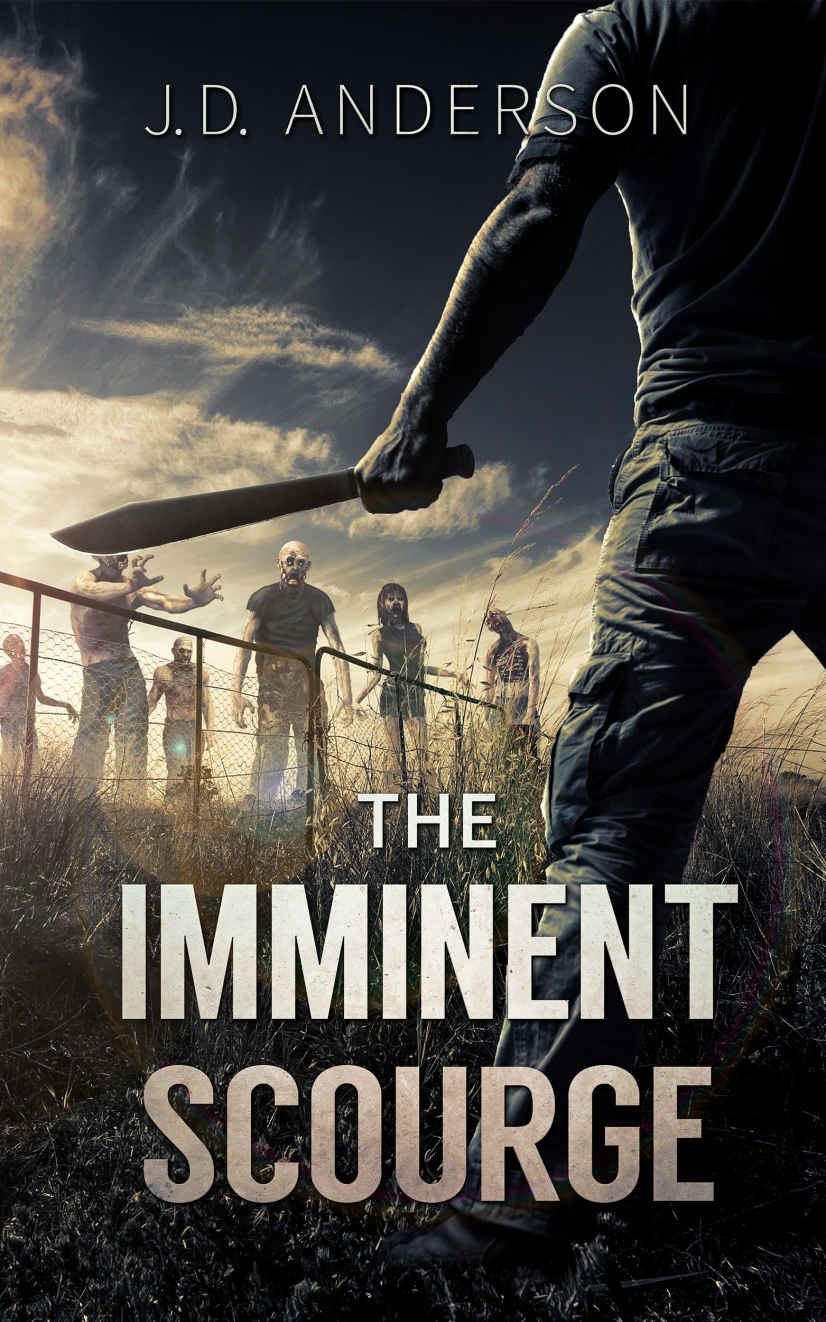
A compelling cover for an intriguing new INKBLOTS' novel
Five 'Blots this evening, several regulars unavailable (Happy anniversary J & A). We chatted about Alisa's imminent and intriguing release, SWIFTWATER, and final work on back material, working with designer, and the million and one things to finalize a book.

Comment after last 'Blots: "To everyone that attended the last meeting, I'm certain that was some of the most helpful feedback I've gotten at a meeting, so thank you. As I work hard on a rewrite I'm discovering just how spot on the comments were. It's exciting to see tangible improvement."

Patrick shared some of his frustrations with being redemptive in his speculative fiction writing. Read Lewis and appreciate Aslan as a Christ figure and the redemptive objectives of his writing, but the need to go back to Scripture, to the source, for true redemption. How to weave good into tales and a genre that is often dark, bloody, and seemingly so unredemptive?

Two zombie sisters, Aza and Duplicity, who sound like they are country bumpkins. The girls grilled him about... but we don't hear them actually doing the grilling. Off to the movies, which Gabe had only seen on small screens, never before on the big screen at a theater. Sarb the name for zombies. Is this universally accepted or did Patrick invent Sarb. Inter-specie love and romance, made to sound quite common. I still think you are narrating conversations and reactions that we should be hearing and seeing. I love your embedded critic of Hollywood and movies. I would strongly suggest varying your narrative with protagonist's thoughts, conversations, and actions. Does Gabe have a mannerism that makes him real? I was then that I realized why there are zombies, to teach us about sin. Could he speculate about this rather than prescriptively states it? Or place it in a conversation. The narrative needs variation. Great content but better conveyed by placing it in conversation and action.

Sofia liked it but wondered if there needed to be more different from the humans they are going to the movies with, unique appearances, mannerisms, things that are normal in their world but not so in humans'. Rachel felt like there was too much past tense. Is the recalling of past scenes slowing the pace of the story?

Further is in the realm of ideas, as in, The further he thought about it, the more anxious he became. Farther is physical distance that could be measured.

Alisa wanted some 'Blots advice. She has several books going but is feeling weary of all of them, hit a wall. I asked Alisa which book she feels the most enthusiasm for, is most intrigued by. The Emblem
was the first thing she brought up. We started talking about story boarding or more loosely following the yarn where it leads you. Dickens was very meticulous and outlined the entire novel before he wrote it, whereas, O'Conner never wrote this way. Create an authentic character, plop them in an inciting and dangerous situation and hang onto your hat. Information bombs and history bombs, chapters that need to convey essential information but without stalling the pace, disconnecting the reader from the protagonist's problem.


I read a bit from my imminently forthcoming adult novel LUTHER IN LOVE. Inkblots members have helped me enormously on this biographical novel, especially the women members; they have helped me with the enormous task of writing from the point of view of a woman, something not so easy for a male author to do (I think female authors do this better than we men, generally speaking). 


Tuesday, December 20, 2016

Falstaff character and creating sympathy for a jolly jerk--INKBLOTS

Laughing and fun with Lewis tonight
Five 'Blots this frigid January evening (ice on the stock tanks this morning and a dusting of snow), but warm and cozy in the Scriptorium.

After chatting for a bit, Patrick leads off with more of his longing to write redemptively but without it being cheesy and superficial. He has written his yarn so that the reader thinks Gabe and his clan are just preppers, planning out an imaginary apocalyptic compound but nothing to worry about. It's all in fun. But what is really going on is a real zombie apocalypse.He reads the beginning of the next section of the book. You are narrating material that I would like to see, hear, feel, instead of being told it. Have the reader hear Junior's father give him chores, and what is his reaction? Is he resentful, eager, insulted at the demeaning task? Prayer request in family worship. Gabe or Junior? Who are we supposed to be tracking with, head we are supposed to be getting into (I realize we are putting in and it can be difficult to equally jump into the right head)? This does seem to be sort of dropped into the story, helicoptered from where though? When the dad interrupted and tried to get them back on the track. Suddenly Junior wanted to become a spy after discoursing on the Donatist controversy in church history. Bob wanted to clarify who was the returnee. Junior or Gabe. Patrick clarified that this historical discussion is going to play an important role later in the story. That is good. I think the reader needs to feel that this is somehow relevant to the whole, even if they don't know how at this stage in the story. Patrick likes to play with audience expectation and give them an unexpected reversal. John pointed out that there was several repetitive uses of verbiage, stunned, stunned. 

I asked Jonathan to explain how he brings in the redemption of a character, He referred us to his heroine, Flannery O'Conner (so like this guy for his literary heroes) who never gives us a tidy pat redemptive starburst untying of the knot. "I see all things through redemption in Christ Jesus," she said and, for her, that meant spending more time showing the fallen condition of her characters and their great need, thereby, creating longing in the reader. Increase the sense of awkwardness by playing against each other, letting the reader feel the tension.

Jonathan gives us a cold read on a short story, beginning medias res, right in the middle of things. Blood on the Snow. Jeff and old man haunted by a ghost. I hear faith right up front, which is a subtle way to prepare your reader for your priority. I like the description of the man's beard but it does not keep him warm in the snow. Dialogue, description from Mr. Duguld. Ghost in the room, but where, and would anyone else see his ghost. Good tactile description of him running his hand along the stone heath stone, leaving an impression in his fingers. Specific description of the logistics of his door and apartment. Ghost had arrived a week ago, cold fingers on his forehead while sleeping. Terrified, his body quaked with fear. It is a good exercise to avoid using the word terrified if you want your reader to be so.  

"Don't use adjectives which merely tell us how you want us to feel about the thing you are describing. I mean, instead of telling us a thing was "terrible," describe it so that we'll be terrified. Don't say it was "delightful"; make us say "delightful" when we've read the description. You see, all those words (horrifying, wonderful, hideous, exquisite) are only like saying to your readers "Please will you do my job for me." (CS Lewis)

He wanted to remain with the ghost and he wanted the ghost to stay with him. We don't know why but we sure wonder what he is thinking. Jonathan has us on the edge of our seats. Very still in the Scriptorium at the moment. Great line of reasoning on him trying to work out if he was sane. John catches stuff, repetitive verbiage. So much easier to catch when reading orally and to others. Patrick pointed out a clarifying moment to the light in his eyes. Using short clipped sentences when creating intrigue.   

Bob reads from his Hot Tub Homicide, but his wife Sharon won't let him use this killer title. Sigh. Then he told us why. Got it. Set in Soap Lake Washington, at a hacked-up health spa. I just love the chatty down-home, Barney Fife wit on display in this yarn. Bill is scheming his con, coming up with the right spin verbiage to bilk his clients, New Age nonsense on steroids, and Bill has the jargon down like he had memorized the Terrestial-Energy Cliff Notes. Bill does not sound to me like the kind of shyster who would be willing to give three years of his life in a wacko monastery preparing for his con? Have him read a National Geographic article about another guy who gave up the three years, and sponge his experience for his con. Which started a discussion of creating backstory that raises the reader's sympathy with the plight of the crook, the John Falstaff syndrome, jolly jerk, but lovable. Give Bill a higher motive, a great aunt dying of cancer, an illegitimate child (there's a restraining order against him) who needs a kidney transplant and a pile of money to get it, something that complicates motive for his con, so the reader can't just despise him, feels torn.

John reads from chapter three of Violetta, 1917 Revolution, Stalin's thugs breaking into the palace. John has done unique research for this Russian novel, interrogating fellow employees at the hospital where he worked for many years, getting an intensely Russian angle on this fascinating moment in Russia history. Down in the passage that Violetta and her governess Coletta abhorred. I like the stacking up of her fears. Creepy monsters, try using the Thesaurus and finding better synonyms for these overused words. You give us tactile sense, lots of feel, but smells, sounds? Have her hear something farther down that makes her wonder if they were plunging into a worse horror than what they were fleeing, a rock dropping, clunking against the walls of an abyss, silent falling, more clunking, echoing, reverberating throughout the passage. The skin on the back of my neck.... Good job of creating a sense of ominous impending disaster farther on, the irony of fleeing from one danger into one far more terrifying.  Alisa thought that Violetta could find comfort from Coletta her governess, grounding herself in the older woman, finding the will to press on into the darkness, the unknown abyss, but going back is worse. She needs a bolster to go on.

I didn't read tonight but "finished" LUTHER IN LOVE today, including some final cleaning, copy editing, formatting, more to go. I printed out the first hard copy for my local readers. Please do not read into "local" that they are lesser, not the real editors, not the professionals. In my experience, my local readers are absolutely amazing, so many grand ideas and noble discoveries. I could not do it without my mother, first and last, the Spear clan, John Schrupp, and my fellow 'Blots.

"Youth is wasted on the young," the concluding line to a productive and enjoyable evening (thank you Jonathan).

Wednesday, December 7, 2016

"It's just what it is!" Meaning and Purpose in Writing: INKBLOTS

Five of us, frigid evening, snow yesterday, but none on the ground at the moment, though forecast for more snow imminent. But we're warm and cozy in the Scriptorium, ready for a productive evening of discussion about writing, reading manuscript excerpts, critiquing one another, and laughing a bit too (at ourselves).

Jonathan Anderson, AP literature high school teacher, began reading Flannery O'Connor and Hawthorne and Dostoevsky, all of whom conspired to help Jonathan create meaning in the midst of authentic literature. After receiving many rejection notices, and plans to self publish, he then received an acceptance letter, after only a week and a half, from Severed Press, a publisher dedicated to printing the works of speculative fiction writers.

Before Jonathan read, we launched into a discussion about meaning in literature. Are the best books, as some passionately insist, just what they are, no meaning, no message, no higher purpose, no bigger picture or issue the author cares deeply about? I have had this discussion with several. It is remarkable how passionately held, how vein bulgingly doctrinaire this view is insisted upon by its advocates and devotees (and how utterly ironic that is, though they don't seem to get the irony). But nobody who carefully reads any of the best authors thinks that they do not have a purpose for writing, a truth they want to convey, a falsehood they want to expose. Honest authors admit this. I'm pretty sure the others use the argument as a ruse to cover for the real agenda they want to insinuate into their readers imagination, but in the guise of no agenda. "There are no moral or immoral books," insisted Oscar Wilde... which is, of course, a moral judgment about books in and of itself. The amoral book argument is a clever disguise and many do not realize it's there; nevertheless, the idea conveyed, foisted on the reader, is no less purposeful. We discussed whether or not art is diminished when the artist has a purpose for writing, a particular concern that they want to explore, a characteristic of life and meaning they want to unearth. The favorite new dictate that writers not have a message, is a thinly veiled guise, that stands in defiance of the centuries, yea, the millenniums of literature from whatever the culture.

Jonathan reads from chapter three of his new speculative fiction novel,  just released with Severed Press. I'm not a reader or a writer of speculative zombie literature. There, I've said it. Nevertheless, right off, it is clear to the reader that Jonathan has literary taste and skill; there is a narrative fluidity to his style, clearly written by someone who has human sensitivities and philosophical and theological objectives. Cross, old fashioned and womanish. Sound of the vacant wind tore through. Crowd used twice in two back to back sentences; maybe try varying with mob or other simile. Trevelyan sounds like a media figure. I find it fascinating how you give brief vignettes of the oncoming zombies, features from their former life. This works so well. I think it is remarkable how you have been able to feature biblical thought in a favorable light and yet not drive a secular publisher away. I was reminded of Jezebel being dump out the upper window and the dogs falling to on her body and blood. This is grim material, bloody and ugly, as I think you intended it to be. I think the reaction you have for your protagonist is so important to this story. He feels remorse, or some anguish at the horror he experienced as he defended himself against the hoard. You have your character reciting Psalm 23, "The Lord is my shepherd..." Just as a point of accuracy, an automatic pistol is not, strictly speaking, a gun. I feel the inexorable nature of your protagonist's dilemma, they just keep coming back. The woman sniffed, or was it a scoff (at his Bible). Jude, Jonathan's protagonist, is an unapologetic Christian, and Jonathan has managed to have this book published by a secular publisher, remarkable. This is not my genre, but Jonathan does it remarkably well. You do a good job of giving the antagonistic unbeliever voice, letting her express all the antagonism toward Christianity that is real from the unbeliever. Deep longing, overwhelming. The intensity of the horror is so real. I probably won't sleep tonight!

We often talk about the use of coarse language, cursing and swearing, at Inkblots. Is there a way to express the coarse realities of foul language, the way so many of our neighbors talk when they are angry or afraid, or, for some of them, it is simply the only vocabulary at hand to the frustrated, angry, individual outside of grace, who can only find satisfaction, power, control, in lashing out verbally--is it possible to convey the reality of this kind of verbal expulsion without actually using the language? Why does this work, that is, make us feel fear, see, feel, and smell the reality of the unreality of this speculative image? Specifics. Jonathan gives us precise, incremental specifics, blow-by-blow.

Bob commented how I always nail him for not engaging all the senses. Jonathan engages the tactile sense more so than others. John commented that there were disconnects. The boy with the key, the woman in the woods. Puzzled John. Jude did not go get a weapon. Seemed like that would be the first thing he would do, get a weapon. Bob thought you could fine-tune your adjective use, use one where you have two, for example. Very fine writing, and a big congratulations on new published book!

Rachel picks up her story about the Russian chef on a mission to discover the finest cheese. I love the clothes on his back and the price on his head. Rachel does a good job of being specific, precise details about the table, dining, cuisine. Rachel, so excited about a connect with a real Russian. wringing her for information, plans to read more next time. We await with baited breath.

Bob gave us another snippet of his O'Henry-esque crime yarn set in Soap Lake Eastern Washington, shyster preying on the unsuspecting. We moaned and groaned when he told us he was going to abandon the project. New Leyden congregation, Dutch congregation, hard-working farmers. Bob has
a way about him, and his writing. It has that Norwegian detachment: I told you I loved you when I married you. I'll let you know if anything changes. What more do you want? Pastor Van Houten. Bob, you are a crack-up.

Shift gears, Bob is writing the 95 These for the 21st Century. We didn't have time to read it tonight but next time. We will email the gang about meeting or not meeting on December 20.

By the way, I can squeeze in one last participant for the April 1-18, 2017 OXFORD CREATIVE WRITING MASTER CLASS. Plans are finalizing, so don't delay. If you know someone who is ready to take their writing to the next levels, this week-long intensive on-location where so many of the great writers learned their craft, may be for them (or you!)