Wednesday, October 12, 2016

SERIOUS Young Author Interview


Meet writer, Ivy Rose

I am constantly amazed when speaking at conferences or churches and I meet young writers, SERIOUS young writers, writing and publishing books decades before I was writing (I was forty when my first book, Mr Pipes and the British Hymn Makers was published, and at Ivy's age I was doing everything I could to avoid the hard work of writing). I first met Hailey (pen name, Ivy Rose) at a conference in Redmond, WA several years ago. Yes, she is eighteen years old now, and several years ago she was seriously writing! Do the math. I want my readers to meet her and get an introduction to her book(s).

1.   Tell me about your background and desire to write.
I am the oldest in my family of seven children. I was blessed to be homeschooled during all of my school years, and after my graduation this year, I began taking college classes through Liberty University online. My goal is to be a nurse. My mom began teaching me to read when I was three years old, and even at that young age I spent several hours each week reading. As I grew older, my love for stories intensified. The only thing I would ask for as gifts were books! :) Around the age of seven, I started keeping a journal when my family would go on trips. From there, I started turning some of those “trip journals” into stories with fictional characters (based heavily off my own family). :)
2.       When did you first know you wanted to be a writer?
I don’t exactly remember, though I think the desire came about when I noticed a lack of stories with characters who were respectful to their parents and actually enjoyed being around their siblings. :) I would have been around ten.
3.       Give us a synopsis of your new book.
1885
When seventeen-year-old Clara Boutwell married her dashing coworker, William McDonald, she was convinced her life was near perfect. The journey before them as newlyweds in the great city of Chicago was promising and exciting. But a frightening disease soon takes William in its grip, forcing them to the clean air of the western frontier in a desperate attempt to save his life. But pioneering doesn’t prove to be easy, with miles between neighbors instead of fences. On the eastern Washington prairies, the McDonalds face hardships and trials in a new world where everything is tested, from physical endurance to emotional strength—down to their relationship and faith in the Lord.

This novel tells the incredible true story of Clara and William, the great-great grandparents of the author, in a sweet narrative full of laughter, tears, and the struggles of an early pioneering family. Prepare yourself to share in their experience as you read this account of a pioneer family in Washington state, and see their lasting legacy that has endured into the fifth generation.

4.       Where did you get the ideas for writing it?
Because this book is the true story of my great-great-grandparents, the ideas for it came directly from my great-great-grandma’s memoirs.
5.       What is your writing routine like?
I try to have a weekly goal to work toward. At the end of each week, I re-evaluate and set new goals for the coming week. That goal can be an outline that needs finishing, a word count on a manuscript, or number of chapters edited. Then, I set a timer for 20 minutes. When the timer goes off, I do something else for another 20 (usually another writing project). I’ve found this method to allow me to get the most done in the shortest amount of time. And, it lets me have two projects going at once, which always makes me feel like I’m getting a lot done. ;)
6.       Who are the most influential authors that have impacted you spiritually and on a literary level too?
E.D.E.N Southworth has impacted me the most on a spiritual level. Her ways of weaving Christ into her novels without it sounding preachy or pushy are absolutely phenomenal. On a literary level, Janette Oke and Jaye L. Knight impact me the most. I can only dream of writing as well as they do.
7.       What are challenges for new authors breaking into the book marketplace?
As with any business, finding a niche is the hardest, yet the most important aspect. There are thousands of amazing books out there, making it quite intimidating for new authors trying to promote their book. What I’ve learned is that there truly are readers for every book. It might take time and effort to find those people, but they are out there. Also, I’ve come to realize that while my books might never be bestsellers, but they will undoubtedly affect someone’s life. Going into the book marketplace with that attitude has allowed me to be pleased with any and all progress my book makes.
8.       What other writing projects do you have going?
I am currently working on a contemporary novella about Chinese missionaries, as well as a full-length contemporary novel. Both of those projects are nearing completion, and when they are done, I will begin the second book of the Long Lake Legacy series.
9.       What advice would you give to other aspiring writers?
Write because you love it. Don’t write what you think other people will like—write what you like. It’s entirely impossible to make every reader happy.
10. What is your reason for writing?

I write because, firstly, I love to create stories. Secondly, I remember being frustrated around the age of thirteen because it felt as if I had run out of good books to read that were appropriate. I’d like to help bridge the gap and write books for teens that are entertaining, uplifting, and completely appropriate.

Connect with Ivy at her blog: http://lakesidepublications.com/

WRITING As God Sees Fit--INKBLOTS

Join me in Oxford April 1-8, 2017
"You do not write the best you can for the sake of art, but for the sake of returning your talent increased to the invisible God to use or not use as He sees fit." Flannery O'Connor

Inkblots talked about the O'Conner perspective on our purpose for writing, why we do it. If it was simply for our own gratification (good writing, making progress, overcoming glitches and literary ticks, ought to gives us a measure of satisfaction), but finally and ultimately for our usefulness to the King, for him to use or not use (it may seem to us) as he sees fit. May it be so. 

Eight writers out this chilly, half-moon autumn evening. Patrick leads off, reminding himself and his fellow 'Blots of the importance of writing not only to tear down (far easier to lob ordnance at your enemies) but to adorn truth and a redemptive understanding of the world. New Shiloh, accused of being radical preppers, purchased a Cold War missile sites--the setting for his latest work. Patrick has an imagination that goes where no man dared go before, at least in contrast to mine, so I feel when I hear him read. There seems to be quite a stretch of beginning exposition, maybe too much. I would suggest starting medias res where the conversation begins with Lenny about Billy, then fill in the back story. This will have the advantage of hooking the reader at the gate, then when their interest is piqued, the who, what, when , where, etc, is filled in a in pieces as the story unfolds. Soft green grass, works, but could you awaken my imagination to see, smell, compare it with something more tangible in the reader's mind. When they hear the outsiders, give us a snippet of their way of talking, instead of just telling us they hear it and it doesn't sound right. Let us hear what it sounds like. Reminded Sofia of The Village film, and others agreed. Alisa gave a vote that she liked it as it is, maybe consider tightening.

We discussed point of view and why shifting is so dangerous for a writer to do to a reader. The conventional wisdom, rule if you will,  is to stick with one dominant  perspective. Cliff hanger chapter endings are conventional (I like to think of it as a relay race and there needs to be a clean clear passing of the baton--or else it gets dropped, and so does the book). Patrick gave a really helpful rationale for breaking conventions, making sure that doing so also fits the movement of the story. Good stuff, Patrick.

Alisa reads from her second character, written in third person. This is an early draft (sounds pretty good to me for a first draft. Mine rarely feel this good in early draft). You narrate some of their words, what she hears from her abductors. I would suggest let the reader hear what she hears, and ramp up her terror, the pain in her wrists, where. Would she beg them not to hurt her? Would she try to threaten them with reprisal from her dad or the law? John agreed that there needs to be more dialogue. Bob does not think she would be rationale enough to threaten and bluff it out. A woman's perspective is needed, and Alisa has that in ways we do not. Patrick thinks there needs to be a moment when she realizes this is real, not just a joke. And wouldn't she pray in such dire straights, even as unbeliever. It won't sound like conventional praying, but how does an unbeliever pray when they are intensely frightened? John thinks it would help if the boys are trying to hide who they are, but she gradually begins to realize who they are, and her reaction, augmented fear. 

John invited us to pause and pray for our country, a thing we were eager to do.  John reads from Saving Grace where she announces to her parents. So he has been working on rewriting, this episode the next day after they have had a chance to sleep on it. Try, "Shifting forward on the edge of the couch, Nora..." instead of two simple sentences. You will get more cohesion by doing this. I think you might be over writing, please listen and hear us out and don't judge us until you have heard what we are about to say. Have Grace interpret her mother's imploring expression and deduce these things, but having her mom say it feels over written. You do more with what you don't write than with what you write. He could tell she was really upset... How could he tell this? Show the body language, the mannerism that conveys really upset to the reader. Good having the glass fall and break. What are they actually saying as they try to comfort her? Let us hear some of that. So why did they adopt? Did the mother get pregnant out of wedlock and have an abortion that made her unable to bear children. This would be a super helpful angle, in my opinion. The women in the room asked if John needs to have this in the story, the adoption makes it too complicated. Rachel points out that the tentacles of adoption and family photos and all the rest complicates this. Patrick weighed in that the emotional impulse to tell their daughter that she was adopted her, but her angst at them not telling her, is dispelled by telling her that she was hiding pretty important familial information (she was pregnant) from them, her parents. Lots of input in this story. Sofia wants to see another layer of connection, as in Grace nearly being aborted by her mom. Is this story too complicated, trying to cover all the angles abortion. What is essential to make the emotional impact on the reader. Doug Mac, father of four daughters, points out that a strong father taking charge of the situation is the way to bring order. But this is not a particularly good father. The author wants to create an emotional scenario whereby the reader longs for a good father, and sees the problem more clearly, and wants a solution. 

Rachel reads further from her Wall Street yarn. Morning after, wherein she implies that she and her ex husband slept together. Nicole or her husband's perspective. At first I thought it was his pov, but now I see, it is from Nicole's. Looked all about her as if to inventory the evidence... This is good writing. I missed something when the other woman came to the door, or what happened there? Maybe I was too busy blogging. .Martin takes her into the immaculate room. Who is this? Olivia's makeup, Walter's fiance. Good use of precise details like the tissue with the make up on it. Realizing that he didn't want her to be seen. She could think, Good call, for an idiot. What an idiot I am, or infer that it could have been him she was thinking of as an idiot. This is the journalist yarn. So Olivia is his current fiance. Patrick thinks that Rachel is writing in the antiquarian Mid-Atlantic stage dialect of in the hay day of old black and white movies. Cary Grant film an Affair to Remember, Rachel knows this stuff.

A congenial time, honest, constructive, encouraging. "You do not write the best you can for the sake of art, but for the sake of returning your talent increased to the invisible God to use or not use as He sees fit." Flannery O'Connor May we return our writing gift--however grand or modest--to the invisible God, increased by our rigorous interchange this evening. 

October 25 is our next INKBLOTS meeting  (and my patient wife's birthday)

Wednesday, October 5, 2016

Putting the Devil to Flight: NRH hymn sing with Greg Wilbur NRH 09


With Greg Wilbur at New Reformation Hymns sing
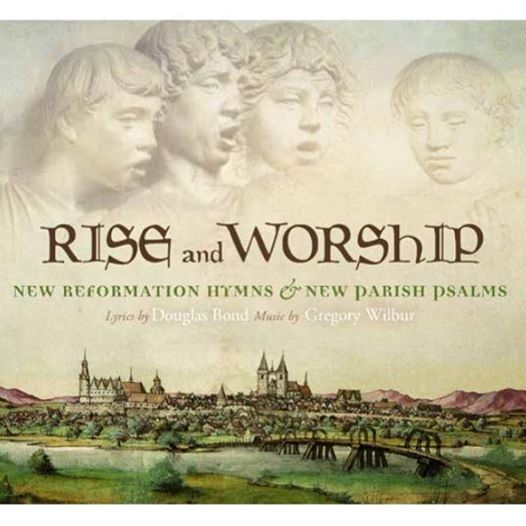
Fundraising with kickstarter has launched for our forthcoming New Reformation Hymns/New Parish Psalms hymn collaboration with Greg Wilbur and Nathan Clark George. We invite you to consider supporting this project. Share if you are so inclined https://www.kickstarter.com/projects/gregorywilbur/we-rise-and-worship-new-reformation-hymns

We Worship Christ, the Cornerstone (8.8.8.8.8.8.) NRH 09

October 1, 2016 (the Bond's first anniversary of moving to the Red House Farm) we hosted a hymn sing with composer extraordinaire (etc.) Greg Wilbur at my Scriptorium on our farm. Rainy fall evening that it was, nearly 50 people from a a dozen churches gathered to sing New Reformation Hymns set to Greg Wilbur's warm, appropriate, and wide-embracingly accessible tunes (with background accompaniment in the form of lowing, clucking, bleating, and oinking). 

The finale of our evening of singing was We Worship Christ, the Cornerstone, and by request, appropriately, and with triumphal resolve, sung twice over. So grateful to Greg and a number of able musicians, from upright bass to recorders, for the rich accompaniment!

“Music is the art of the prophets," wrote Luther. "It is the only other art which, like theology, can calm the agitations of the soul and put the Devil to flight.” I opened our evening with this reminder from the great Reformer and hymn writer. Our functional goal in creating NRH hymns is to wed solid reformational theology with poetry (hopefully of the enduring quality; remains to be seen), with the best tunes, accessible to the whole body of Christ, regardless of age, church background (or none), hipster, non-hipster, black, white, and everything between, for "One body made of many parts." Our theological/liturgical goal in writing NRH? To glorify Father, Son, and Holy Spirit; to build up the body with adoring, Psalm-like praises to Jesus Christ; and to put the Devil to flight.

How We Worship Christ, the Cornerstone, my most ironic hymn, came about: I was included in the loop of a series of emails from church musicians who had attended a music symposium in Florida. They all seemed to agree that there was a dearth of hymn poetry on the theme of unity and oneness in the body of Christ as explored by Paul in Ephesians 2:11-22. I'm pretty certain that the dearth of hymns on this theme is simply objective reality on display, the inevitable mirroring of the woeful lack of substantive unity within the church. It's difficult to rise and lustily sing about something experientially absent.

My process when I am going to write a hymn on a particular theme is to read the passages of Scripture that preceptually lay out the theme, then to cross-reference with everything I can unearth on the theme in sermons and commentaries; after that I begin gathering reoccurring phrases and words. All the while praying for the Spirit to sanctify my imagination, I enter with trepidation into the mysterious realm of poetry (Tolkien believed that all communication was poetry before the Fall and that in some mysterious way poetry moves us back to the garden, my paraphrase).


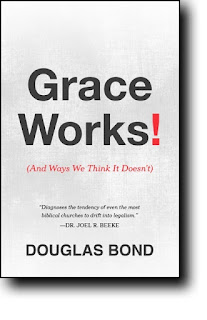
http://www.bondbooks.net/graceworks.htm
Why is NRH 09 my most ironic hymn? The year I wrote it, 2009, marked a major turning point in the Bond family life. After coming to our wits' ends at preaching wrenching us back to Moses more than fixing our eyes on Jesus, we began a process of rediscovering the beauty and wonder of the gospel of Jesus Christ. That rediscovery would come at a price: 25 years of visible church unity was severed; after my publisher urged me to write a book on how covenant moralism and legalism erode the gospel, and my reluctantly writing GRACE WORKS! (And Ways We Think It Doesn't), months after its release, I was terminated after more than two decades of commended teaching at an institution led by men who had decided that mine was a trajectory at odds with theirs.

Hence, ironically, in December of 2009, when what the Bible means about confessional unity had been wrenched from the theoretical to the wincingly real and immediate in our lives, I managed to write the following lines. They came together as if I had been given a poetical/theological spinal block--painlessly, at least while writing the hymn. I won't kid you; there's a great deal of lingering pain in the process of rediscovering the gospel of Jesus and being misrepresented, misunderstood, maligned, ostracized, even shunned. Is it worth it? "Saints, apostles, martyrs Answer, Yes!" And if they can, under infinitely weightier crosses, by the grace of God, YES! So can we. 


We worship Christ, the Cornerstone,
Who made us one in him alone!
Not Jew nor Gentile, bond nor free,
This commonwealth of unity.           
Our Lord has from the two made one,
And with his blood our peace has won.

Brought near in Christ, the Prince of Peace,
Our envy, strife, and warfare cease;
For tribes and tongues, and strangers all,
Our Peace has broken down the wall;
New covenant mercy he extends
To us his fellow heirs and friends.

One faith, one hope of heav’n above,
A unity of holy love;
One body made of many parts,

A unity of loving hearts;
One temple built of cast-off stone,
Made holy by the Holy One.

To Jesus Christ we lift one voice— 
The household of our Father’s choice—
Whose love makes ours for others grow
And makes the watching world to know
That our abiding Cornerstone
Has made us one in Christ alone!

       Douglas Bond, Copyright, December 2, 2009

Spread the word about NEW REFORMATION HYMNS
Order a signed copy of GRACE WORKS